Advances in Engineering Advances in Engineering features breaking research judged by Advances in Engineering advisory team to be of key importance in the Engineering field. Papers are selected from over 10,000 published each week from most peer reviewed journals.

Significance
Steel columns can be defined as structural members that are subjected to axial loads, bending moments and shear forces. Often than not, discrete holes are placed in the webs of cold-formed steel channel beams and columns mainly to facilitate installation of services. This has an effect on the failure modes and moment capacities of these structural members. As such, numerous research has been carried out regarding the two. In fact, bearing capacity formulas of cold-formed steel channel columns with web holes have been proposed based on effective width method. Nonetheless, there are few published reports about investigations on cold formed steel channel beams with web holes.
Available literature shows that for steel beam channels, current design provisions were adopted based on direct strength method (DSM) in North American Specification (NAS). Consequently, there is still a need to assess the reliability of adopting DSM in NAS for beams with web holes so as to predict the design strength of cold-formed steel channel beam.
In a recent publication, Northeast Forestry University scientists: Professor Jinyou Zhao, Undergraduate Kuo Sun and Professor Jun Wang from the School of Civil Engineering in collaboration with Professor Cheng Yu at the University of North Texas studied the different failure modes of cold-formed steel channel beams with web holes. In addition, they also addressed the effects of hole height-to-web depth ratio on moment capacities. Their work is currently published in the research journal, Engineering Structures.
In brief, the tests of cold formed steel channel beams with various hole heights and lip widths were conducted under four-point bending. The finite element models (FEM) validated by tests were then utilized to carry out numerous parametric analyses, following which the analysis results were used to verify the accurateness of critical elastic distortional buckling stress prediction method using CUFSM finite strip program, and to modify the existing approximate prediction formulas of critical elastic local buckling stress applying to such beams with web holes. All in all, the current DSM formulas of cold-formed steel channel beams with web holes stipulated in NAS were assessed and modified for engineering application.
The authors observed that the web holes altered the failure modes of beams from only distortional buckling or only local buckling to distortional-local buckling interaction controlled by distortional buckling or local-distortional buckling interaction controlled by local buckling. Indeed, they highlighted that the decrease in beam capacities were closely related to the hole height-to-web depth ratio.
In summary, the study by Professor Jinyou Zhao and colleagues presented detailed experimental investigations on cold-formed steel channel beams with web holes subjected to four-point bending. They reported that the influence of web holes on beam capacities was relatively small with a maximum reduction value of 7.0% when the hole height-to-web depth ratio increased from 0 to 0.4, and the dramatic reduction in beam capacities was found with a maximum reduction value of 16.3% when the hole height-to-web depth ratio further increased to 0.8. Altogether, they proposed modified DSM formulas for beams with web holes.


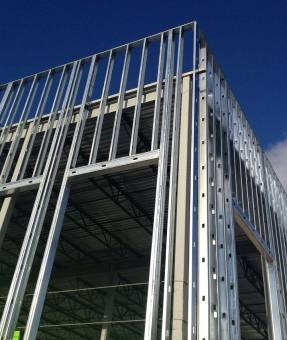
Figure 1. Cold-Formed Steel with Web Holes of Practical Engineering


Figure 2. Failure mode of specimens with web holes



Reference
Jinyou Zhao, Kuo Sun, Cheng Yu, Jun Wang. Tests and direct strength design on cold-formed steel channel beams with web holes. Engineering Structures, volume 184 (2019) page 434–446.
Go To Engineering Structures