Advances in Engineering Advances in Engineering features breaking research judged by Advances in Engineering advisory team to be of key importance in the Engineering field. Papers are selected from over 10,000 published each week from most peer reviewed journals.

Significance Statement
There has been considerable research in harnessing fluid flow energy. Most studies have considered extracting the energy using turbines rotated using fluid forces, as well as from flow-induced vibration generated by the periodic vortex-induced forces that act on a slender body. The former method is widely employed which is not the case with the latter, since no method has been developed to combine translational motion with the rotational generator.
In a recent paper published in Journal of Sound and Vibration, Professor Yoshiki Nishi and colleagues at Yokohama National University in Japan set out to experimentally confirm the possibility of uniting translational motion of a mass, and the translational motion of a linear-type generator, which has the potential of providing continuous renewable energy. They contend that a system having 2 degrees of freedom, especially the second mode, has a high potential for large output of harvested energy.
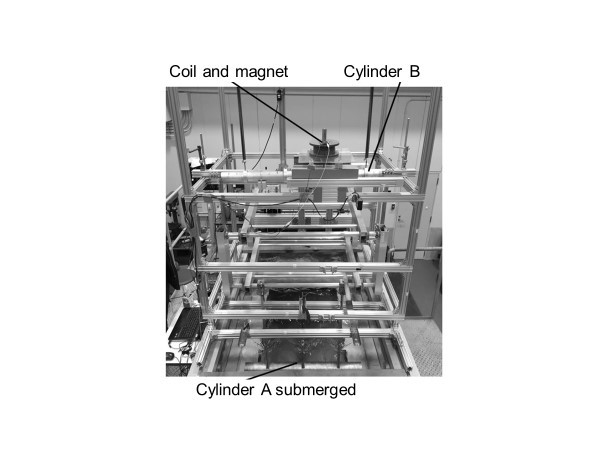
The authors mounted 2 moveable circular cylinders on springs, whereby one of the cylinders was submerged in water and exposed to fluid flow generated by 2 rotating impellers. The movement of the submerged cylinder was transmitted via rigid frames, springs, as well as through the other cylinder to a generator made up of a magnet and a coil.
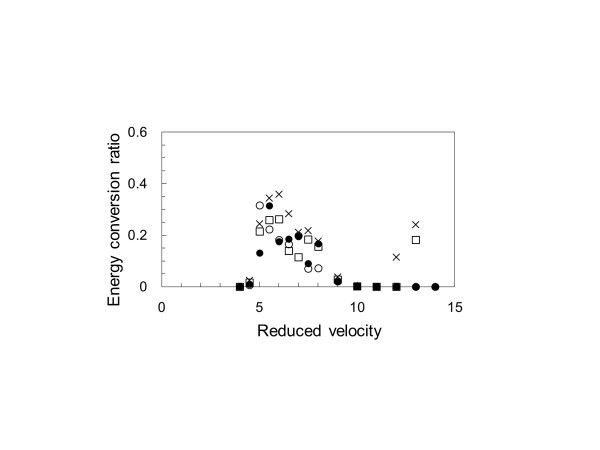
The research team observed that at low mass ratios of the range 0.5 and 1.0, and reduced velocity of about 6.5, the amplitude of the submerged cylinder was near its diameter, while that of the other cylinder was lower. Both cylinders had almost similar frequencies, and the vibrations, which were mostly of the first natural mode, were in phase. A weak vortex-induced vibration was however observed at a 13.0 reduced velocity. For reduced velocities higher than 9.0, both cylinders had frequencies that were 20% higher as compared with the first-mode natural frequency. The induced voltage in the generator was about 4.0V.
For the case of 1.5 and 2.0 mass ratios and a reduced velocity of 6.5, the frequencies of both cylinders were in phase which is similar to the case with low mass ratios, and the amplitude of the submerged cylinder was higher as compared with the other cylinder. However, at a reduced velocity of about 13.0, the air-exposed cylinder had a higher amplitude as compared with the submerged cylinder. It was evident that an increase in mass ratio brings the second mode’s natural frequency nearer that of the first mode which implies that a higher mass ratio allows lock-in to the second mode to take place at lower reduced velocities.
The authors also noted that the system extracted flow energy but the generator inefficiently converted this energy to electrical energy. They suggested the use of a magnet having a slightly stronger magnetic field with multiple poles, or the application of coils having more turns which would increase the quantity of harvested power. Their study concluded that an increase in the number of degrees of freedom improves the practicality of power extraction systems installed in environments having time-varying flow velocities.


Reference
Yoshiki Nishi, Kengo Fukuda, Wataru Shinohara. Experimental energy harvesting from fluid flow by using two vibrating masses. Journal of Sound and Vibration 394 (2017) 321-332
Go To Journal of Sound and Vibration