Advances in Engineering Advances in Engineering features breaking research judged by Advances in Engineering advisory team to be of key importance in the Engineering field. Papers are selected from over 10,000 published each week from most peer reviewed journals.

Significance Statement
Cross-laminated timber is a timber panel nowadays used in most constructions. It is constituted by three or more board layers that are orthogonally glued with respect to the board’s grain direction. It has been used for several years and now standardized procedures to production evaluation are important for both the consumers and producers.
For nearly all glued structural components, face bonding quality and consistency must be proved in the preliminary testing and continually monitored throughout the factory production. This calls for dependable testing methods to sufficiently assess the glue line integrity. However, for CLT the test methodology has been mainly based on the procedures currently being adopted for glulam, not entirely suitable for CLT too. For instance, shear tests provide an easy-to-measure value, but in CLT specimens may generate problems of rolling shear. Also, delamination tests have been applied in glulam for research and production control, but result quite severe for CLT.
Research collaboration between scientists at University of Florence and scientists at Italian National Research Council, Trees and Timber Institute evaluated the face bonding integrity of cross-laminated timber panel. They proposed new test methods based on the conventional methodologies developed for glulam as well as solid wood panels, but adapted for CLT panels. Their work is now published in Construction and Building Materials.
The authors used two cross-laminated timber panels, which were made of spruce. The panels were obtained from manufacturers who dully followed the gluing stipulations for their production processes. The panels were produced with polyurethane adhesive making five layers with varying thicknesses.
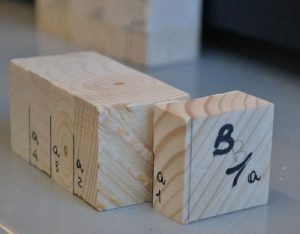
In a bid to evaluate the sampling techniques, the authors cut the panels into several strips and applied a total of 5 test methods. For every strip, the authors obtained specimens such that all typologies were taken from adjacent zones of each panel. This enabled them to control the variability related to areas with different bonding integrity then the delamination and shear tests were performed. The authors compared the test methods both by means of experimental data and finite element analysis.
From the results obtained in the shear tests, the authors observed that all the methods used were effective in assessing the bonding integrity among the layers of the selected panels. However, considerations on the easiness and practicability of specimen preparation and test execution, as well as on the theoretical distribution of internal shear stress, were provided in order to discuss and to elect the most suitable approach for inclusion in the technical standards.
Delamination results and shear tests were not correlated. For the delamination test, specimen size was an important factor that dictated the outcomes of the testing.
When it came to the sampling techniques, the authors observed that diagonal sampling was almost similar to sampling along the parallel strips. This also indicated that sampling along the ends would be sufficient in characterizing the bonding of panels homogenously glued, thus reducing the amount of material used by the company for quality control.





Reference
Michele Betti1, Michele Brunetti2, Marco Pio Lauriola1, Michela Nocetti2, Francesco Ravalli1, and Benedetto Pizzo2. Comparison of newly proposed test methods to evaluate the bonding quality of Cross-Laminated Timber (CLT) panels by means of experimental data and finite element (FE) analysis. Construction and Building Materials, volume 125 (2016), pages 952–963.
[expand title=”Show Affiliations”]- Department of Civil and Environmental Engineering (DICEA), University of Florence, Via di Santa Marta, 3-I-50139 Florence, Italy
- CNR-IVALSA, Istituto per la Valorizzazione del Legno e delle Specie Arboree, via Madonna del Piano 10, I-50019 Sesto Fiorentino (FI), Italy
Go To Construction and Building Materials