Advances in Engineering Advances in Engineering features breaking research judged by Advances in Engineering advisory team to be of key importance in the Engineering field. Papers are selected from over 10,000 published each week from most peer reviewed journals.

Significance
Partial differential equations are commonly used to represent the behaviors of currents and voltages along a power transmission line. Several techniques have been used in solving such equations including the use of modulators and large range frequency sinusoidal oscillations. The solutions techniques are, however, limited for the analysis of transmission lines that operate under steady-state conditions.
For systems with uniformly distributed parameters, lumped parameter ladder circuits are preferred. Due to their physical and mathematical model representation, they can be used for various analyses such as heat transfer and the behavior of electronics and electrical systems. Lumped parameter circuits represent the quantity values of currents and voltages as a function of time, by reducing the partial differential equations into ordinary differential equations as well as the state space representation of the system into finite dimensions. The resulting analytical solution, well-known General line equations, is however not sufficiently accurate for the certain cases of ground fault analysis in an HV network. Therefore, more effort has been put in place over the past decades to model transmission lines for ground fault current analysis.
A research by Professor Ljubivoje M. Popović at the J. P. Elektrodistribucija-Beograd in Serbia
enables a new approach for the analysis of electrical line transient states and resonant phenomena by using relatively simple equations. The primary objective was to develop the equations for correct ground fault analysis at any point along a transmission line. These equations Professor Popović named as the General equations of the lumped parameters ladder circuits. The research work is currently published in the research journal, Electrical Power and Energy Systems.
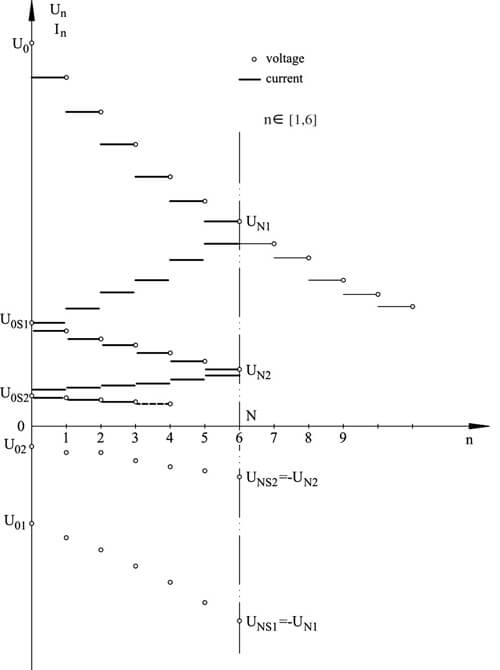
Through summation of the specially formed finite and infinite geometric series and the principle of superposition, accurate lumped parameter model for the systems with distributed parameters was developed. The resultant relatively simple equations describe the relationships between the currents and voltages and their behaviors in both steady and transient conditions at any point of a transmission line and enable these quantities analyses along the whole line length.
Since the developed procedure successively follows one by one each phase of the actual physical process which precedes establishing the steady state in a line it is very convenient for the analysis of electrical line transient states and resonant phenomena. Additionally, it is important to say that the developed analytical procedure at the same time represents an alternative way of obtaining the already existing and well-known General line equations and as such it is very convenient for the educational purposes as well.
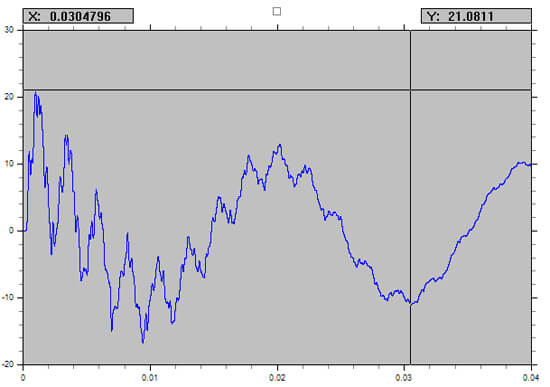
Consequently, the developed analytical procedures by Professor Ljubivoje M. Popović introduce a new approach for the analysis of the transient processes in the power transmission lines. The desired accuracy is achievable by using the relatively simple mathematical operations which do not require the use of computers. For example, the maximum over-voltages resulting from the power frequency transients of a power line can be determined. It is a crucial consideration because its underestimation may lead to ground faults and damages of the insulation and protective device while its overestimation may also result to over cost of the whole systems such as power insulation.

Reference
Popović, Lj. (2018). General equations of lumped parameter ladder circuits and a special approach to analyzing electrical line transient states. International Journal of Electrical Power & Energy Systems, 95, 568-576
Go To International Journal of Electrical Power & Energy Systems