Advances in Engineering Advances in Engineering features breaking research judged by Advances in Engineering advisory team to be of key importance in the Engineering field. Papers are selected from over 10,000 published each week from most peer reviewed journals.

Significance
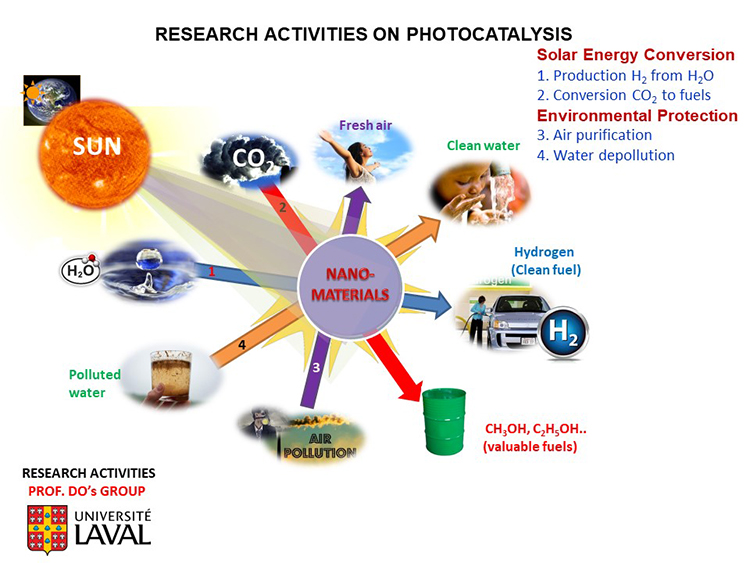
The current global energy crisis due to the rapid depletion of fossils fuels requires an urgent and effective solution. This has also been escalated by the fact that most fossil fuels are high emitters of greenhouse gases, thus leading to various mitigation measures. These issues have prompted researchers to develop renewable energy sources as a promising solution taking into consideration the need to protect the environment and satisfy long-term energy demand. Hydrogen has a high energy density and is pollutant-free (water as the by-product of combustion) thus a suitable candidate. To this end, the development of efficient photocatalytic processes using solar energy is highly desirable for hydrogen generation.
It has been known for some time that graphitic carbon nitride (g-C3N4) is a suitable material for hydrogen generation due to its excellent properties. Alternatively, scientists have embraced nanotechnology in an attempt to address the limitations of the bulk g-C3N4. For instance, nanosheets with desired properties have been designed to enhance photocatalytic hydrogen production. However, their implementation is hindered due to several drawbacks like large bandgap and undesirable structural defects resulted from conventional methods. Recent use of the melamine-cyanuric acid supramolecular complex as a precursor for carbon nitride synthesis has shed lights to find a long-lasting solution.
In a new research work published in Chemsuschem, a group of Laval University researchers led by Professor Trong-On Do from the Department of Chemical Engineering explored a new approach for the synthesis of melamine-cyanuric acid supramolecular (MCS) complex and its feasibility in enhancing properties of synthesized carbon nitride nanosheets.
In brief, the research team synthesized MCS complex with highly condensed lamellar structure. Next, the obtained complex was used to prepared carbon nitride nanosheets after undergoing thermal treatment in argon (Ar) and calcination in the air both at 4000C. Eventually, they investigated the photocatalytic performance of the resulting nanosheets in hydrogen production.
The authors observed significant improvement in the production of hydrogen under full sunlight and especially in the visible light region. This was attributed to the superior properties of the synthesized carbon nitride nanosheets, i.e. large specific surface area and effective sunlight absorption. The introduction of numerous in-plane nanoholes significantly enlarged the specific surface area of nanosheets while the sizeable tri-s-triazine unit system coupled with structural defects emanating from the induced oxygen-containing groups enhanced the visible light absorption, which is observed for the first time for carbon nitride nanosheet materials. The hydrogen evolution, in this case, was eleven times as more as compared to the conventional bulk. The relatively high quantum efficiency of 20.9% was recorded at 420nm. The responsive wavelength range for photocatalytic hydrogen evolution dramatically extends to even 590 nm with a quantum efficiency of 3.5%.
In summary, Professor Trong-On Do and his research group are the first to develop carbon nitride nanosheets with in-plane holes that give significantly high sunlight absorption specifically in the visible region and a high specific surface area. This was due to the incorporated tri-s-triazine unit system and structural defects emanating from the induced oxygen-containing group. Altogether, this is a promising synthesis method for enhancing hydrogen production that would see a significant advancement in the production of renewable energy.

Reference
Vu, N. N., Nguyen, C. C., Kaliaguine, S., & Do, T. O. (2019). Synthesis of g-C3 N4 Nanosheets by Using a Highly Condensed Lamellar Crystalline Melamine–Cyanuric Acid Supramolecular Complex for Enhanced Solar Hydrogen Generation. Chemsuschem, 12(1), 291-302.
Go To Chemsuschem