Advances in Engineering Advances in Engineering features breaking research judged by Advances in Engineering advisory team to be of key importance in the Engineering field. Papers are selected from over 10,000 published each week from most peer reviewed journals.

Significance
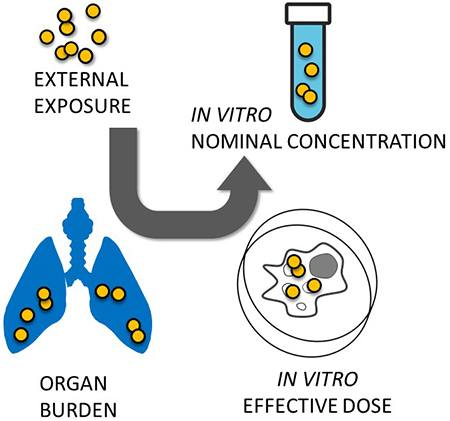
Nanomaterials hold enormous potential for sustainable innovations in environmental, engineering, material science fields and biomedical applications like delivering drugs and vaccines more efficiently. Toxicological research on nanomaterials is being conducted for more than a decade. Most of these toxicological studies are performed in vitro and only fewer studies in vivo. This raises the question, how results from in vitro studies can be applied to hazard and risk assessment for humans. In vitro test systems are far less complex than whole organisms like humans. The differences between whole organisms and in vitro test concern toxicodynamics (effects) and toxicokinetics (uptake, distribution and excretion). Toxicodynamic differences can be addressed by adopting more complex in vitro models. Differences in toxicokinetics can be minimized by in vivo to in vitro dose extrapolations (IVIVE) to match concentrations used in vitro to internal exposure of humans or animals exposed in vivo.
Notably, the lungs are the main target organ since inhalation is the predominant exposure route of concern. However, most in vitro studies utilize high-concentrations of nanomaterials making it difficult to correlate the concentration and effects of the nanomaterials in vitro and to the in vivo situation. To this end, the quality of the in vitro data can be improved by selecting in vitro test concentrations reflecting the in vivo target organ burden produced after exposure.
Herein, Dr. Lan Ma-Hock, Dr. Emmanuel Ruggiero, Dr. Johannes-Georg Keller, Dr. Wendel Wohlleben and led by Dr. Robert Landsiedel from BASF SE in Germany developed a new procedure for addressing the sources of the internal exposure differences using nanomaterial in vivo organ burden data for in vitro dose setting (OBIV). The database used in the survey comprised organ burden data of one-microscale test material and 16 nanomaterials for describing the OBIV approach. The original research article is currently published in the research journal, Small. Dr. Ursula Sauer from Scientific Consultancy – Animal Welfare also contributed to the study.
In their approach, the research team selected short-term toxicity LOAECs because most in vitro studies are designed to address the short-term effects. The organ burden data was described in detail. Finally, a procedure comprised of six steps was proposed based on the survey results. The steps include (1) determining the in vivo exposure, (2) identification of the in vivo organ burden at the desirable LOAEC, (3) extrapolating in vitro effective dose, (4) further extrapolation of in vitro dose to nominal concentrations, (5) determining the dose-response relations bet setting the dose ranges, and (6) considering the uncertainties and variabilities associated with the burden data and specificities of the test results. In addition to the description of the procedure, tables of pre-calculated in vitro concentrations correlating to doses of existing in vivo studies are given. The data can be used to establish the effective dose ranges for in vitro models and to use existing results of in vitro for risk assessments.
In summary, a six-step procedure is proposed to minimize the differences between in vitro and in vivo models. The author caution, that discrepancies between in vitro and in vivo models need prudent consideration: the experimental read-outs and the potencies are usually different in vitro and in vivo. OBIV can, nonetheless, reduce the differences in exposures.
Since the knowledge of the corresponding in vitro doses facilitates the prediction of nanomaterial’s in vivo toxicity, OBIV principles can reduce, replace and refine animal testing. In a statement to Advances in Engineering, Dr. Robert Landsiedel, the lead author, said their results will provide more relevant study design and more realistic assessment of results from in vitro models and thus help to improve in vitro testing and reduce animal testing.

Reference
Ma‐Hock, L., Sauer, U., Ruggiero, E., Keller, J., Wohlleben, W., & Landsiedel, R. (2021). The Use of Nanomaterial In Vivo Organ Burden Data for In Vitro Dose Setting. Small, 17(15), 2005725.