Advances in Engineering Advances in Engineering features breaking research judged by Advances in Engineering advisory team to be of key importance in the Engineering field. Papers are selected from over 10,000 published each week from most peer reviewed journals.

Significance Statement
Stirling engine has developed interest due to its ability to use an external heat source with low noise and carbon dioxide emissions and with theoretically high thermal efficiency. The study of the physical phenomena taking place in this engine is usually based on simulation models which should be cost-effective, time-friendly and accurate at the same time. Moreover, those models must be validated against experimental data, evidencing current interest on measurements.
A Stirling machine can be divided into different subsystems: heat supply system; working gas circuit; drive mechanism; electrical system, which require particular analyses in order to improve the performance of the whole machine. However, experimental data rarely refer to the different subsystems, due to the difficulty in characterizing the indicated power or the drive mechanism performance through measurements of instantaneous pressure and volumes in the different zones of the engine.
This article is the first publication related to the application of a method recently conceived at the University of Oviedo for the indirect characterization of indicated power via brake power measurements. The procedure is based on semi-empirical models for both indicated power and mechanical power losses previously developed and validated on several Stirling engines under different working conditions. Using dimensionless variables, the models make explicit the influence of the rotational speed on the performance at real operating conditions.
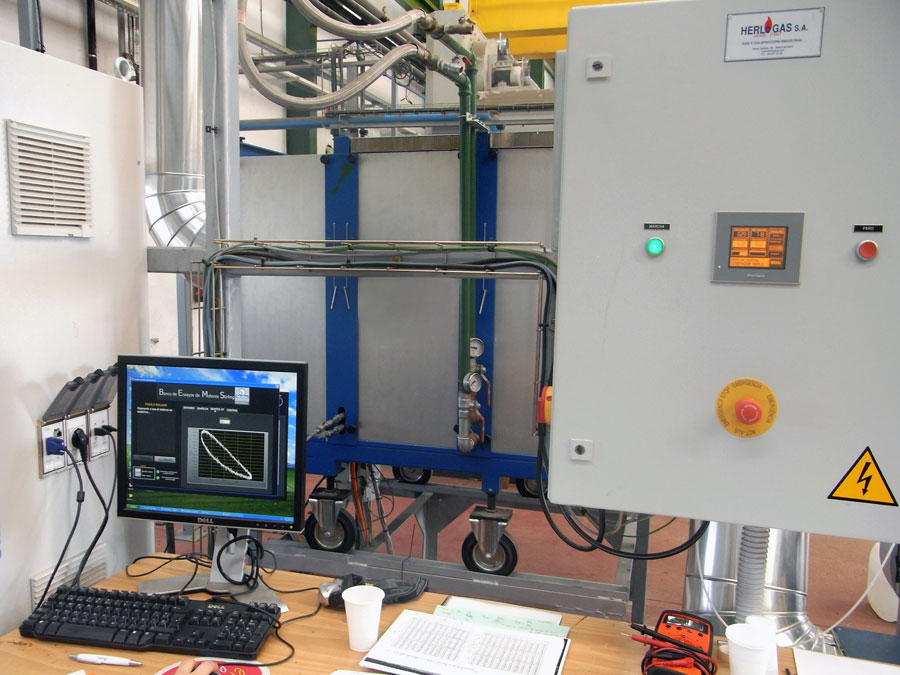
The new method requires torque and rotational frequency measurements as well as wall temperatures in the heater and the cooler to compute the theoretical threshold of operation, that is, the quasi-static indicated work per cycle, as previous steps to obtain the coefficients of the semi-empirical models by means of least-squares calculations. The procedure is applied in the article to Yamanokami-2 engine tests, using 16 different operating points available for this engine and showing acceptable accuracy between the experimental measurements of indicated power and the new method predictions.
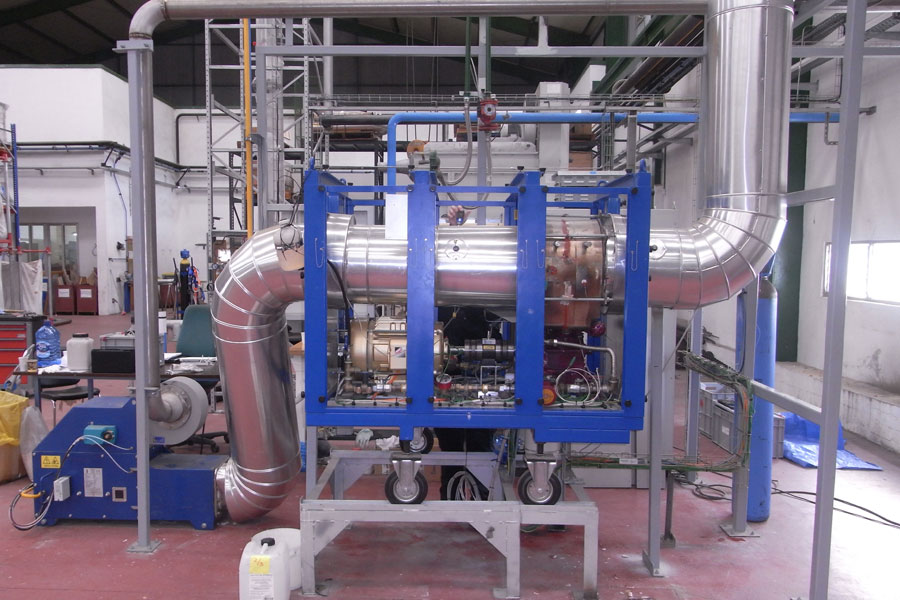
The paper also shows the application of the procedure for the analysis of a V-160 cogeneration unit recently restored by IK4-Tekniker. In this case direct indicated power measurements were available but strange tendency was detected at low speed values. The estimations given by the proposed methodology were decisive to determine that the indicated power measurements were not as accurate as expected, probably due to leakage or errors in pressure measurements taken only at the compression cylinder. In addition, simulations obtained by means of the GGSISM software, developed at the University of Seville and validated with the V-161 engine, a modern version of the V-160 unit, were used in the analyses, showing agreement with the estimations provided by the new methodology.
In summary, the method presented by the authors shows the benefit in reducing the potential risk of gas leaking derived from thermocouple and pressure transducer port operations. This method can also be used as a tool for detecting anomalous measurements and makes possible to obtain indicated power estimations from brake power measurements.
Journal Reference
Iván Mesonero1 , Susana López1, Francisco J. García-Granados2, Francisco J. Jiménez-Espadafor2, David García3, Jesús-Ignacio Prieto3. Indirect characterisation of indicated power in Stirling engines through brake power measurements. Applied Thermal Engineering,Volume 100, 2016, Pages 961–971.
[expand title=”Show Affiliations”]- IK4-TEKNIKER, Iñaki Goenaga 5, 20600 Eibar, Spain
- Departamento de Ingeniería Energética, Escuela Técnica Superior de Ingeniería de Sevilla, Camino de los Descubrimientos s/n, 41092 Sevilla, Spain
- University of Oviedo, Campus de Viesques, 33204 Gijón, Spain [/expand]
Go To Applied Thermal Engineering