Advances in Engineering Advances in Engineering features breaking research judged by Advances in Engineering advisory team to be of key importance in the Engineering field. Papers are selected from over 10,000 published each week from most peer reviewed journals.

Significance Statement
The Superpave Performance Grade specification which addresses asphalt binder property related to hot-mix asphalt HMA fatigue performance cannot effectively relate and quantify performance of modified asphalt binders commonly used presently. It has been hypothesized that higher elastic recovery property of modified asphalt binders increases fatigue cracking resistance performance, but very few studies have been conducted to validate this assumption.
Zhang et al. (2016) initiated a study which was published in, Construction and Building Materials, investigating the relationship between asphalt binder elastic recovery properties and hot-mix asphalt fatigue performance.
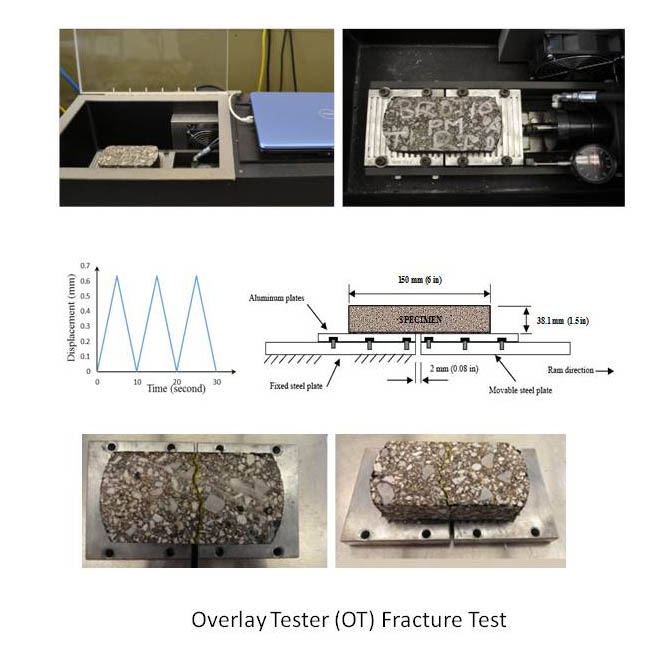
In order to achieve this objective, two asphalt binder test such as elastic recovery ER and multiple stress creep recovery MSCR and two hot-mix asphalt performance test namely dynamic modulus DM and OT fracture test were conducted. The elastic recovery test was performed using a ductilometer and briquette specimens. The multiple stress creep recovery test was performed using a dynamic shear rheometer DSR.
For this study, a total of 11 Texas hot-mix asphalt mixes categorized in five mix types (B, C, D, F and CAM) were collected from various field construction sites across Texas. Asphalt binders extracted from plant-mixed materials was utilized for testing.
When elastic recovery and multiple stress creep recovery test was performed at temperature of 25°C and 64°C respectively, coefficient of correlation was relatively low under two different stress levels of 0.1 and 3.2KPa. The poor correlation could be attributed to performance at different temperatures. A good linear correlation was observed between multiple stress creep recovery at 0.1KPa and 3.2KPa which may be attributed to the same testing temperature.
Dynamic modulus testing revealed CA1 and F1 having the greatest asphalt binder elastic recovery values exhibiting lower stiffness when compared to other mixes. This may be partially attributed to higher asphalt contents as well as higher binder elastic recovery.
Comparison of asphalt binder elastic recovery properties and the predicted fatigue life based on the OT fracture properties and dynamic modulus data observed three greatest fatigue lives corresponding to the three higher asphalt binder recovery values in elastic recovery test of D1, CA1 and F1 mixes. No trend was observed when asphalt binder elastic recovery was less than 59%.
The predicted fatigue life was also validated based on the OT cyclic fatigue test and the field observation of pavement performance. Type B mix had poor fatigue performance with predicted only 57 months’ worth of service life, which is consistent with the observation in the OT fatigue test that its OT cycles to failure was smaller than 130 which failed Texas OT pass-fail criterion of minimum of 300 cycles. F1 and CA1 type mixes with the highest predicted pavement fatigue lives performed very well in the OT test which exhibited over 900 cycles to failure. Overall, Asphalt binders with high elastic recovery properties at 59% or more (D1, CA1 and F1) showed long predicted fatigue lives greater than 150 months which was also consistent with OT fatigue test results in other studies and field performance observations.
The findings of this study have provided substantial relationship between asphalt binder elastic recovery and hot-mix asphalt fatigue performance.


Journal Reference
Jun Zhang1 , Geoffrey S. Simate2, Sang Ick Lee3, Sheng Hu3, Lubinda F. Walubita3,4,5. Relating asphalt binder elastic recovery properties to HMA crack modeling and fatigue life prediction, Construction and Building Materials, Volume 111, 2016, Pages 644–651.
[expand title=”Show Affiliations”]- Department of Civil Engineering, Texas A&M University, College Station, TX 77843, USA
- University of the Witwatersrand, Johannesburg, P/Bag 3, Wits 2050, South Africa
- Texas A&M Transportation Institute (TTI) – The Texas A&M University System, College Station, TX 77843, USA
- Iliso (Z) Consulting Engineers Ltd, Lusaka, Zambia
- Transportation Research Center, Wuhan Institute of Technology, Wuhan, China
Go To Construction and Building Materials