Advances in Engineering Advances in Engineering features breaking research judged by Advances in Engineering advisory team to be of key importance in the Engineering field. Papers are selected from over 10,000 published each week from most peer reviewed journals.

Significance Statement
High-Order methods in Computational Fluid Dynamics (CFD) have been growing in popularity due to their promise of increased computational efficiency and fidelity to flow physics. The Flux Reconstruction (FR) approach, a variant of the Discontinuous Galerkin Finite Element Method (DGFEM) not only offers flexibility in its capacity to handle complex meshes but also provides several options for time-stepping methods, strategies for controlling dispersion and dissipation errors, multigrid convergence acceleration techniques etc. and is highly suitable for implementation on parallel architectures like GPUs.
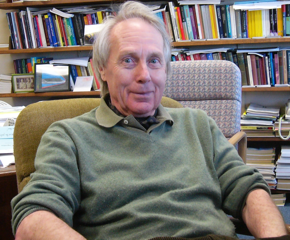
Dr. Abhishek Sheshadri and Professor Antony Jameson from Stanford University investigated the linear stability of the Flux Reconstruction approach on quadrilateral or tensor product meshes. The authors formulated a novel 2D Sobolev norm suitable for tensor product elements and by investigating the growth of such a norm, they showed that the FR approach is stable on Cartesian meshes for the linear advection equation. The study is published in the Journal of Scientific Computing. The authors have further extended this analysis the advection-diffusion equation and obtained similar results. The stability analysis also provides intuition for many of the dissipation properties observed in numerical experiments. The authors’ approach to investigate stability might be particularly helpful for similar studies in three dimensions or for non-linear fluxes.
The authors also developed a novel technique for stabilizing high-order methods against nonlinear instabilities that arise due to shocks and other discontinuities in the flow. Shocks occur in high speed compressible flows and pose a major challenge for high-order numerical methods. The method works by detecting regions shocks and other discontinuities and then filtering the flow in these regions. The shock detection method proposed by the authors is inspired from edge detection techniques used in signal and image processing. The filtering applied for capturing the detected shocks is a post-processing operation that does not modify the PDE and therefore the time-step sizes; which is crucial for explicit time-stepping schemes.
The proposed method is robust and works for inviscid and viscous flows on unstructured meshes without sabotaging the accuracy of the flow. The filtering framework employed can also be used for stabilizing against aliasing instabilities and for convergence acceleration in steady state flows. Their shock capturing method is not dependent on particular flow physics and is therefore applicable to all types of flows including astronomical and multiphase flows.
Their research will assist industrial practitioners of CFD to undertake more reliable high-fidelity scale-resolving simulations on complex geometries.
References
Sheshadri, A., Jameson, A. On the Stability of the Flux Reconstruction Schemes On Quadrilateral Elements for the Linear Advection Equation, Journal of Scientific Computing 67(2): 769-790, 2016
Sheshadri, A., Jameson, A. Erratum to: On the Stability of the Flux Reconstruction Schemes on Quadrilateral Elements for the Linear Advection Equation, Journal of Scientific Computing 67(2):791–794, 2016.
Sheshadri, A., An Analysis of Stability of the Flux Reconstruction formulation with Applications to Shock Capturing, PhD Thesis, Stanford University, 2016.


Journal Reference
Abhishek Sheshadri, Antony Jameson. On the Stability of the Flux Reconstruction Schemes on Quadrilateral Elements for the Linear Advection Equation. Journal of Scientific Computing, May 2016, Volume 67, Issue 2, pp 769–790.
Stanford University Stanford USA
Go To Journal of Scientific Computing