 Advances in Engineering Advances in Engineering features breaking research judged by Advances in Engineering advisory team to be of key importance in the Engineering field. Papers are selected from over 10,000 published each week from most peer reviewed journals.

Significance Statement
Numerical dispersion and attenuation are commonly seen in finite element and finite difference wave propagation solutions of physical problems. The errors introduced are a result of the spatial and temporal discretizations used to solve transient wave propagations. To achieve accurate solutions of complex problems, the spatial and temporal discretizations should be selected according to the dispersion (period elongation) and attenuation (amplitude decay) properties of the methods used.
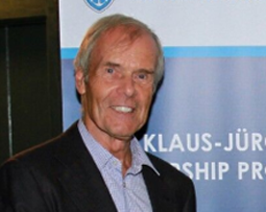
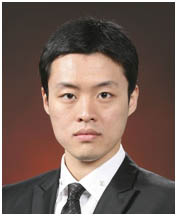
Professor Klaus-Jürgen Bathe, a pioneer and world famous researcher in the field of finite element analysis and applications, and his PhD student Ki-Tae Kim at the Massachusetts Institute of Technology examined the use of the Method of Finite Spheres with the Bathe method to solve transient wave propagation problems. The new findings are now published in the peer-reviewed international journal, Computers and Structures.
The Bathe method, an implicit time integration method, gave accurate results when used with the Method of Finite Spheres enriched with harmonic functions. The important property of the Bathe method is that the high frequencies which can not be accurately resolved by the spatial discretization used are cut-out while the low frequency response is accurately solved for. The same property was earlier also observed when using bi-linear finite elements but with the Method of Finite Spheres much more reliable and accurate results are obtained.
Kim and Bathe used the Method of Finite Spheres with bi-linear polynomials and trigonometric functions as local basis to calculate the response solutions, and a very important observation was made: The accuracy of the predicted response increases as the CFL number is decreased. This solution behavior using uniform spatial discretizations did not depend on any specific direction of wave travel. Hence multiple waves of different velocities and with different directions can be directly solved for accurately. This observation is in contrast to what is seen when traditional finite element and finite difference discretizations are used with explicit or implicit time integration schemes.
The authors successfully solved transient wave propagation problems with high accuracy. However, since in the current paper they only considered uniformly distributed spheres of the same radius in two-dimensional analyses and only one time integration method, further studies would be valuable using different arrangements of spheres, different time integration schemes, for two- and three-dimensional problems, and using more general schemes based on ‘overlapping finite elements’.
References
Ki-Tae Kim, Klaus-Jürgen Bathe, Transient implicit wave propagation dynamics with the method of finite spheres, Computers and Structures, Volume 173, 2016, Pages 50–60.
Klaus-Jürgen Bathe, The finite element method with ‘overlapping finite elements’, Proceedings Sixth International Conference on Structural Engineering, Mechanics and Computation — SEMC 2016, Cape Town, South Africa (A. Zingoni, ed.), 2016.

Journal Reference
Ki-Tae Kim, Klaus-Jürgen Bathe, Transient implicit wave propagation dynamics with the method of finite spheres, Computers and Structures, Volume 173, 2016, Pages 50–60.
Department of Mechanical Engineering, Massachusetts Institute of Technology, Cambridge, MA, USA.
Go To Computers & Structures