Advances in Engineering Advances in Engineering features breaking research judged by Advances in Engineering advisory team to be of key importance in the Engineering field. Papers are selected from over 10,000 published each week from most peer reviewed journals.

Significance
Rapid advancement in technology has led to the creation of mechatronic systems that have been widely used in modern industries. It is also the basis for the industrial automation witnessed today. Underactuated mechatronic systems, in particular, have been commonly used in crane transportation for decades. They have several advantages including simple mechanical structures, low energy consumption, and low products costs among others. To improve the functionalities of these systems, several studies both theoretically and practically have been conducted. For example, various control strategies such as using nonlinear controllers and sliding mode-based controllers have been presented for overhead cranes.
In most cases, the overhead crane systems exhibit double pendulum characteristics due to the large mass and the hook’s center of gravity that does not coincide with the payload. The systems also have the number of independent inputs less than the degree of freedom. This renders most of the traditional single pendulum controllers unsuitable for crane transportation. To the end, controllers for double pendulum cranes have been widely investigated with the aim of optimizing their performances, operation safety, and costs. For instance, adaptive tracking controllers have been designed for cranes subjected to external disturbances while the input shaping technology has been used to suppress the dynamics resulting from the oscillations.
Also, various intelligent controllers have been incorporated in use. Although the existing controllers for double pendulum cranes have shown significant improvements, they have not taken much consideration in the energy consumptions of such systems which is a crucial design concern today.
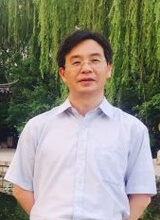
A group of researchers at Nankai University: Associate Professor Ning Sun, Yiming Wu, He Chen and Professor Yongchun Fang proposed an energy-optimal solution for double-pendulum crane systems controllers. The aim was to minimize the energy consumption in moving the trolley from one location to the desired location while at the same time eliminating the double pendulum swings and enhancing safety by keeping the state variable within the given boundaries. This work is a significant breakthrough in the field of crane automation, and it is published in the journal, Mechanical Systems and Signal Processing.
Briefly, for the experiment purpose, the authors first used the Lagrange’s method to obtain the systems dynamics, from which the energy consumption function was constructed. The control problem was then formulated as a quadratic programming problem after the necessary transformations and calculations of the energy consumption equation. Eventually, the quadratic programming problem was solved using a convex optimization technique after which it was implemented on a double pendulum crane for performance verification of the controller.
The authors successfully used the proposed energy-optimal solution to achieve the transportation objectives such as the swing elimination with minimal energy consumption in double pendulum cranes. The system also satisfied the set state constraints while effectively suppressing the residual oscillations. Furthermore, simulation and hardware experimental results provided signified the reliability of the systems controller. Currently, the authors are applying the proposed method to a 32-ton industrial crane to improve its performance.
The study is the first to be reported about optimal-energy consumption in double pendulum cranes with various state and control constraints. Due to its reliability and efficient performance, it will advance transportation by under-actuated double pendulum cranes in the various fields because of the superior’s controllers as compared to other comparative controllers.




Reference
Sun, N., Wu, Y., Chen, H., & Fang, Y. (2018). An energy-optimal solution for transportation control of cranes with double pendulum dynamics: Design and experiments. Mechanical Systems and Signal Processing, 102, 87-101.
Go To Mechanical Systems and Signal Processing