Advances in Engineering Advances in Engineering features breaking research judged by Advances in Engineering advisory team to be of key importance in the Engineering field. Papers are selected from over 10,000 published each week from most peer reviewed journals.

Significance
Structural components are generally susceptible to failures due to numerous causes. Therefore, structural optimization has been widely employed in structural design not only to enhance their performance but also to meet the desirable structural economy. Presently, optimization methods range from simple dimensional parameter optimization to shape and topology. In particular, the development of computer technology has led to the development of several optimization algorithms for effective optimization of trust topology with complex designs. This included multiscale topology optimization which enables the realization of better layout updating, unlike traditional topology optimization. However, the aforementioned methods do not take into consideration the influence of the structural uncertainties that may result in inaccurate findings.
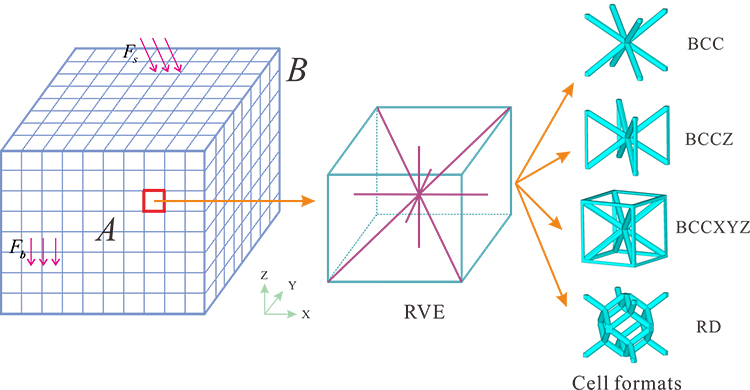
With the gradual increase in complex structural systems, Dr. Lei Wang, Jin Xiong Liang and Dongliang Liu from Beihang University together with Wenpin Chen from Shanghai Marine Equipment Research Institute studied nonprobabilistic reliability-based topology optimization (NRBTO) techniques. The main objective was to demonstrate an implementation of the above novel technique in continuum structures with displacement constraints and optimal layout comprising of solid materials and truss-like microstructure material simultaneously. The work is currently published in International Journal for Numerical Methods in Engineering.
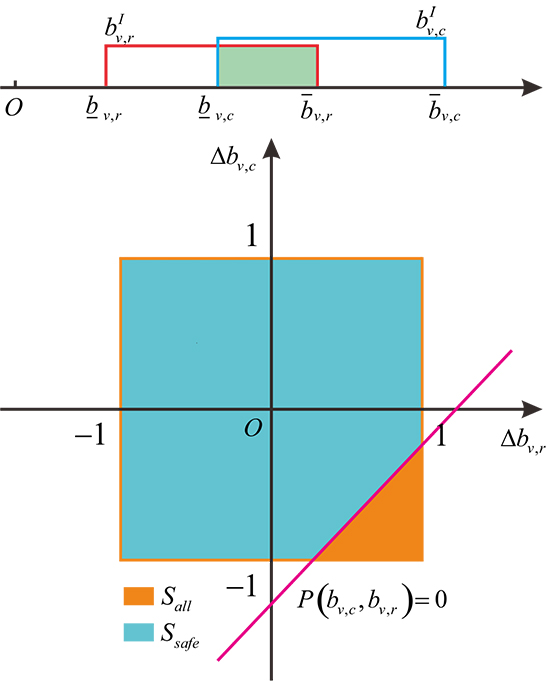
Briefly, the research team began their work by constructing a new solid material and truss-like microstructure material structure integrated design interpolation model. Next, they measured the range of structural uncertainties and nonprobabilistic reliability using interval sets and new reliability index respectively. Besides, the nonprobabilistic reliability index-based continuum structure optimal model was evaluated by taking into consideration the effects of several factors: external loads, the unknown-but-bounded uncertainties induced within the material properties as well as safety displacements.
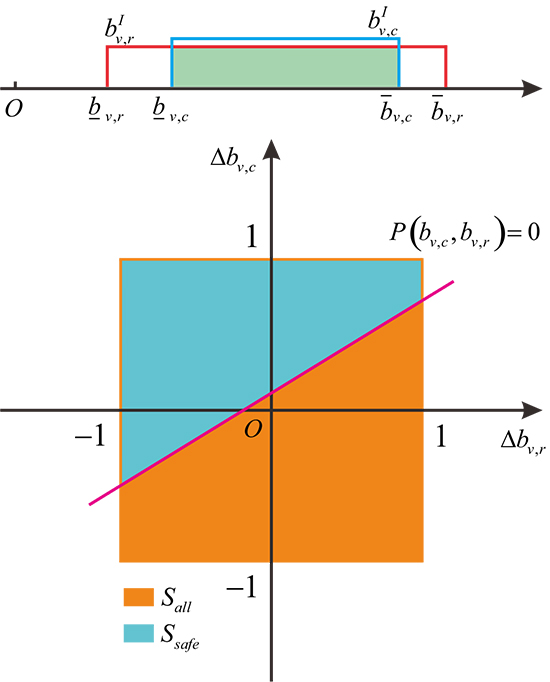
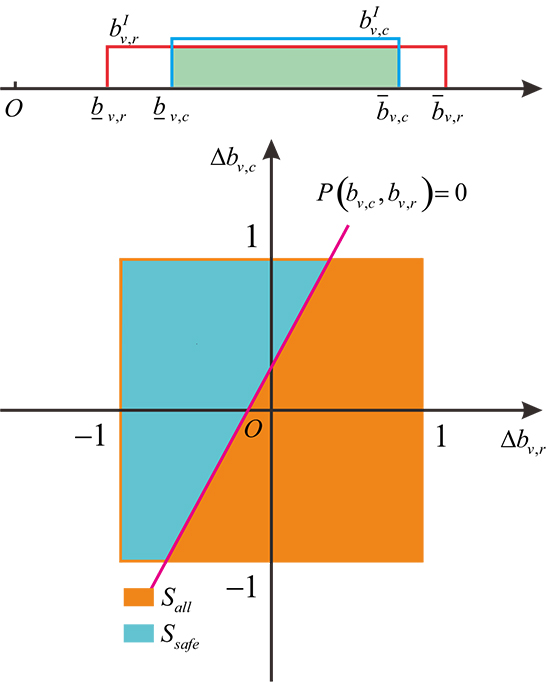
The authors observed that a combination of finite element method and topology optimization process enabled the use of design domain elements to select solid material or truss-like microstructure materials. Also, they confirmed the macro-micro stiffness performance through volume element analysis. Regarding the fact that multisource uncertainties are almost inevitable in structural engineering, quantification of parametric uncertainties requires large quantities of experimental samples which were effectively represented through the nonprobabilistic reliability-based topology optimization technique together with unknown-but-bounded uncertainties. However, for safety precautions, a new reliability index with its full solution was presented. Together with the adjoint vector method, sensitivity information between the design variables and the reliability measurements were obtained. This guaranteed the desired computation accuracy and efficiency.
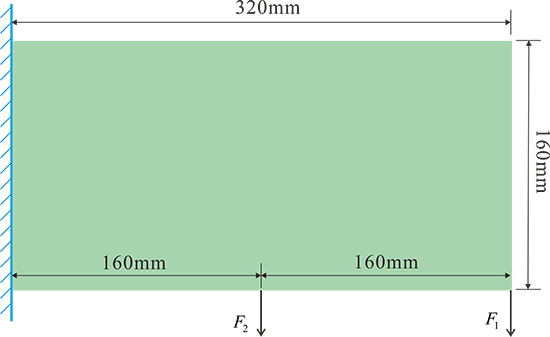
The optimization method by Lei Wang and colleagues was iteratively solved by employing the moving asymptote method. The effectiveness of the developed methodology was validated using two examples. According to the authors, the optimal results presented by the nonprobabilistic reliability-based topology optimization framework induced apparent differences in the topology layouts as compared to those obtained from conventional deterministic optimization. Therefore, the study will advance various engineering fields and especially with the rapid development of additive manufacturing and three-dimensional printing technologies.







Reference
Wang, L., Liang, J., Liu, D., & Chen, W. (2019). A novel reliability-based topology optimization framework for the concurrent design of solid and truss-like material structures with unknown but bounded uncertainties. International Journal for Numerical Methods in Engineering, 119(4), 239-260.
Go To International Journal for Numerical Methods in Engineering