Advances in Engineering Advances in Engineering features breaking research judged by Advances in Engineering advisory team to be of key importance in the Engineering field. Papers are selected from over 10,000 published each week from most peer reviewed journals.

Significance
Energy sharing involves the distribution and allocation of energy resources among multiple users or entities. This process often requires solving complex optimization problems to ensure efficient and fair distribution of energy, considering factors like supply-demand balance, cost, and environmental impact. A Virtual Power Plant (VPP) is an innovative concept in the energy sector, primarily focusing on the decentralized generation and distribution of electricity. Unlike traditional power plants that rely on large-scale, centralized generation facilities, a VPP operates by linking and coordinating various small-scale, distributed energy resources (DERs). These resources can include solar panels, wind turbines, small hydroelectric generators, battery storage systems, and even controllable loads like HVAC systems in large buildings.
VPPs integrate energy produced from multiple, geographically dispersed sources. This approach can enhance the resilience of the power grid against localized failures or disruptions. It VPPs can quickly respond to changes in energy demand or supply, improving overall grid stability and efficiency by simply managing a diverse mix of energy sources. Moreover, VPPs rely heavily on modern information and communication technologies. These technologies allow for the remote and automated control of the connected DERs, optimizing energy production and distribution in real-time. VPPs are particularly effective in integrating renewable energy sources into the power grid. By coordinating various renewable sources, VPPs can mitigate issues like the intermittent nature of solar or wind power. Furthermore, VPPs can adjust the energy load by controlling certain DERs, like industrial cooling systems, reducing the demand during peak times or increasing it when excess energy is available. Indeed, VPPs represent a shift towards a more distributed, intelligent, and sustainable power grid, aligning with the global trend of increasing renewable energy adoption and the push for smart grid technologies.
Indeed, the transition from traditional electricity consumers to proactive prosumers in VPPs has been accelerated by the integration of DERs. This shift has enabled prosumers to share surplus energy, fostering a more dynamic and decentralized energy market. However, this evolution presents significant challenges, particularly in terms of communication and coordination among a vast number of participants. In a new study published in the IEEE Transactions on Smart Grid by Cheng Feng, Dr. Kedi Zheng, Yangze Zhou, and led by Professor Qixin Chen from the Department of Electrical Engineering at Tsinghua University together with Professor Peter Palensky at Intelligent Electric Power Grids, TU Delft, the authors addressed the challenges of integrating a large number of prosumers (both energy producers and consumers) into VPPs, which are becoming increasingly important in modern energy grids. This study has received strong support from the National Key R&D Program project of China, “Key Technologies for Aggregation, Interaction and Control of Virtual Power Plants with Enormous Flexible Resources” (2021YFB2401200). The key issue is managing communication congestion that arises with massive prosumer participation. The researchers proposed solution, an online partial-update algorithm using the alternating direction method of multipliers (ADMM), aims to streamline this process. By selectively updating a subset of prosumers in each ADMM round, it balances the need for efficient energy sharing with the limitations of communication bandwidth. This approach is not only innovative but also practical, considering the growing trend towards decentralized energy resources and the critical need for efficient energy management in VPPs.
The ADMM is an optimization algorithm that is used in various fields, including energy management and sharing. When applied to energy sharing, ADMM-based approaches facilitate efficient, decentralized decision-making in distributed energy systems, such as microgrids or virtual power plants. ADMM breaks down a complex optimization problem into smaller, more manageable sub-problems. This is particularly useful in energy systems where multiple independent entities (like different households or businesses) are involved. Each entity in the network solves its optimization problem locally. This involves determining how much energy to generate, store, or consume based on local conditions and constraints. After local optimization, entities communicate their decisions to a central coordinator or exchange information with each other. The goal is to ensure that the collective decisions align with overall system objectives (like minimizing costs or maximizing renewable energy use). ADMM can be used to optimally distribute energy generated from renewable sources among different users in a microgrid. It also helps in coordinating distributed energy resources to optimize energy production and distribution. There are significant benefits of energy sharing, for instance ADMM allows for decentralized decision-making, which is vital in distributed energy systems where centralized control might be impractical or inefficient.: It can handle large-scale problems involving many entities, making it suitable for complex energy networks.
The key concern addressed by the researchers is the potential for communication network congestion, which could lead to increased negotiation waiting times and risk missing crucial market deadlines. This problem is especially pronounced in large-scale energy sharing scenarios involving thousands of prosumers. The proposed solution is an innovative online partial-update algorithm for energy sharing, based on the ADMM. The algorithm focused on managing the interaction between the VPP and prosumers by selecting only a subset of prosumers for ADMM updates in each round. Significant contributions have been made in the following areas.
- This approach aims to prevent the communication congestion that can result from massive simultaneous update requests,where the number of prosumers participating in updates is deliberately restricted. A partial-update ADMM algorithm is developed for energy sharing in the VPP, which only requires a subset of the prosumers to involve in distributed iterations every round to minimize the convergence time.
- The study also designs a fair and efficient scheduling policy t for determining the optimal number of prosumers to participate in these updates, ensuring a balance between efficiency and fairness. Meanwhile, the proposed system prioritizes convergence-critical prosumers in the update process while ensuring that all prosumers receive sufficient opportunities for participation.
- The research conducts techniques investigation to enhance the online performance of the complete partial-update ADMM algorithm with scheduling. The objective is to minimize additional computational and communication overheads, allowing the algorithm to operate effectively in real-time environments.
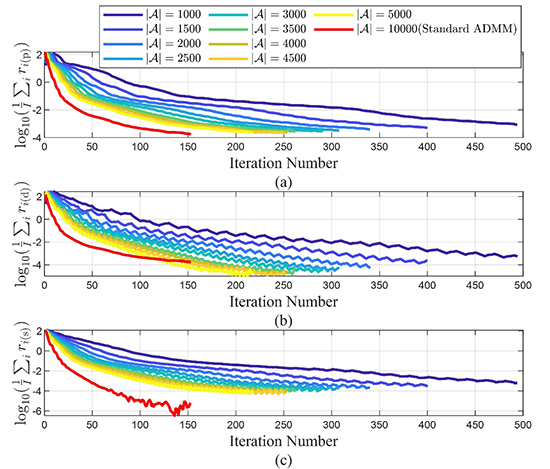
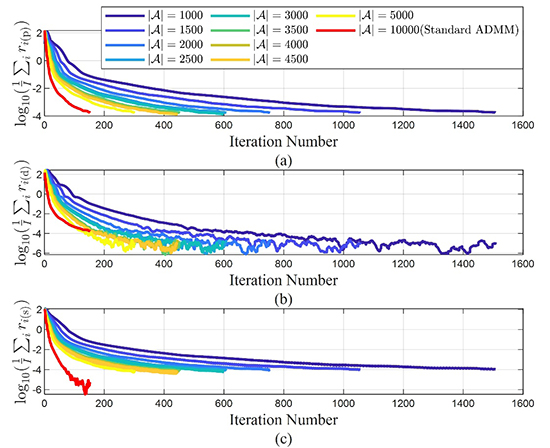
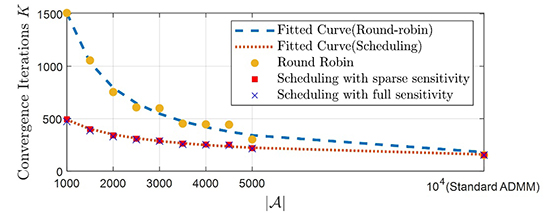
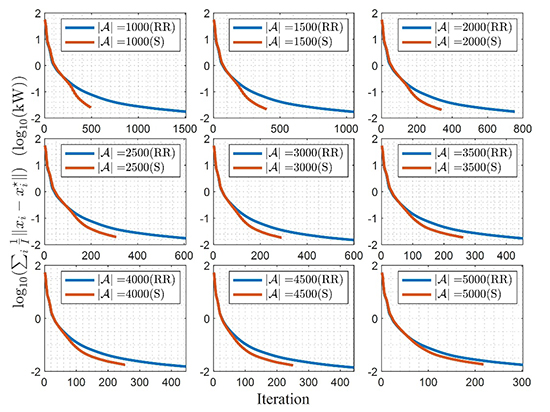
Numerical studies support the effectiveness of this approach, highlighting its potential to reduce overall convergence time significantly while maintaining fair and efficient energy sharing.
In a statement to Advances in Engineering, the authors said “the team emphasized on a novel partial-update asynchronous energy sharing algorithm effectively tackles the challenges posed by communication network congestion and massive prosumer access. They successfully proposed a unique scheduling policy, balancing efficiency and fairness in prosumer participation, enhancing the overall performance of energy sharing in VPPs. It has proven capable of managing over 10,000 prosumers within a VPP framework. Impressively, it reduces negotiation time for distributed VPP energy sharing by 30%-50%, while simultaneously ensuring the optimality of the VPP energy sharing plan. This novel approach offers a scalable, efficient, and practical solution to the evolving challenges in VPPs. Therefore, it is essential for this work to receive extensive attention and discussion within the academic and engineering communities”. In conclusion, the research work represents a significant step forward in addressing the challenges of large-scale energy sharing in VPPs. It introduces a practical and scalable solution to optimize communication and coordination among a growing number of prosumers, ensuring the efficient and fair distribution of energy resources.
In the future, with the development of smart cities, new digital assets will give electric end-users more edge computing and decision-making capabilities. The core technology achievements in this study will play an important role in dealing with high-frequency interaction problems of large-scale end-users under heterogeneous communication, and have great application prospects.





Reference
Cheng Feng, Kedi Zheng, Yangze Zhou, Peter Palensky, and Qixin Chen. Update Scheduling for ADMM-Based Energy Sharing in Virtual Power Plants Considering Massive Prosumer Access. IEEE TRANSACTIONS ON SMART GRID, VOL. 14, NO. 5, 2023 3961