Advances in Engineering Advances in Engineering features breaking research judged by Advances in Engineering advisory team to be of key importance in the Engineering field. Papers are selected from over 10,000 published each week from most peer reviewed journals.

Significance
Nuclear magnetic resonance is powerful because nuclear spins can retain quantum information for relatively long times while remaining sensitive to their local magnetic and structural environment. That same weak coupling, however, also makes nuclear spins difficult to initialize and detect with high sensitivity, especially when one wishes to move from ensemble-averaged spectroscopy toward small, well-defined spin systems. Optical access changes this balance. If a nuclear spin state can be prepared, manipulated, and read through an optical transition, NMR gains a route toward low-field sensitivity, molecular-scale addressability, and direct connection to photonic quantum architectures. The central difficulty is that optical and nuclear degrees of freedom are not naturally linked in most molecular systems in a way that permits coherent control without introducing additional decoherence channels.
A common strategy is to address nuclear spins indirectly through electron spins, using optical transitions connected to magnetic electronic states. This route has been powerful in solid-state defect systems, but it brings a physical compromise: the same electron spin that enables optical access can also add magnetic noise, restrict useful spin density, and limit the nuclear coherence that makes the spin attractive in the first place. Trivalent non-Kramers rare-earth ions offer a different route. In Eu3+, the absence of a net electronic spin allows the nuclear spin to be accessed through ultranarrow optical transitions without relying on a coupled electron spin. That distinction is central to the present paper.
In a recently published research paper in Nature Materials Dr. Evgenij Vasilenko, Vishnu Unni Chorakkunnath, Dr. Jeremias Resch, Nicholas Jobbitt, Dr. Diana Serrano, Dr. Philippe Goldner, Dr. Senthil Kumar Kuppusamy, and led by Professor Mario Ruben & Professor David Hunger from the Karlsruhe Institute of Technology in Germany developed an optically detected nuclear magnetic resonance approach for coherently controlled 151Eu3+ nuclear spins in a stoichiometric europium molecular crystal. They combined spectral-pit-based optical spin initialization, RF control of two nuclear quadrupole transitions, and optical read-out of spin population changes through ultranarrow 7F0 to 5D0 transitions. The technically distinct advance is the demonstration of Rabi oscillations, Hahn-echo coherence, and CPMG dynamical decoupling in a molecular rare-earth complex with direct optical nuclear spin access. They also established a measurable correlation between optical transition frequency and nuclear spin resonance properties, linking local molecular crystal-field variation to both optical and RF response.
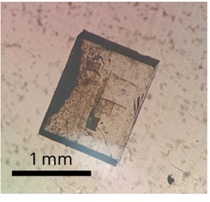
The researchers began with millimetre-sized single crystals of the europium complex grown by slow solvent evaporation, then incorporated an individual crystal into a fibre-based ferrule arrangement operated in liquid helium at 4.2 K. This experimental choice mattered because the optical transition itself served as the entry point to the nuclear spin system. The crystal quality therefore had immediate consequences for how selectively the Eu3+ ions could be addressed. Optical characterization of the 7F0 to 5D0 transition gave an inhomogeneous linewidth of 1.94 GHz, substantially narrower than previously reported for a microcrystalline powder of the same molecular material. Spectral hole burning yielded a homogeneous linewidth of 310 kHz, corresponding to an optical dephasing time just above one microsecond, while optical free-induction decay and photon echo measurements provided a more direct view of instantaneous optical coherence and optical coherence time. They also established that high-quality molecular crystals could provide a sufficiently narrow optical interface for nuclear spin experiments. The optical line was then used to prepare a spin-polarized sub-ensemble by burning a spectral pit through optical pumping. Rather than performing full hyperfine class preparation, the team used a 10 MHz-wide chirped optical burn that depleted one hyperfine ground-state population for a selected class of ions. The consequence of this design choice was a practical one with direct spectroscopic value: the spin preparation was fast enough and produced enough contrast to support repeated optically detected NMR measurements.
The authors obtained nuclear spin lifetime by monitoring recovery of the spectral pit. The decay required two time constants, a shorter component of 4.4 s and a longer component of 120 s. The long persistence of the optically prepared population made it possible to interrogate the quadrupole transitions of 151Eu3+ with radio-frequency pulses and detect the resulting population redistribution optically. Two ground-state nuclear quadrupole resonances were resolved at 21.475 MHz and 33.944 MHz, assigned to the |±1/2〉 to |±3/2〉 and |±3/2〉 to |±5/2〉 transitions, respectively. Their linewidths were not equivalent. The 34 MHz transition showed an 88 kHz inhomogeneous linewidth, while the 21.5 MHz transition was broader but gave stronger signal contrast under the same pulse conditions. They probed the 21.5 MHz transition at different positions across the optical inhomogeneous line, the researchers found that the spin transition frequency shifts with optical probing frequency, with an approximate gradient of −4 kHz GHz−1. The spin linewidth also increased toward the wings of the optical distribution. This correlation tied the nuclear quadrupole environment to the optical transition energy and showed that strain or local ligand-field variation affects both degrees of freedom in a linked, material-specific manner. In a molecular system where the crystal field symmetry differs from common inorganic hosts, this observation is especially informative because it connects the optical read-out channel to the local quadrupolar parameters that set the nuclear resonance.
The team tested coherent manipulation on the 21.5 MHz transition. Radio-frequency driving produced nuclear Rabi oscillations with a Rabi frequency of 14 kHz at 92 W, and the expected square-root dependence of Rabi frequency on RF power was observed. The damping of the oscillations reflected the inhomogeneous distribution of transition frequencies, which is precisely the kind of dephasing that pulsed NMR methods are designed to refocus. A Hahn-echo sequence extended the measurement from driven population oscillations to coherent spin evolution, giving a nuclear spin coherence time of 0.61 ms. Carr–Purcell–Meiboom–Gill dynamical decoupling then increased the observed coherence to 2.0 ms with eight refocusing pulses. The authors afterwards measured exponent, 0.53, differed from the value expected for a simple correlated noise bath of a single spin species. The authors attributed the more complex decoherence environment to a combination of nearby proton spins, randomly distributed 13C spins, possible residual paramagnetic impurities from the europium salt precursor, and quasi-localized low-frequency vibrational modes. The result is a coherent molecular nuclear spin system whose dephasing is not dominated by a single idealized noise source, but by the chemically and structurally specific environment of the molecular crystal.
The importance of the research work of Karlsruhe Institute of Technology scientists is its direct experimental connection between optical spectroscopy and coherent nuclear spin control in a molecular rare-earth complex. Previous molecular europium systems had already shown properties needed for optical nuclear spin access, but the present work completes a more demanding sequence: optical initialization, optically detected nuclear magnetic resonance, coherent RF-driven spin manipulation, spin echo refocusing, and dynamical decoupling. That combination establishes molecular Eu3+ nuclear spins as experimentally controllable quantum objects rather than only long-lived spectroscopic states. The findings also sharpen how molecular design should be viewed in this area. The ligand field is not a passive host environment surrounding an otherwise standard rare-earth ion. It determines the quadrupolar structure, influences the correlation between optical and RF transition frequencies, and contributes to the strain-sensitive inhomogeneous broadening observed across the optical line. Because the molecular complex has a defined coordination environment, these correlations can be treated as part of the material’s controllable physics. The paper therefore supports a design logic in which optical linewidth, nuclear quadrupole structure, spin lifetime, and spin-bath composition are considered together.
The coherence times reported here are measured in an ensemble molecular crystal at liquid-helium temperature, and the authors keep their future expectations tied to specific physical routes: stronger dynamical decoupling, lower temperature operation, magnetic-field polarization of paramagnetic impurities, suppression of low-frequency vibrational modes, isotopic or chemical purification, and ligand deuteration. These are not abstract claims of improvement; they follow from the dephasing sources identified in the measurements. The work also suggests that optically detected NMR in such complexes may become a sensitive probe of material properties, since optical and spin inhomogeneities carry linked information about strain and local crystal-field variation. For molecular quantum technologies, the result is technically meaningful because it brings together atomically defined molecular architecture with direct optical access to coherent nuclear spins. The demonstrated millisecond-scale nuclear coherence, optical spin preparation, and RF control form a platform on which more elaborate molecular spin registers could be explored, especially if future experiments move toward single-molecule read-out or nanophotonic integration.


Reference
Vasilenko, E., Unni Chorakkunnath, V., Resch, J. et al. Optically detected nuclear magnetic resonance of coherent spins in a molecular complex. Nat. Mater. (2026). https://doi.org/10.1038/s41563-026-02539-0
Go to Journal of Nature Materials