 Advances in Engineering Advances in Engineering features breaking research judged by Advances in Engineering advisory team to be of key importance in the Engineering field. Papers are selected from over 10,000 published each week from most peer reviewed journals.

Significance
Magnesium hydride (MgH₂) is of high interest for hydrogen storage because of its high hydrogen content and relatively low weight. It also has useful optical and electrical properties, making it a candidate for switchable windows, mirrors, and protective layers in photovoltaic devices. However, producing MgH₂ in the form of thin films or nanoscale structures remains challenging, especially when the material must have a controlled composition and morphology.
Several methods have been used to prepare MgH₂, including ball milling, reactive evaporation, sputtering, and hydrogenation of metallic magnesium. Ball milling produces fine particles that can improve hydrogen absorption and release, but repeated hydrogen cycling can cause the particles to grow and lose some of their advantages. Thin-film deposition methods have other limitations. Reactive evaporation and sputtering often produce mixtures of magnesium hydride and metallic magnesium, and their directional nature makes them less suitable for coating substrates with complex shapes.
Chemical vapor deposition (CVD) provides another way to grow thin films. In this process, a volatile chemical precursor reaches a heated substrate and undergoes reactions that produce the desired solid material. CVD can produce coatings over large areas and, under suitable conditions, deposit material on complex surfaces. Despite these advantages, a CVD process for producing MgH₂ thin films had not previously been reported.
One of the main difficulties is finding a suitable magnesium-containing precursor. It must be sufficiently volatile to reach the substrate, decompose at a practical temperature, and supply hydrogen to form MgH₂ without leaving substantial impurities. The precursor chemistry is especially important because unwanted decomposition reactions can produce metallic magnesium instead of the hydride.
In a recent research paper published in Materials Today Communications, Laurent Souqui from Uppsala University, working with Christopher Caroff, R. Joseph Lastowski, Samyukta Shrivastav, Gregory Girolami, Jessica Krogstad, and John Abelson from the University of Illinois at Urbana-Champaign, developed a chemical vapor deposition process for producing magnesium hydride thin films and nanowires. Their approach uses a newly synthesized magnesium diamidodiboranate precursor, Mg(NMe₂BH₂NMe₂BH₃)₂, abbreviated Mg(NBNB)₂, which contains both magnesium and hydrogen within the same molecule. The researchers investigated how this precursor decomposes during deposition and how the growth conditions influence the composition, crystal structure, and morphology of the resulting material.
Experiments and Findings
The researchers deposited MgH₂ onto heated substrates using the Mg(NBNB)₂ precursor at temperatures between 140 and 300 °C. The precursor was heated separately to produce sufficient vapor for deposition, without requiring an additional carrier gas. Several oxide-coated substrates were investigated, with hafnium oxide (HfO₂) serving as the main substrate coating because it remained stable during deposition and prevented unwanted reactions with the underlying silicon.
An important question the team asked was whether the precursor could produce magnesium hydride without forming metallic magnesium or leaving substantial amounts of boron and nitrogen from its ligands. X-ray diffraction identified α-MgH₂ as the only crystalline phase across the investigated deposition conditions. Raman spectroscopy independently confirmed the presence of MgH₂ through its characteristic vibrational bands. The deposits were nanocrystalline, with crystal sizes that could be influenced by the precursor supply.
Chemical composition measurements provided further evidence of clean precursor decomposition. X-ray photoelectron spectroscopy detected little or no boron and nitrogen in most deposits, although small amounts were present on certain oxide surfaces. Rutherford backscattering measurements also supported the formation of MgH₂ rather than metallic magnesium. These observations suggest that most of the ligand components were removed during deposition through the formation of volatile reaction products.
The surface structure depended strongly on temperature and deposition time. Between 140 and 200 °C, relatively short deposition periods produced continuous, granular films composed of small MgH₂ grains. They found that increasing the precursor pressure increased the deposition rate approximately linearly, making it possible to adjust the rate of film growth without substantially changing the surface morphology under these conditions.
Longer deposition times produced a different structure. Pillars began to extend above the continuous MgH₂ film, becoming narrower toward their tips. This behavior is consistent with a growth instability in which certain regions of the surface develop more rapidly than others. The change from a relatively uniform film to protruding pillars showed that deposition time influenced the final morphology, even when the substrate temperature remained unchanged.
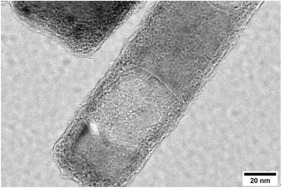
Increasing the deposition temperature produced further changes in the growth pattern. Instead of forming continuous granular films, the material initially developed into interconnected islands that became more separated and elongated at higher temperatures. With continued deposition, these structures developed into faceted films containing protruding nanowires. Some of the nanowires reached approximately 3.5 µm in length and 50 nm in width. Electron microscopy suggested that the wires had rectangular cross sections and that their broadened bases developed through lateral growth. Their small dimensions are of interest for hydrogen storage because reducing the size of MgH₂ structures can improve hydrogen absorption and release kinetics.
The research conducted crystal orientation measurements which provided additional information about the different growth structures. The pillars formed at lower temperatures showed a preferred orientation associated with the (101) planes, whereas the faceted films produced at higher temperatures showed a stronger (110) orientation. These differences suggest that the preferred directions of crystal growth change with the deposition conditions. The authors proposed that the polar character of the [101] direction may help explain the formation of elongated MgH₂ structures.
The optical properties of the continuous films were also investigated. Measurements showed relatively low absorption in the visible region, with stronger absorption at higher photon energies. The refractive index was slightly lower than reported values for bulk MgH₂, which the authors suggested could be related to differences in film density or the presence of small amounts of oxygen. Additional absorption features may be associated with hydrogen vacancies, although their origin was not established experimentally.
Engineering Significance
The significance of the research work of Laurent Souqui et al is in the demonstration that magnesium hydride can be deposited directly from a single molecular precursor using chemical vapor deposition. Earlier thin-film methods commonly relied on reactions involving metallic magnesium and an external hydrogen source, sometimes leaving unwanted magnesium in the deposited material. Here, the precursor supplies the necessary hydrogen during decomposition, producing crystalline MgH₂ with very low concentrations of residual ligand elements.
The proposed chemical reaction involves hydrogen transfer from the precursor’s BH₂ or BH₃ groups to the magnesium center. This provides a plausible explanation for the formation of MgH₂ and the removal of the remaining ligand components as volatile products. The researchers could not determine which boron-hydrogen group supplied the hydrogen, so the precise decomposition pathway remains unresolved.
An important aspect of the deposition process is the ability to obtain different MgH₂ structures by adjusting temperature and growth duration. Short deposition periods at relatively low temperatures favor continuous granular films, whereas longer times or higher temperatures produce pillars, faceted surfaces, and nanowires. These differences provide useful information about how MgH₂ nucleates and grows under vapor deposition conditions.
The ability to produce continuous films and nanoscale structures from the same precursor is relevant to different potential applications. Thin MgH₂ films may be useful for optical coatings, and nanowires provide dimensions associated with improved hydrogen transport kinetics. The reported experiments establish control over material formation and structure, rather than demonstrating the performance of a finished hydrogen storage or optical device.


Reference
Laurent Souqui, Christopher M. Caroff, R. Joseph Lastowski, Samyukta Shrivastav, Gregory S. Girolami, Jessica A. Krogstad, John R. Abelson, MgH2 thin films and nanowires deposited by CVD from a magnesium diamidodiboranate precursor, Materials Today Communications, Volume 50, 2026, 114615,