 Advances in Engineering Advances in Engineering features breaking research judged by Advances in Engineering advisory team to be of key importance in the Engineering field. Papers are selected from over 10,000 published each week from most peer reviewed journals.

Release date November 27, 2026
Significance
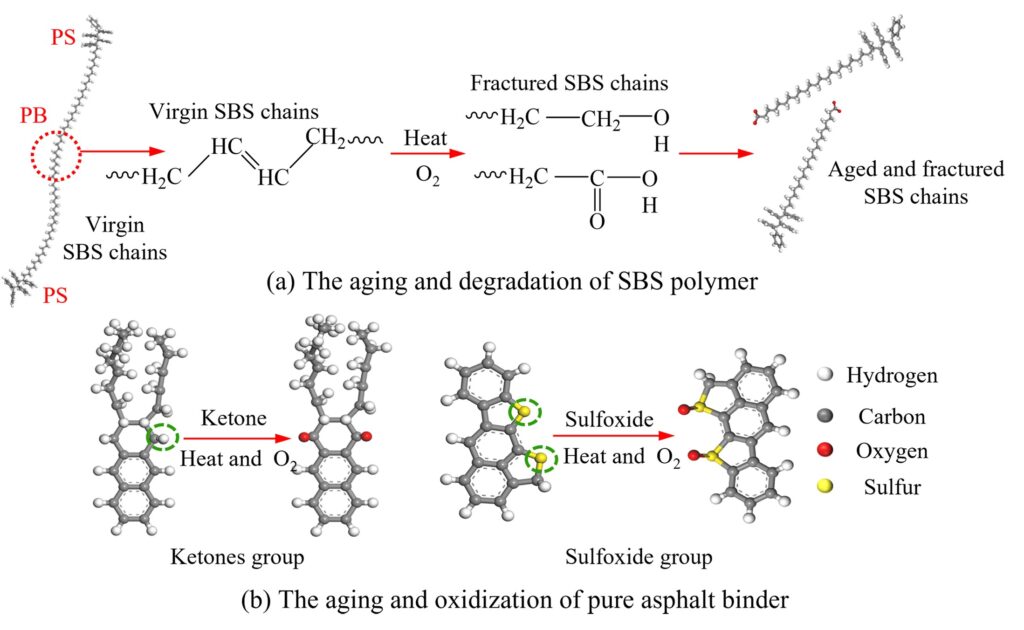
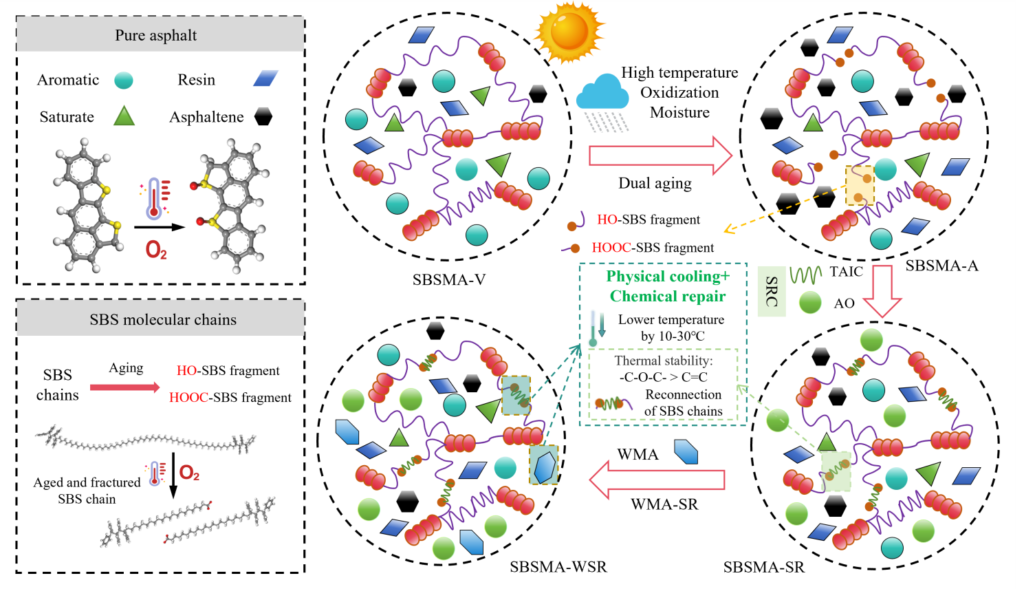
Styrene-butadiene-styrene (SBS) polymer-modified asphalt is used in road pavements because it improves elasticity and resistance to permanent deformation and cracking. Over time, exposure to heat and oxygen alters both the asphalt binder and the SBS polymer. Oxidation increases the proportion of heavier asphalt components, making the material harder and more brittle. It also causes the breakdown of carbon-carbon double bonds in the polybutadiene segments, fracturing polymer chains and weakening the network responsible for much of the binder’s elasticity.
Recycling aged SBS-modified asphalt presents several challenges. Conventional rejuvenating oils can soften the hardened binder by replenishing lighter components, but they cannot reconnect broken polymer chains. Chemical rejuvenating agents can repair this damage by forming new covalent bonds, restoring both the asphalt matrix and the SBS network when used alongside rejuvenating oils. However, the repaired material remains vulnerable to further degradation during recycling. Conventional hot-mix processing requires temperatures of around 175–195°C, which can accelerate the evaporation of lighter components and damage the reconstructed polymer structure. As a result, some of the recovered properties may be lost during mixing and paving. Warm-mix technology addresses this problem by reducing binder viscosity, making it possible to process the material at lower temperatures and limit further degradation.
In a recent research paper published in Polymer, Ziyang Liu, Peixin Xu, and Associate Professor Derun Zhang from Huazhong University of Science and Technology, together with Dr. Yuan Zhang from South China University of Technology and Lijing Wang from Hubei Changjiang Road & Bridge Co., Ltd., investigated whether combining chemical rejuvenation with lower-temperature processing could better preserve the mechanical properties of recycled SBS-modified asphalt.
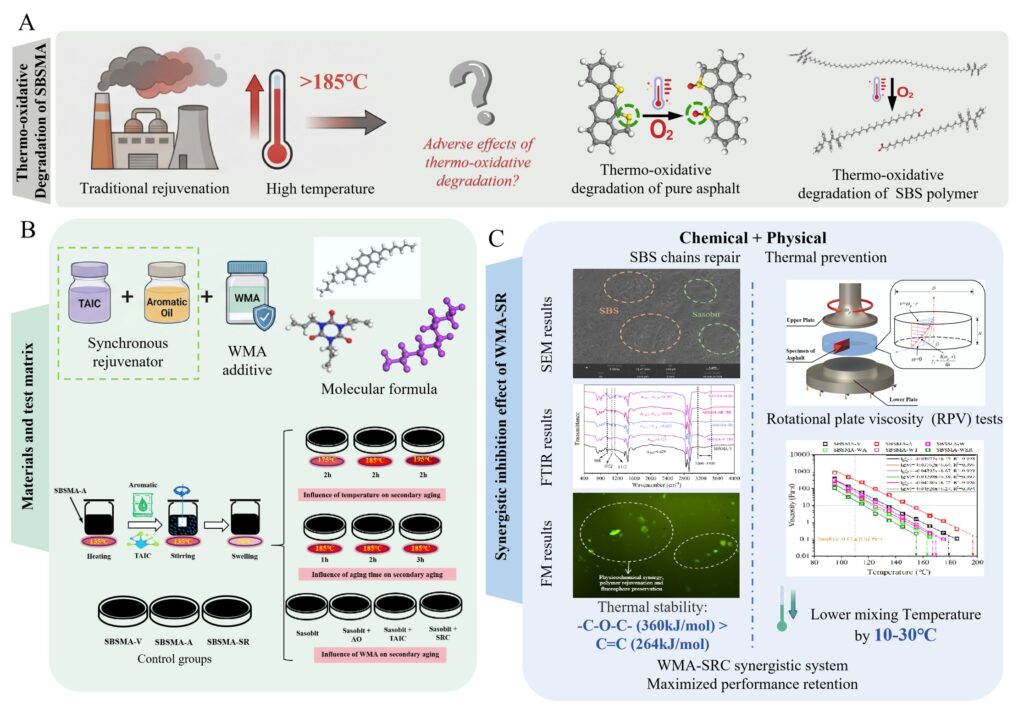
To evaluate the treatment, the researchers artificially aged virgin SBS-modified asphalt to simulate long-term service conditions. They then treated the aged binder with a rejuvenator containing aromatic oil and triallyl isocyanurate (TAIC). The aromatic oil replenished lighter asphalt components, and TAIC reconnected fractured polymer chains through covalent bonding. An organic wax-based additive was added to lower the mixing temperature.
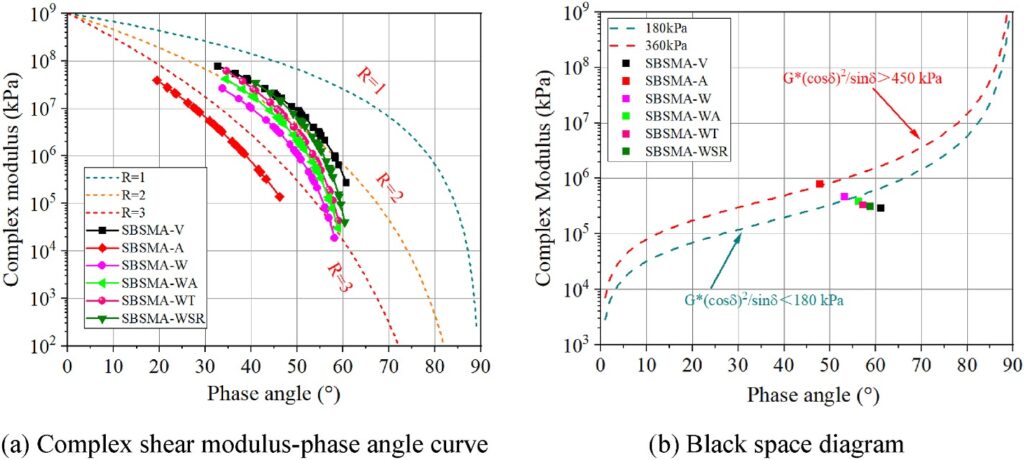
The rejuvenated binder was exposed to different temperatures and aging durations to examine how further thermal exposure affected its performance. The researchers performed mechanical testing and showed that temperature had a greater influence on degradation than exposure time. They found higher temperatures made the binder stiffer and more resistant to permanent deformation, but also reduced its elasticity and increased its susceptibility to cracking, whereas low-temperature testing showed a similar loss of flexibility, which indicate that greater stiffness did not necessarily mean better overall performance.
To reduce this deterioration, the researchers introduced Sasobit, an organic wax-based additive, into different rejuvenation formulations. Viscosity measurements showed that combining Sasobit with the synchronous rejuvenator reduced the mixing temperature by approximately 24 °C relative to that of the virgin SBS-modified asphalt, helping to limit the thermal exposure responsible for further degradation.
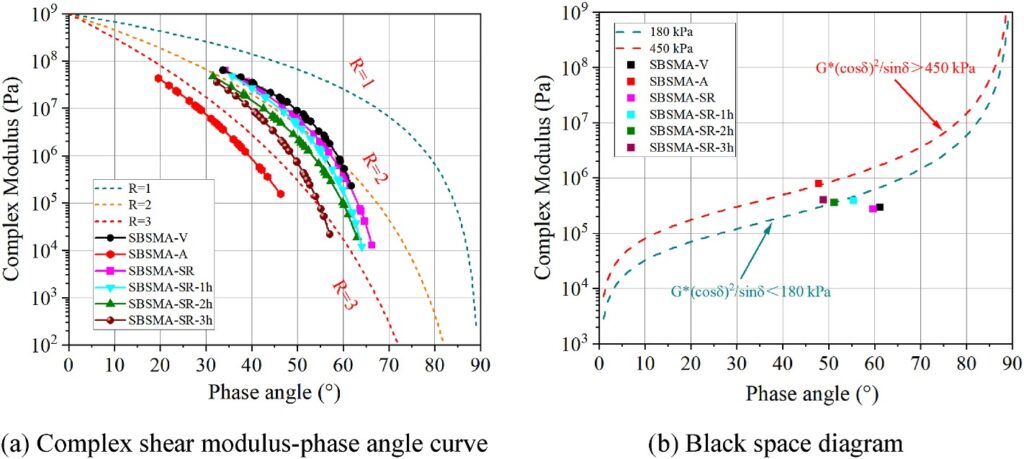
The team compared formulations containing Sasobit alone, Sasobit combined separately with aromatic oil or TAIC, and a mixture containing all three components. The complete treatment retained the best balance of mechanical properties after thermal aging, with lower susceptibility to intermediate-temperature cracking and better low-temperature elastic recovery. Its higher delayed elastic recovery and lower irrecoverable deformation also indicated better preservation of the repaired SBS network.
To measure these differences, the authors introduced a performance variation ratio that compares the mechanical properties of treated asphalt with those of the virgin material. The complete formulation maintained the evaluated properties within 20% of the virgin binder values, showing substantially less deterioration than the other treatments.
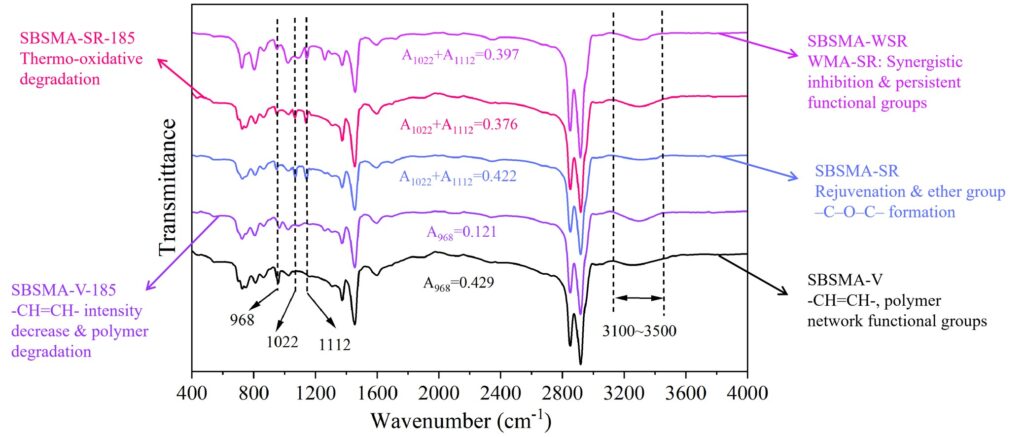
They also conducted Fourier transform infrared spectroscopy to understand why the combined treatment performed better showed that thermal aging reduced the characteristic signal associated with carbon-carbon double bonds in SBS. After treatment with TAIC, new signals appeared that were attributed to ether linkages formed during polymer reconstruction. These linkages were associated with greater resistance to thermo-oxidative degradation. Following thermal exposure, the double-bond signal in virgin SBS-modified asphalt decreased by around 72%, compared with an 11% reduction in the combined ether-bond signals of the chemically rejuvenated binder. With the addition of Sasobit, it improved the retention of these chemical features, which means that lower processing temperatures can protect the repaired polymer structure.
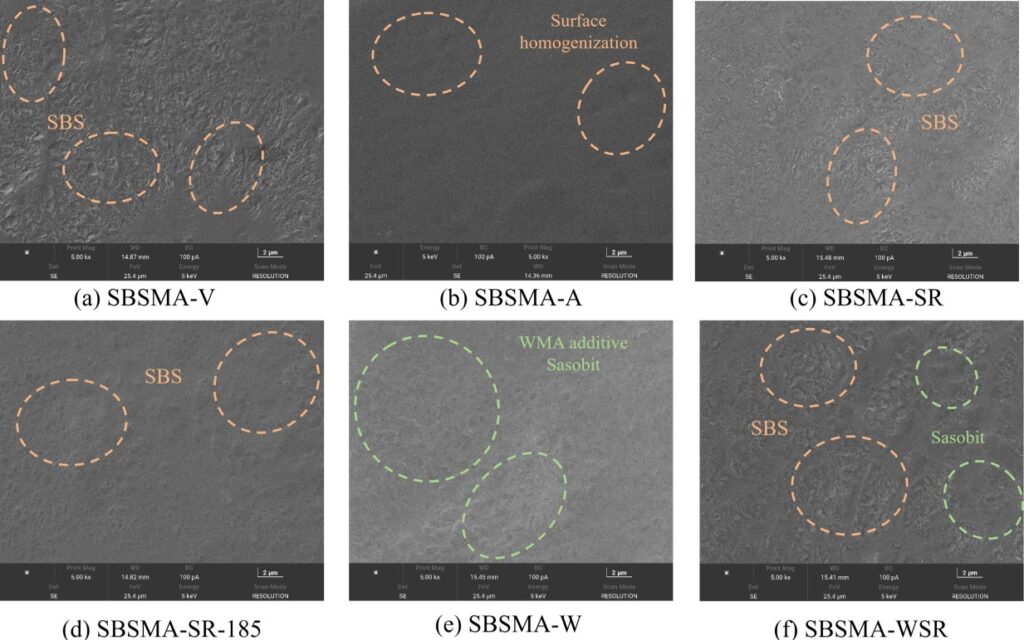
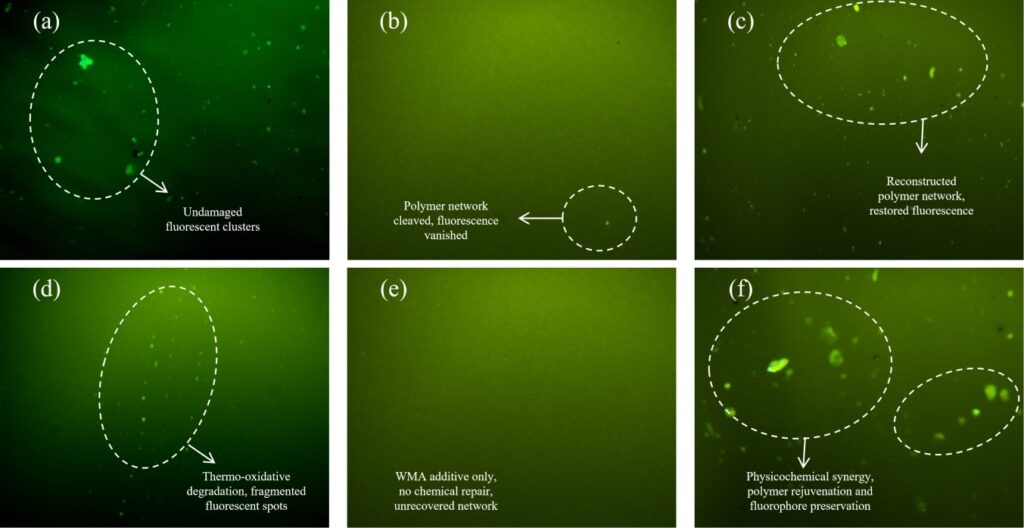
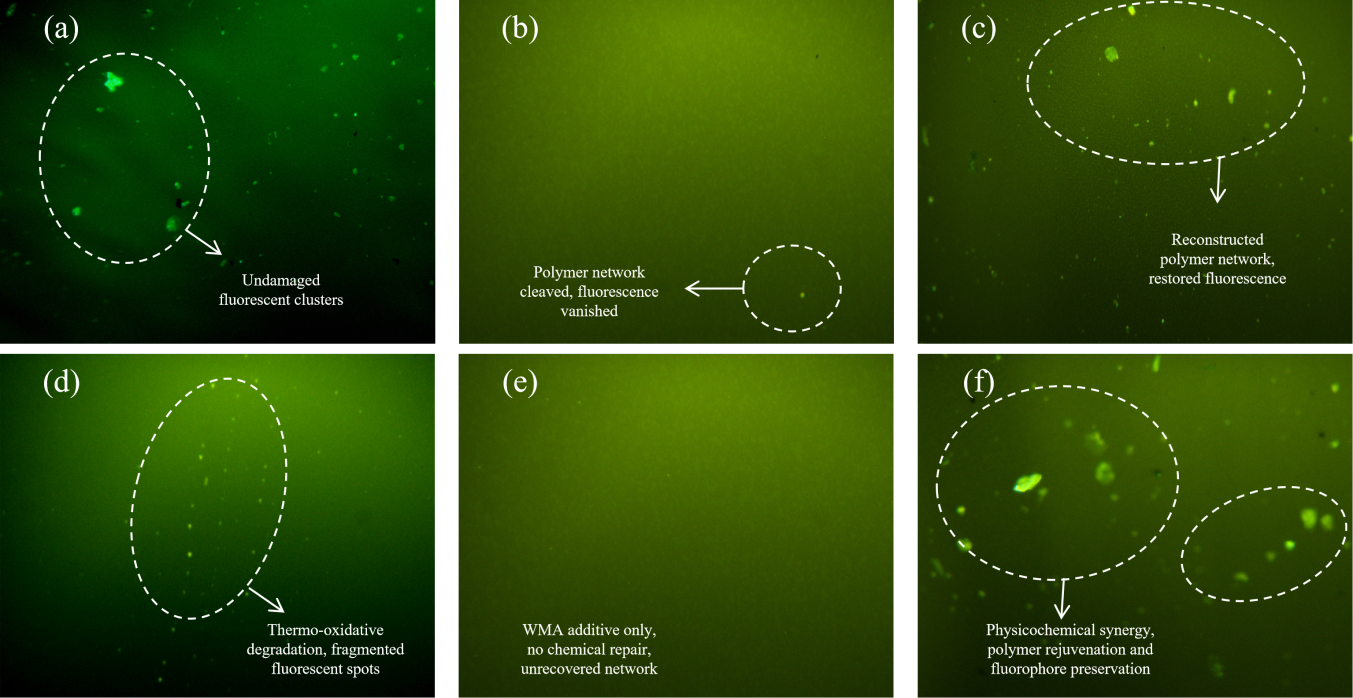
Microscopic observations provided further evidence of this protection. Scanning electron microscopy showed that severe aging disrupted the interconnected polymer network, and chemical rejuvenation restored a more continuous structure. Renewed exposure to high temperatures caused further fragmentation. Fluorescence microscopy showed similar changes in the distribution of the polymer phase. The aged binder displayed little remaining fluorescence, but distinct polymer regions reappeared after rejuvenation. These regions became fragmented after conventional high-temperature processing, whereas the combined warm-mix treatment retained a more connected structure with well-defined polymer clusters.
The new study by Derun Zhang and colleagues demonstrated that repairing aged SBS-modified asphalt is only part of the challenge. The repaired polymer network must also withstand the high temperatures used during recycling. Chemical rejuvenation restores the damaged structure, and lower-temperature processing reduces its exposure to further degradation, preserving the binder’s elasticity and resistance to cracking.
The chemical analysis also showed why the type of bonds formed during polymer repair matters. The ether-containing linkages introduced through TAIC treatment were more resistant to thermal degradation than the original carbon-carbon double bonds, which are more susceptible to oxidation. This greater stability was associated with better elastic recovery and resistance to cracking after thermal aging. The research shows the value of combining chemical rejuvenation with lower-temperature processing when recycling aged SBS-modified asphalt. Repairing the damaged polymer network and limiting its exposure to high temperatures can preserve the binder’s mechanical properties, offering a promising approach toward more sustainable asphalt recycling.

Reference
Ziyang Liu, Peixin Xu, Yuan Zhang, Lijing Wang, Derun Zhang, Sustainable upcycling of fractured SBS polymer networks in rejuvenated SBS-modified asphalt: Synergistic physicochemical inhibition of thermo-oxidative degradation, Polymer, Volume 362, 2026, 130530,