Advances in Engineering Advances in Engineering features breaking research judged by Advances in Engineering advisory team to be of key importance in the Engineering field. Papers are selected from over 10,000 published each week from most peer reviewed journals.

Significance
Semiconductor quantum dots have become central to the development of quantum photonic technologies because they can act as reliable sources of single photons and entangled photon pairs. Their solid-state nature makes them attractive for integration with optical platforms, while their discrete energy levels allow deterministic control over emission processes. Applications ranging from quantum computing to secure communication rely on their ability to generate high-quality photonic states with controlled coherence and indistinguishability. However, the dominant mechanism used so far is based on bright excitons, electron–hole pairs of opposite spin that recombine radiatively to release photons. While effective for photon generation, bright excitons suffer from relatively short lifetimes, limiting their utility for long-lived quantum memory or coherent information transfer. In contrast, quantum dots also host dark excitons, exciton states where the electron and hole have parallel spins. These states are optically forbidden in direct transitions, which greatly suppresses their emission rate. The result is lifetimes that can be orders of magnitude longer than those of bright excitons. Such extended storage makes dark excitons theoretically ideal for holding quantum coherence over time and potentially enabling protocols such as time-bin entanglement or even entangled cluster-state generation. Despite this promise, direct optical control of dark excitons has been extremely challenging. Their optical inactivity prevents standard excitation or manipulation methods from addressing them directly. Earlier approaches attempted to use higher excited states and exploit relaxation processes, but these strategies did not achieve coherent preparation and retrieval of dark excitons in the simplest excitation manifold. As a consequence, the dark exciton’s potential has remained largely untapped, more a subject of theoretical proposals than experimental demonstrations. The difficulty lies in finding a means of coupling the dark exciton to optically accessible states without destroying its advantageous long lifetime. Magnetic fields can induce mixing between bright and dark states, offering a possible pathway. Additionally, sophisticated optical pulse shaping can be used to drive transitions in ways that circumvent the direct selection rules. Combining these strategies opens a possibility for coherent all-optical access to the dark exciton.
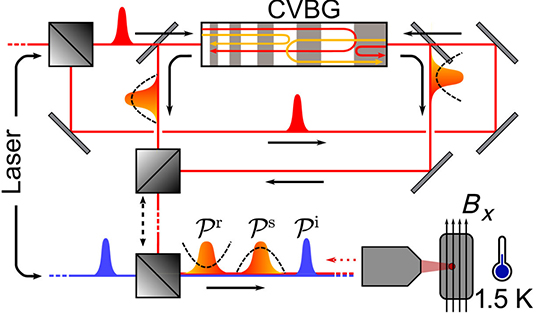
To this account, new research paper published in Science Advances and conducted by graduate student Florian Kappe, Dr. René Schwarz, Professor Yusuf Karli, Thomas Bracht, Professor Vollrath Axt, Professor Saimon Covre da Silva, Professor Armando Rastelli, Professor Vikas Remesh, Dr. Doris Reiter, and led by Professor Gregor Weihs from the University of Innsbruck in Austria, the researchers developed two complementary models: an experimental protocol using chirped optical pulses and magnetic fields to prepare, store, and retrieve dark excitons in GaAs/AlGaAs quantum dots, and a theoretical framework based on tensor-network simulations that reproduced the dynamics with numerical exactness. Together, these approaches demonstrated coherent and reversible all-optical manipulation of optically forbidden exciton states. The novelty lies in transforming dark excitons into usable, long-lived quantum resources without relying on non-coherent relaxation processes. This work establishes a scalable pathway toward integrating quantum memory and photon generation within a single solid-state platform. The experiments were conducted on GaAs/AlGaAs quantum dots embedded in a cavity structure and cooled to cryogenic temperatures of about 1.5 K. A vector magnet provided in-plane magnetic fields up to 4 T to induce coupling between bright and dark exciton states. The optical control sequence consisted of three key pulses: an initialization pulse, a storage pulse, and a retrieval pulse. Each was spectrally tuned using 4f pulse shapers, and the storage and retrieval pulses were chirped with ±45 ps² using chirped volume Bragg gratings. This setup allowed precise control of state populations while monitoring emission via time-resolved single-photon detection. The initialization pulse excited the system into the biexciton state via two-photon excitation. From there, the storage pulse—negatively chirped and horizontally polarized—adiabatically transferred population into the dark exciton state. Polarization-resolved magneto-photoluminescence confirmed the identification of bright and dark states, with decay rate measurements showing lifetimes for the dark exciton an order of magnitude longer than those of bright states. A distinct dim emission line corroborated dark exciton occupation, consistent with theoretical expectations. During the storage step, emission dynamics revealed a clear transition from bright exciton cascades to slower decay dominated by the dark exciton, signaling successful preparation.
To retrieve the stored population, a positively chirped pulse was applied after a controlled delay, transferring the dark exciton back into the biexciton state. The subsequent cascaded emission provided a readout of retrieval success. Time-resolved data showed that after storage, emission persisted at dark exciton energies, while retrieval triggered renewed cascaded photon emission, confirming reversible population transfer. Importantly, autocorrelation measurements demonstrated vanishing g(2)(0), proving that the retrieved photons retained single-photon character, a requirement for quantum information use. The authors also performed detailed theoretical modeling was performed using tensor-network methods to incorporate phonon coupling and Lindblad dynamics. Simulations reproduced the observed temporal features, including the transient occupation of bright excitons during chirped pulse action and the long-lived dark exciton decay. Dressed-state analyses clarified how chirped pulses adiabatically guided populations between biexciton and dark exciton states via intermediate dressed manifolds, confirming the robustness of the mechanism against decoherence. Parameter sweeps revealed the importance of timing between initialization and storage pulses, polarization alignment, and detuning, with optimal dark exciton preparation achieved at specific delays and slight detuning from the biexciton–bright exciton resonance.
In conclusion, the demonstration of coherent preparation and retrieval of dark excitons represents a substantial advance in the quantum photonics field. For years, dark excitons were recognized for their long lifetimes but were regarded as largely inaccessible for practical optical protocols. By establishing a scheme that circumvents this barrier, the authors effectively convert the dark exciton into a usable quantum memory element within semiconductor quantum dots. This capability directly addresses the need for temporally extended storage of quantum information, which is vital for synchronization in quantum communication systems and for generating time-bin entangled states. Moreover, the experimental results confirm that all-optical protocols can achieve this control without requiring relaxation pathways or auxiliary higher-lying states, simplifying the approach and enhancing coherence preservation. The use of chirped pulses is particularly impactful because it creates robustness against spectral detuning and phonon interactions, issues that frequently complicate solid-state implementations. Moreover, the method relies only on moderate magnetic fields and standard optical components, suggesting that integration into scalable photonic architectures is feasible. The scheme therefore aligns well with the broader push toward practical, device-compatible quantum dot platforms. We think the implications extend beyond communication. Dark excitons could serve as building blocks for entangled cluster-state generation, a resource central to measurement-based quantum computation. Their extended coherence times allow more complex manipulations before decay becomes limiting. The ability to store and retrieve photons on demand also strengthens quantum repeater concepts, where temporary storage of quantum states is needed to bridge long distances. Beyond networking, the protocol enriches the state manifold of quantum dots, adding functionality that bright excitons alone cannot provide. This expansion of accessible states creates flexibility in designing new photonic protocols, for example, schemes where both bright and dark excitons are used in tandem to engineer novel entanglement structures. In summary, this work opens a new frontier where quantum dots are not only bright sources of photons but also controllable memories, paving the way for versatile architectures in quantum communication and computation

Reference
Kappe F, Schwarz R, Karli Y, Bracht T, Axt VM, Covre da Silva SF, Rastelli A, Remesh V, Reiter DE, Weihs G. Keeping the photon in the dark: Enabling quantum dot dark state control by chirped pulses and magnetic fields. Sci Adv. 2025 ;11(28):eadu4261. doi: 10.1126/sciadv.adu4261.