Advances in Engineering Advances in Engineering features breaking research judged by Advances in Engineering advisory team to be of key importance in the Engineering field. Papers are selected from over 10,000 published each week from most peer reviewed journals.

Significance
Generally, bar shape determines the strength of the bond that will form between the reinforcing bar and concrete; where deformed bars have been established to form the strongest bond. It is widely acknowledged that the bond response between deformed bar and the surrounding concrete plays a crucial role in determining the mechanical behavior of reinforced concrete. Many factors play part to ensure the bond strength between reinforcement and concrete is strong, with much emphasis on some critical regions such as beam-column joint. As such, during design and construction, provision of adequate bond strength to resist various loadings should be of a central issue for majority of reinforced concrete structures.
To date, the bond mechanism has been investigated and substantial progress reported. In fact, attempts to incorporate fiber reinforcement have inspired a myriad of studies. However, owing to the diversities of fiber types, test methods, loading paths, etc., some of the existing results have been found to be contradictory. In addition, a review of fiber enhanced concrete reveals that few studies have attempted to quantitatively reflect the fiber contributions. In fact, some of the most popular design codes in use fail to account for the contributions and the positive influence of fibers on the concrete bond.
To address this, a team of researchers from the School of Civil Engineering, Wuhan University: Dr. Le Huang, Professor Lihua Xu, Dr. Yin Chi, Dr. Fangqian Deng and Dr. Aoli Zhang proposed to study the bond strength of deformed bar embedded in steel-polypropylene hybrid fiber reinforced concrete (HFRC) matrix. Their approach involved experimental investigation on the bond strength of the embedded deformed bar with the aim being to shed light on the reinforcing mechanism of the hybrid fibers. Their work is currently published in the research journal, Construction and Building Materials.
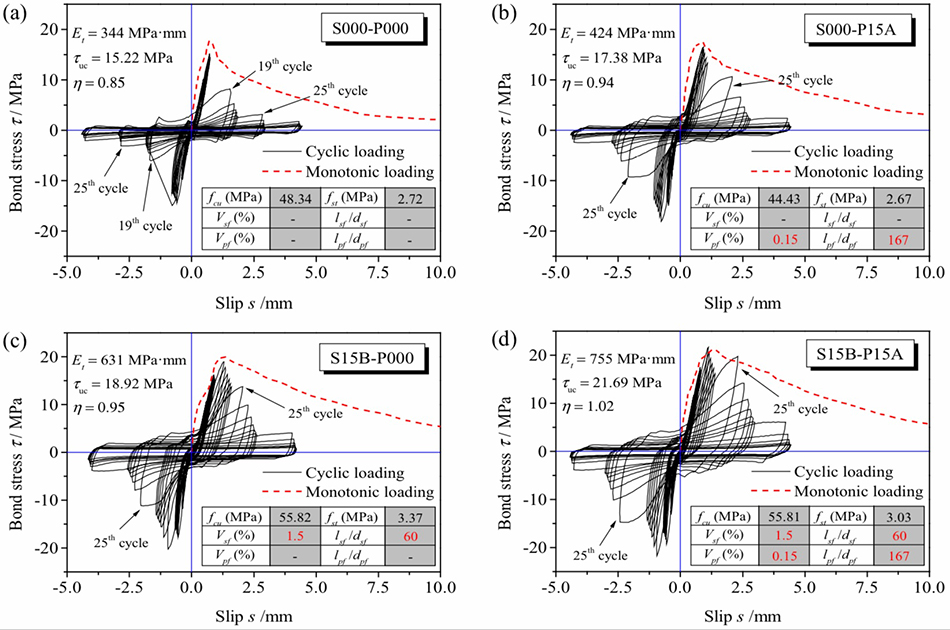
Ideally, their focus on the aforementioned test was mainly to enable the assessment of the influence of fiber characteristics, i.e. the volume fraction and aspect ratio, on the complete bond response. All the same, the benefits of hybrid fibers were evaluated through a series of monotonic/cyclic pull-out testing on 72 specimens. The influences of fiber characteristics, i.e. the volume fraction and aspect ratio, on the failure mode and the complete bond-slip responses were analyzed.
Their results showed that for a well-confined HFRC specimen, the cyclic bond response at the pre-peak stage almost approached its monotonic response with slight reduction in the ultimate bond strength. Additionally, the authors reported that when the specimens prepared were compared with plain concrete, the introduction of hybrid fibers was seen to exert obvious positive influences on the bond strength, due to the synergetic effects in inhibiting the propagation of cracks at multi-scale and multi-stages.
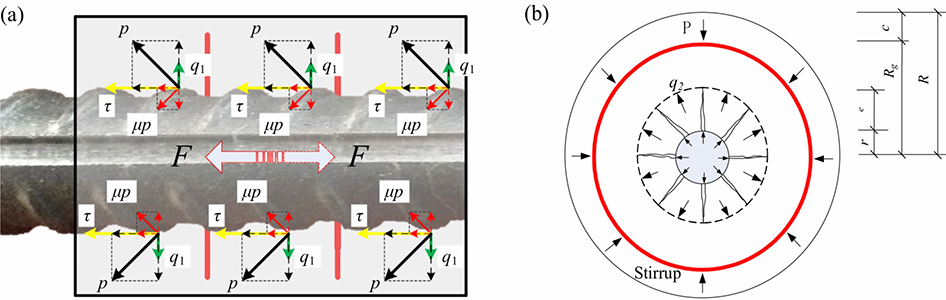
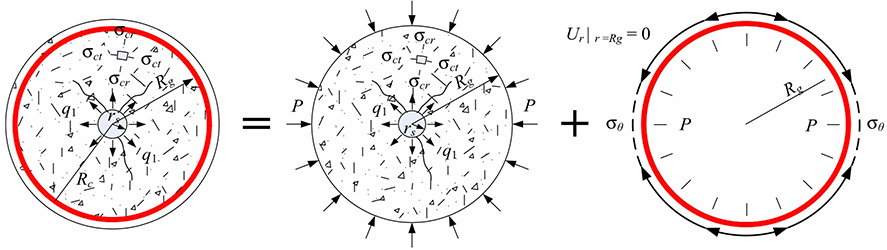
In summary, Wuhan University scientists successfully investigated the bond response of deformed bar embedded in HFRC in which the fiber contributions on the bond strength was emphatically assessed. Overall, the research team demonstrated a convergence of incumbent cognitive divergences by presenting a methodological challenge that could aid in comprehending the role of fibers in matters bonding. In an interview with Advances in Engineering, Professor Lihua Xu emphasized that the satisfactory verifications between independent test results solidly substantiated that their modified model was applicable to reflect the effects of fiber reinforcement, stirrup confinement and geometrical shape of deformed bar reasonably.



Reference
Le Huang, Lihua Xu, Yin Chi, Fangqian Deng, Aoli Zhang. Bond strength of deformed bar embedded in steel-polypropylene hybrid fiber reinforced concrete. Construction and Building Materials volume 218 (2019) page 176–192.