Advances in Engineering Advances in Engineering features breaking research judged by Advances in Engineering advisory team to be of key importance in the Engineering field. Papers are selected from over 10,000 published each week from most peer reviewed journals.

Significance
In the landscape of optical sensing, distributed fiber systems have carved out a critical role in temperature monitoring, especially where reliability and resilience are vital. Raman-based distributed temperature sensing (DTS) has long been appreciated for its robustness—immune to electromagnetic interference, inherently safe in volatile settings, and capable of tracking temperature variations over extended fiber lengths. This makes it invaluable for monitoring power grids, oil pipelines, industrial sites, and other infrastructure where environmental shifts can foreshadow serious failures. Yet, despite its practical strengths, one frustrating limitation has lingered: the spatial resolution. That limitation stems from a rather fundamental design constraint. In conventional Raman systems, resolution is intrinsically bound to the duration of the laser pulse used for sensing. The physics of optical time-domain reflectometry dictate that shorter pulses offer finer spatial resolution, but there’s a catch—narrowing the pulse inevitably reduces the energy in the pulse, which in turn weakens the already faint Raman backscatter. The result is a decline in signal-to-noise ratio (SNR), especially across the multi-kilometer distances often needed in real-world deployments. Various strategies have been tried: more sophisticated coding schemes, heavy post-processing with deconvolution algorithms, even resorting to specially engineered fibers. Each comes with trade-offs—added cost, complexity, or a steep decline in scalability.
To this account, new research paper published in Photonics Research and led by Professor Jian Li and conducted by Dr. Bowen Fan, Dr. Zijia Cheng, Professor Xiaohui Xue, and Professor Mingjiang Zhang from the Taiyuan University of Technology, researchers developed new approach which was refreshingly unconventional. Rather than inching forward within the same framework, they asked whether the dependency on pulse width could be bypassed altogether. Their thinking led them to chaotic signals—those complex, unpredictable waveforms that at first glance seem antithetical to precision measurement. But when modulated in carefully designed asymmetric paired pulses, chaos offered something powerful: a way to embed unique, non-repeating temporal features into the probing signal.
The team led by Professor Jian Li approached the experimental design where at the heart of the setup was the generation of chaotic light—not in the metaphorical sense, but real, temporally unpredictable optical signals. Starting with a stable continuous-wave laser operating at 1550 nm, they pushed the system into chaos through a feedback loop. This wasn’t trial-and-error fiddling; it involved finely adjusting polarization states and attenuation levels until the laser entered a broadband chaotic state with a signature both spectrally rich and temporally erratic. It’s that structured randomness that made the next step possible. The authors didn’t stop at generating chaos and they actually shaped it. Using a semiconductor optical amplifier, they modulated this chaotic output into a paired-pulse structure, deliberately asymmetric: one narrow, brief pulse and one much broader. This pairing wasn’t arbitrary. The short pulse helped define precise spatial features, while the wider pulse carried enough energy to support high signal strength over long distances. It was a clever balance—resolution and SNR, working together instead of at odds.
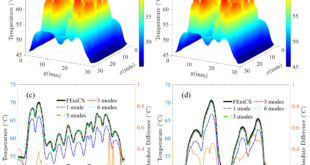
To test the system’s limits, Taiyuan University of Technology scientists ran 10 kilometers of standard multimode fiber and introduced a modest thermal anomaly—just 30 centimeters long—at the far end. That’s smaller than what most commercial systems can even register, especially across that distance. Yet through the correlation of the chaotic pulse’s unique structure with the returning Raman anti-Stokes signal, the team not only detected it—they pinpointed its location with remarkable clarity. The chaotic modulation gave each section of fiber a unique signature to match against. What stood out wasn’t just the spatial resolution of 30 cm or the SNR of 6.67 dB—both significant achievements—but the system’s stability across varying test conditions. Whether adjusting pulse width or shifting temperatures, the method held its ground. And crucially, they did all of this without relying on exotic or custom hardware. Standard fiber, off-the-shelf detectors. That matters. It means this isn’t some fragile lab curiosity—it’s a technique that could realistically be deployed.
In conclusion, the significance of the research work of Professor Jian Li and his colleagues at Taiyuan University of Technology is in their advancement of chaotic asymmetric paired-pulses and opening the door to a new kind of sensing, where precision and distance no longer need to fight for dominance. Perhaps the most profound implication is its potential to transform how we detect risk. A small hotspot in an underground power cable, a subtle temperature change along an oil pipeline, or a hidden fault in a bridge structure—each of these scenarios hinges on catching faint thermal signals before they grow catastrophic. Until now, many of these small anomalies were blurred out by the limitations of resolution or buried in noise. This method gives them sharpness, voice, and location. Moreover, we believe what sets this new study apart is not merely that it achieved a 30-centimeter resolution over 10 kilometers, but that it did so without exotic hardware or computational gymnastics. By using standard multimode fibers and off-the-shelf detectors, the researchers demonstrated that extraordinary results don’t require extraordinary tools—just a different way of listening to the signals we already have. In a field where high-end performance has often been synonymous with high-end cost, this makes the technology immediately more democratic and scalable.
Additionally, the use of chaotic modulation introduces an elegant form of noise immunity. Because each pulse carries a unique, non-repetitive signature, it becomes far easier to distinguish true temperature signals from random background fluctuations. This improves both the reliability and interpretability of the data, especially in unpredictable environments. In essence, the new study of Professor Jian Li and colleagues reframes our understanding, in that it’s not just about measuring temperature more precisely—it’s about enabling safer systems, earlier warnings, and smarter infrastructure. With this new lens, chaos is no longer noise to be filtered out—it’s the signal we’ve been waiting to hear.

Reference
Fan, Bowen & Li, Jian & Cheng, Zijia & Xue, Xiaohui & Zhang, Mingjiang. (2024). Realizing submeter spatial resolution for Raman distributed fiber-optic sensing using chaotic asymmetric paired-pulse correlation-enhanced. Photonics Research. 12. 10.1364/PRJ.528799.