Advances in Engineering Advances in Engineering features breaking research judged by Advances in Engineering advisory team to be of key importance in the Engineering field. Papers are selected from over 10,000 published each week from most peer reviewed journals.

Significance Statement
In the field of interventional radiology, when a physician wants to make a puncture or a biopsy for example, he must insert a long medical needle in the human body. This instrument can be deformed by its environment (because of the inhomogeneity of the human tissues) and miss its target. The consequences can be dramatic.
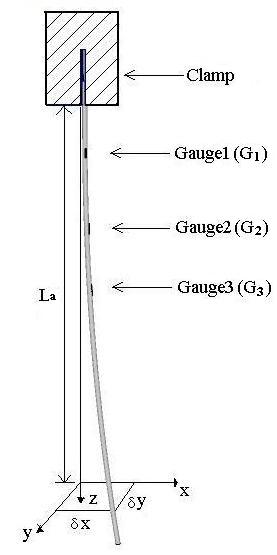
Traditionally, the physician use medical imaging to help him to reach its target. But no medical imaging gives satisfactory results for different reasons. Another possibility is to use the modeling. But all modeling methods use assumption that the needle and/or the human tissues are crushproof. And it is well known that this assumption is not realistic. So in our work, we propose to instrument a needle with microgauges. These microsensors allow to measure in real time, during its use, the strain of the needle. We can calculate from this strain the real shape of the needle and give it to the physician, in a previous medical image of the patient.
The novelty in this work is that the microfabrications are processed on an unconventional substrate (curved surface and stainless steel).
The perspective of this work is to place several microgauges on the needle on different generatrix, to allow measures on the three dimensions. Finally, we want to have a prototype of an instrumented needle, to integrate it in a microlocalization system.
Journal Reference
Microsystem Technologies, pp 1-6, 2015.
Agnès Bonvilain 1,2, Mathilde Gangneron1,2
[expand title=”Show Affiliations”]- Univ. Grenoble Alpes, TIMA, 38031, Grenoble, France
- CNRS, TIMA, 38031, Grenoble, France
Abstract
Further to the first fabrication of strain microgauges on cylindrical metal substrates (Yang et al. Microelectron Eng 97:285–288, 2012), that we cannot experiment because of problems of wire bonding, we have reviewed the bonding process. These microgauges enable the real-time measurement of the medical needle strain distribution from which its deflection status can be deduced. So this paper deals with the new bonding process of the microgauges and the detailed experimentations. These experimentations consist in constrain the needle and verify that we can measure the strain. They allow also the calculations and the comparison of the theoretical and experimental gauge factor. Finally we discuss about the improvement of the prototype in terms of optimization of the process. Finally some material questions must find solution.
Go To Microsystem Technologies