 Advances in Engineering Advances in Engineering features breaking research judged by Advances in Engineering advisory team to be of key importance in the Engineering field. Papers are selected from over 10,000 published each week from most peer reviewed journals.

Significance Statement
Anaerobic digestion is a well-known conversion process yielding biogas materials. The waste stream known as digestate from anaerobic digestion plant is widely used as fertilizer in farm land to release soil nutrients (Nitrogen, Phosphorus, and Calcium).
Pyrolysis can convert biomass and waste into solid, liquid and gaseous forms which offers various advantage in power generation and application. Despite these advantages there is need for upgrade due to their low energy content, high acidity and viscosity. One method of upgrade is by blending pyrolysis oil with another component such as biodiesel or biofuels.
Aston University scientists in the UK investigated the combustion and emission performance of digestate pyrolysis oil blends in a multi-cylinder indirect injection compression ignition engine. The study is published in journal, Fuel, examined pyrolysis oil from anaerobically digested pellets as fuel for diesel engine applications.
Among various pyrolysis techniques, intermediate pyrolysis attracted attention due to the flexibility of feedstock used making it favorable since more than half of the feedstock remains in digestate for production of biofuel.
For this study, Hossain et al. (2016), digestate was dried and pelletized for reducing moisture content from 80% to 20%. The properties of the digestate pellets were 6mm in diameter and 20mm long. Digestate pyrolysis oil was produced from digestate pellets feeding the Pyroformer® at the rate 5Kg/h with a biomass to biochar ratio of three.
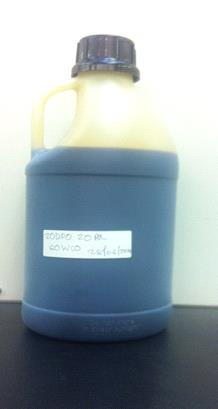
Pyrolysis oil was blended with waste cooking oil to improve fuel value and butanol was added to reduce viscosity of blends. Three blends each of digestate pyrolysis oil, waste cooking oil and butanol was prepared. First blend had 10% digestate pyrolysis oil + 70% waste cooking oil + 20% butanol, Second blend had 20% digestate pyrolysis oil + 60% waste cooking oil + 20% butanol and third with 30% digestate pyrolysis oil + 50% waste cooking oil + 20% butanol.
For engine test, three cylinder Lister Petter Alpha Series engine was used (9.9KW, 1500rpm) with combustion of indirect injection type. Combustion analysis and in-cylinder pressure was also analyzed by ‘KiBox To Go’ and Kistler pressure sensor-amplifier respectively while an optical encoder was used to detect crank angle. Kitler pressure and amplifier was also used tom measure fuel line injection pressure.
Froude Hofmann AGSOHS eddy current dynamometer was used to measure and control engine load and speed with measurement accuracy for speed and torque to be ±1rpm and ±0.4Nm respectively. Fuel consumption, measurement and log temperatures at various locations was also analyzed.
Results from characteristics of pyrolysis of oil blends, higher heating value and moisture content of digestate pellets were 15.02MJ/Kg and 11.5% (wt. %) respectively. Viscosity values of 100% digestate pyrolysis oil at 400C was approximately 158 times higher than that of fossil diesel. Viscosity of 10% digestate pyrolysis oil blend was lower than 20% digestate pyrolysis oil and viscosities of 20% digestate pyrolysis oil and 30% digestate pyrolysis oil were close to each other. Calorific values of digestate pyrolysis oil blends were close to that of fossil diesel where higher heating value of 20% digestate pyrolysis oil blend was approximately 17% lower than fossil diesel value. The flash point temperature blends of digestate pyrolysis oil were in range of 41-440C lower than fossil diesel.
The ASTM copper corrosion and acid number values of 20% digestate pyrolysis oil and 30% digestate pyrolysis oil were 2C and 1.2 (wt%) while fossil diesel values were 1b and 0.023 (wt%) indicating a better suitable use for internal combustion engine.
In-cylinder pressure results showed digestate pyrolysis oil blends produced slightly uneven pressure profile when compared to fossil diesel and waste cooking oil. This was due to low cetane number, high density and viscosity values of digestate pyrolysis blends.
At 80% load operation, combustion of 20% digestate pyrolysis oil and 30% digestate pyrolysis oil fuels caused lower peak cylinder pressures by 2% and 4% respectively compared to fossil diesel.
Maximum heating release rates 20% digestate pyrolysis oil and 30% digestate pyrolysis oil blends were approximately higher than fossil diesel and waste cooking oil but total burning duration of both blends decreased by 12% and 3% respectively.
Brake specific fuel consumption were approximately 19% and 5% higher on volume basis and 32% and 15% higher on weight basis when compared to fossil diesel. 30% digestate pyrolysis oil and 20% digestate pyrolysis oil blends had decrease in brake thermal efficiency by 7% and 3% giving lower level smoke than fossil diesel. At full load, carbon dioxide emission of 30% digestate pyrolysis oil blend was 5% higher than fossil diesel and carbon monoxide emission decreased by 39% and 66% for 20% digestate pyrolysis oil and 30% digestate pyrolysis oil respectively when compared to fossil diesel.
Hossain et al. (2016), suggested further investigations on pyrolysis of anaerobic digestion digestate from various source of biomass feedstock to assess fuel quality of oil and blends as digestion pellets may contain heavy metals and chlorine and further investigation of digestate pyrolysis oil on direct injection engine was also be recommended.

REFERENCE
Hossain, A.K., Serrano, C., Brammer, J.B., Omran, A., Ahmed, F., Smith, D.I., Davies, P.A. Combustion of Fuel Blends Containing Digestate Pyrolysis Oil in a Multi-Cylinder Compression Ignition Engine. Fuel, 2016, Volume 171, pp 18-28.