Advances in Engineering Advances in Engineering features breaking research judged by Advances in Engineering advisory team to be of key importance in the Engineering field. Papers are selected from over 10,000 published each week from most peer reviewed journals.

Significance
Earthquakes result in extensive destruction of infrastructure and loss of life. Whereas some parts of the world are prone to earthquakes, others are far much safer with only the possibility of tremors of very low magnitudes. Over the past decades, predicting and reducing the extent of damages caused by earthquakes have been a global concern.
Recent earthquakes have induced structural failures of bridges. Usual type of failure modes of bridges results from damaged connection between the superstructure and the substructures, damages to the columns induced by the ground movement among others. However, unusual types of failure modes like the web rapture of the prestressed girders and collapse of the span have also been observed, like in the case of the 2010 Maule earthquake in Chile.. In the present literature, deck rotation of straight and skewed bridges have been identified during severe ground shaking. These rotation may have been generated by the incoherent response of the substructures, deck pounding, loss of stoppers, among others.
Presently, despite other causes of the deck rotation in straight bridges, greater excitation of the rotational mode is viewed as the prevalent cause. Unfortunately, deck rotation have not been explored fully. In order to crack down the difficulties involved in the study, researchers have been looking for alternatives and have identified mathematical methods as a promising solution. For instance, it allows investigating the effect of the coefficient of friction between the abutments and the deck. However, it is quite difficult to perform such studies owing to the nonlinear influence and hard prediction of the deck rotation.
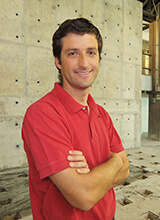
Recently, Leonel Peralta and Professor Matias Hube at Pontifical Catholic University of Chile investigated the deck rotation in straight bridges through assessment of the asymmetries in the bridge characteristics. Chada underpass, a straight bridge that suffered deck rotation during the Maule earthquake was used as a case study. They also investigated the effects of transverse diaphragms on seismic behavior and deck rotation of bridges. Generally, the authors considered asymmetries relating to variations in the lateral stoppers’ strength, the gap distance between the lateral stoppers and concrete girders as well as the friction coefficient between the bearings and the cap beams. Furthermore, Opensees software was used to model the three-dimensional of the bridge. The work is published in the journal, Engineering Structures.
The authors observed that the induced asymmetries were capable of explaining a part of the observed deck rotation. The numerical model predicted a maximum relative displacement of the deck of 52.8 cm as compared to 142 cm observed in the Chada bridge after the earthquake. The considered asymmetry of the coefficient of friction of the bearing exhibited the largest deck rotation among the three tested asymmetries while the deck rotation was limited by the strength of the lateral stoppers’. However, the deck rotation had got no direct relation to the longitudinal deck displacement and displacement of the elastomer bearings.
The Leonel Peralta-Matias Hube study successfully analyzed bridge asymmetries as a possible cause of deck rotation in straight bridges. This will help provide more information about unusual failures modes of structures during earthquakes. Therefore, it will help in design optimization of the structures to reduce the extent of infrastructure damages during earthquakes which are prevalent in certain parts of the world.



Reference
Peralta, L., & Hube, M. (2018). Deck rotation of straight bridges induced by asymmetric characteristics and effect of transverse diaphragms. Engineering Structures, 173, 729-743.
Go To Engineering Structures