Advances in Engineering Advances in Engineering features breaking research judged by Advances in Engineering advisory team to be of key importance in the Engineering field. Papers are selected from over 10,000 published each week from most peer reviewed journals.

Significance
Structural stability under extreme environmental conditions is critical in many engineering applications such as spacecraft systems including remote sensing satellites which rely heavily on the geometric precision of their components to maintain the integrity of imaging systems, radar arrays, and communication antennas where slightest thermal deformation—on the scale of tens of microns—can cause a misalignment significant enough to degrade mission-critical data. However, the space environment is inherently unstable in terms of temperature distribution which is a major challenge. Unlike terrestrial systems that often operate under controlled or slowly varying temperatures, satellites in orbit experience sharp, uneven thermal gradients as they transition between sunlight and shadow or dissipate internally generated heat from electronic systems. These non-uniform temperature fields produce asymmetric expansions in structural components, leading to out-of-plane warping that current predictive models struggle to capture with precision. The most advanced structures today often incorporate metamaterials engineered for near-zero thermal expansion. These metastructures have shown great promise in laboratory settings, especially under uniform temperature loads, but they falter when exposed to the complex, multidirectional heating patterns typical in orbital conditions. The inconsistency stems from a gap between idealized design assumptions and the realities of manufacturing and operation. Additive manufacturing, which is commonly used to produce such complex lattice structures, introduces imperfections such as small pores, minor misalignments, micro-cracks that can collectively alter the thermal and mechanical behavior of the final structure. Unfortunately, most theoretical models assume ideal geometry and ignore these deviations. As a result, simulations often predict deformation magnitudes that diverge significantly from experimental observations, creating uncertainty in performance forecasting and limiting the deployment of such structures in high-stakes missions.
Faced with these limitations, new research paper published in Aerospace Science and Technology and led by Professor Xiaogang Guo, Xiaonan Han, Huabin Yu and Jili Rong from the School of Aerospace Engineering, Beijing Institute of Technology alongside Professor Hao Zhou from the Beijing Institute of Spacecraft System Engineering, researchers developed a high-fidelity prediction method for thermal deformation in near-zero warping sandwich metastructures subjected to non-uniform temperature fields. They achieved remarkably accurate deformation predictions by integrating CT-based reconstruction of manufacturing defects with analytical modeling and finite element simulations. Their approach accounts for real-world geometric deviations introduced during additive manufacturing, significantly narrowing the gap between theoretical predictions and experimental results. This method enhances the reliability of thermally stable structures in precision-critical aerospace applications.
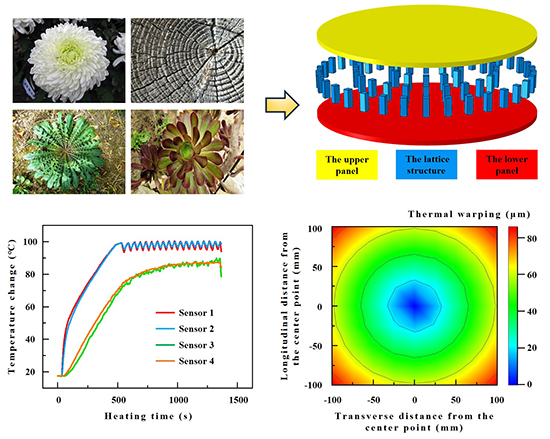
The research team constructed a physical metastructure specimen using selective laser melting with AlSi10Mg alloy and the process allowed them to fabricate the sandwich geometry required for the study where they integrated two thin panels flanking a central lattice of precisely engineered beam units. Their intention was to simulate the exact structural response of a near-zero warping metastructure when subjected to non-uniform temperature conditions. Using a customized thermal testing platform, they imposed a controlled heating regime in which the bottom surface was elevated to 100 °C while the top remained exposed to ambient convection. This chosed this situp to replicate the kind of directional heating a spacecraft might experience in orbit. Afterward, they employed a sophisticated 3D digital image correlation system to track the deformation of the structure with sub-micron resolution. Measurement points were strategically placed across the top panel, including at the central node and equidistant positions along the diagonals. The displacement recorded at these points revealed a remarkable result: the maximum thermal warping reached only 85.76 micrometers. At first glance, this value confirmed the structure’s ability to resist deformation under thermal stress—a success by design standards. Yet, it also exposed a deeper discrepancy. Earlier simulations, both theoretical and FEA-based, had predicted higher deformation values of roughly 108 and 107 micrometers, respectively. This variance, though subtle in scale, was too significant to ignore given the precision demands of aerospace applications.
Moreover, the authors conducted a detailed micro-CT scan of the fabricated specimen, reconstructing a high-fidelity three-dimensional digital replica of the actual structure which showed localized imperfections—panel curvatures, uneven thicknesses, and internal lattice distortions—that had quietly altered the structure’s thermal behavior and by integrating these real geometries into the theoretical model and re-running the simulations, they found that the predicted warping closely matched the experimental result at 88.47 micrometers. Additionally, they found a secondary FEA run using the CT-based model yielded an even closer match at 86.16 micrometers. These refined predictions narrowed the error margin to below 3% which is a drastic improvement over the original estimates.
In conclusion, the work of Professor Xiaogang Guo and colleagues demonstrated that even micron-scale deviations introduced during additive fabrication can meaningfully shift the thermal behavior of critical components and instead of treating those deviations as noise, they embraced them as data.
Indeed, the team developed a workflow capable of delivering predictive results within a few percentage points of actual measurements by simply merging CT-based defect mapping with refined analytical models and such accuracy can make more reliable spacecraft systems. When applied to payload-bearing structures like antennas or imaging platforms, this new methodology could prevent the kind of thermal-induced warping that has previously led to mission failure, signal degradation, or costly in-orbit recalibrations. In high-stakes missions where nanometers matter, this fidelity is indispensable. We believe equally significant is the demonstration that real-world manufacturing flaws can be systematically captured, quantified, and modeled and instead of relying on idealized CAD representations or assumptions of uniformity, future designs can be evaluated based on how they are actually built. It redefines the standard of “design validation” for aerospace hardware and signals a transition toward high-fidelity, defect-aware engineering.

Reference
Xiaonan Han, Huabin Yu, Xiaogang Guo, Hao Zhou, Jili Rong, A prediction method of thermal deformation of near-zero warping sandwich structure under non-uniform temperature field, Aerospace Science and Technology, Volume 157, 2025, 109786,