Advances in Engineering Advances in Engineering features breaking research judged by Advances in Engineering advisory team to be of key importance in the Engineering field. Papers are selected from over 10,000 published each week from most peer reviewed journals.

Significance Statement
The International Fusion Materials Irradiation Facility, also known as IFMIF, is a projected materials test facility in which candidate materials for the use in an energy producing fusion reactor can be fully qualified. IFMIF is an accelerator-based neutron source that produces, using deuterium-lithium nuclear reactions, a large neutron flux with a spectrum similar to that expected at the first wall of a fusion reactor.
The IFMIF project was started in 1994 as an international scientific research program, carried out by Japan, the European Union, the United States, and Russia, and managed by the International Energy Agency. Since 2007, it has been pursued by the Japanese Government and EURATOM under the Broader Approach Agreement in the field of fusion energy research, through the IFMIF/EVEDA project, which conducts engineering validation and engineering design activities for IFMIF.
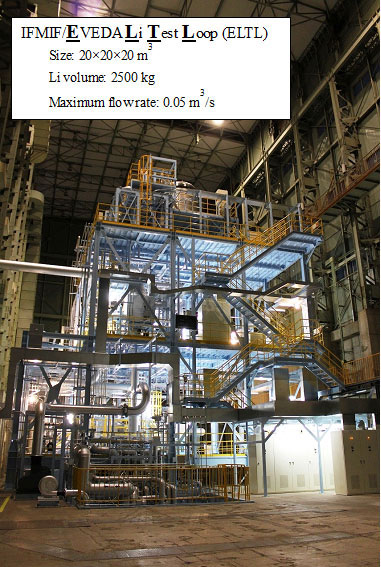
The lithium target validation activities have proven that a 25 mm thick lithium jet flowing at 15 m/s can be realized as the beam target for two accelerators, each delivering a deuteron beam of 125 mA at 40 MeV in continuous wave with a beam power of 2 x 5 MW. A long-term operation of the lithium target, with maximum allowable thickness variations within +/1 mm, has been successfully demonstrated in the EVEDA Lithium Test Loop (ELTL).
Visit our website and Wikipedia for more information.
https://en.wikipedia.org/wiki/International_Fusion_Materials_Irradiation_Facility
Hiroo Kondo
Dr. Hiroo Kondo is a principal researcher in Advanced Fusion Neutron Source Design Group, Fusion Energy Research and Development Directorate, National Institutes for Quantum and Radiological Science and Technology (QST). He received his Ph.D in nuclear engineering from Osaka University. He worked as an assistant professor and associate professor at Osaka University and then an assistant principal researcher in Japan Atomic Energy Agency (JAEA). [/author]
Journal Reference
Fusion Engineering and Design, Available online 20 October 2015.
Hiroo Kondo1 , Takuji Kanemura1, Tomohiro Furukawa1, Yasushi Hirakawa1, Eiichi Wakai1, Juan Knaster2
[expand title=”Show Affiliations”]
- Japan Atomic Energy Agency, Ibaraki, Japan
- IFMIF/EVEDA Project Team, Rokkasho, Japan
The International Fusion Materials Irradiation Facility (IFMIF) is an accelerator-based D+-Li neutron source in which two 40-MeV-D+ beams with a total current of 250 mA are injected into a liquid Li stream flowing at 15 m/s (Li target). The EVEDA Li test loop (ELTL), which simulates the hydraulic conditions of the Li target and a part of the purification system envisaged in IFMIF, is a main activity in the Li target facility of the IFMIF/EVEDA project and has been implemented under the Broader Approach (BA) agreement since 2007. The key issues to be validated in ELTL were as follows: (1) validation of the Li target, Li target diagnostics, and cold trap (CT), and (2) validation of long-term operation. This study describes the stability of the Li target in an integrated long-term operation run of the entire system as a demonstration of the IFMIF Li target facility. The Li target was continuously operated with the CT for 571 h, and its stability was evaluated periodically using a high-precision Li target diagnostic. Therefore, the Li target essentially satisfied the stability requirement of <±1 mm throughout the continuous operation.
Go To Fusion Engineering and Design