Effect of Hedging-Integrated Rule Curves on the Performance of the Pong Reservoir (India) During Scenario-Neutral Climate Change Perturbations

Significance Statement

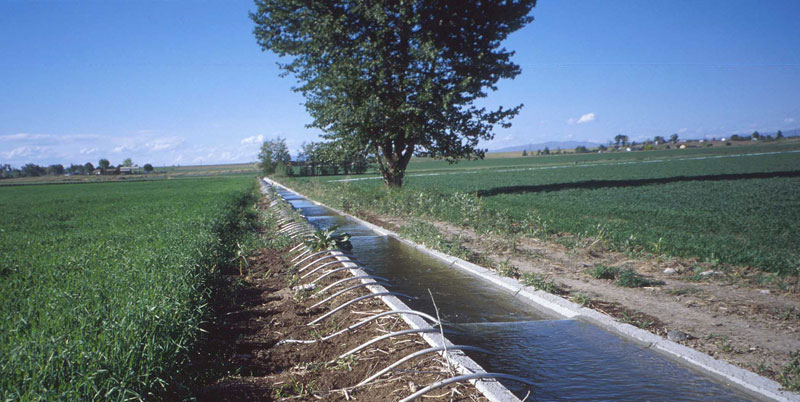
Researchers from Heriot-Watt University Scotland in collaboration with Cranfield University England and IIT-Roorkee in India are collaborating on a multi-institutional project titled “Mitigating climate change impacts on Indian agriculture through improved irrigation water management (MICCI)”. They are investigating the effects of projected climate change and its variability on irrigation water security in India and evaluating the effectiveness of better irrigation and water management strategies in mitigating any resulting water shortages thereby improving the productivity of the available water.

The authors in the hydrology paper used HYSIM rainfall-runoff model  which uses rainfall and potential evaporation data to simulate the hydrological cycle (surface runoff, percolation to groundwater and river flow) on a continuous basis. This enabled the impacts of projected changes in climatic attributes (precipitation, temperature, etc.) on future water resources availability in the case study Beas River Basin in Himachal Pradesh to be simulated.  Extensive reservoir simulation studies on the multi-purpose Pong reservoir in the Basin showed that dwindling water availability in the future will lead to significant deterioration in the performance of this major water resources infrastructure unless improvement in its operational management is carried out. Examples of such improved operational practices were developed and tested with resounding success. Although applied to an Indian Basin, the methodology is sufficiently generic that it  can be extended to other south Asian countries. This paper should improve our understanding of the climate change water problem and offer solutions that are robust and effective for Indian irrigators.

 

Effect of Hedging-Integrated Rule Curves on the Performance of the Pong Reservoir (India) During Scenario-Neutral Climate Change Perturbations-advances in engineering


About the author

Professor Adeloye is Professor of water resources management at the Institute for Infrastructure and Environment, Heriot-Watt University, Edinburgh, UK. He is also the Associate Dean of the University with remit for Arts, Humanities and Social Sciences. Professor Adeloye obtained his Bachelor Honours degree (First Class, First Position) in Agricultural Engineering from the University of Ife (Nigeria), as a result of which he was the recipient of the Faculty of Technology Prize for being the best overall student in the 1977 graduating Year at the University. He also holds the MSc and PhD degrees in Water Resources Management from Newcastle University, England. His research has focused on the development of robust tools for the sustainable planning and management of reservoirs, for which he has developed rapid but accurate assessment methodologies which remove the need for time series data that are often lacking, especially in developing economies. A further area of focus is the assessment of climate change impacts and its uncertainties on water resources and flooding, and their use for designing robust adaptation strategies. Work has also been extended to groundwater resources and its integrated management with surface water resources. Latterly, he has been developing machine learning, artificial intelligence paradigms, such as supervised and unsupervised artificial neural networks, fuzzy inference and data mining for analysing complex environmental systems, including water quality, wastewater treatment plants operation and control and crop evapotranspiration. His research has been extensively published; his highly successful book “Water Resources Yield” is widely used for graduate training and practice worldwide. He has also attracted external funding for his research and he is currently the lead-PI for “MICCI- Mitigating climate change impacts on Indian agriculture through improved irrigation water management”, one of five projects jointly funded by the UK-NERC and India-MOES under the Indo-UK changing water cycle (South Asia) thematic programme. An alumnus of the prestigious Fellowship of the Royal Commission for the Exhibition of 1851 , Professor Adeloye is a chartered Engineer (UK), Chartered Water and Environmental Manager, Member Chartered Institution of Water and Environmental Management, and Fellow of the UK Higher Education Academy. Professor Adeloye is a seasoned Educator and has taught in Europe, Africa, Asia (including the Middle East) and the Americas, in addition to supervising successfully several doctoral and Masters’ candidates from different parts of the world. Some former students of Professor Adeloye are now occupying positions of high responsibility in their various countries. Recently, he has advised the Director General of the Nigeria Hydrological Services Agency (NIHSA) on technical aspects of floods, droughts and water resources management.

About the author

Dr Bankaru-Swamy Soundharajan did his PhD in Water Resources Engineering at the Indian Institute of Technology, Madras. Dr Soundharajan is working as a Research Associate at Heriot-Watt University, UK; he also previously worked as a Water Resources Scientist at the International Water Management Institute, IWMI. His research focus includes developing improved operating policies for water supply reservoirs, assessment and mitigation of climate change impacts on water resources, Irrigation water management and crop simulation modelling.

About the author

Dr. C.S.P.Ojha , Ph.D. (Imperial College, London) is a Professor in Civil Engineering, IIT Roorkee since 2004. He has more than 25 years of teaching and research experience in the area of water resources and environmental engineering. He has authored/coauthored about 190 peer reviewed journal publications, 25 book chapters and authored/edited about half a dozen books. He has supervised 42 Ph.D. students. He was also awarded Alexander von Humboldt Fellowship in 2001, Distinguished Visiting Fellowship of Royal Academy of Engineering in 2008, Visiting Fellowship of ASCE in 2010 and Senior JSPS Fellowship in 2010-11. He has received research paper awards from ASCE in 2001, 2009, 2010 and 2013, and about half a dozen research paper awards from reputed Indian Journals. He was awarded BCEEM by American Academy of Environmental Engineering in 2011 and Curtis Visiting Professorship by Purdue University, USA, in 2012-2013. He was also awarded State of the Art Award in Civil Engineering by ASCE in 2014.

About the author

Dr Renji Remesan is currently working as a Hydrological Modeler & Water Resources management Scientist at CEH Wallingford, United Kingdom.  Dr Remesan’s research focus is shaped to improve catchment management by integrating field / global gridded data collection and mathematical/physical modelling tools so that it can provide meaningful guidance to policy/decision makers. Dr Remesan’s research interests include non-linear modelling of hydro-meteorological time series, artificial intelligence in hydrology, numerical weather modelling and river basin/catchment modelling using physically/ conceptually lumped models and distributed hydrological models. Dr Remesan completed his PhD degree in Water and Environmental Engineering at University of Bristol, UK in 2010 and Masters from IIT Kharagpur, India. He has worked as a postdoctoral research fellow at Cranfield University and University of Hull, England on different international research projects in collaboration with other institutions focusing on hydrological and climatic modelling. He is an Associate Fellow of the UK Higher Education Academy.

Journal Reference

Water Resources Management, January 2016, Volume 30, Issue 2, pp 445-470.

J. Adeloye1, B.-S. Soundharajan1, C. S. P. Ojha2, R. Remesan3 

[expand title=”Show Affiliations”]
  1. Institute for Infrastructure and Environment Heriot-Watt University
  2. Department of Civil Engineering IIT-Roorkee
  3. Cranfield Water Science Institute Cranfield University [/expand]

Abstract

This study has evaluated the effects of improved, hedging-integrated reservoir rule curves on the current and climate-change-perturbed future performances of the Pong reservoir, India. The Pong reservoir was formed by impounding the snow- and glacial-dominated Beas River in Himachal Pradesh. Simulated historic and climate-change runoff series by the HYSIM rainfall-runoff model formed the basis of the analysis. The climate perturbations used delta changes in temperature (from 0° to +2 °C) and rainfall (from −10 to +10 % of annual rainfall). Reservoir simulations were then carried out, forced with the simulated runoff scenarios, guided by rule curves derived by a coupled sequent peak algorithm and genetic algorithms optimiser. Reservoir performance was summarised in terms of reliability, resilience, vulnerability and sustainability. The results show that the historic vulnerability reduced from 61 % (no hedging) to 20 % (with hedging), i.e., better than the 25 % vulnerability often assumed tolerable for most water consumers. Climate change perturbations in the rainfall produced the expected outcomes for the runoff, with higher rainfall resulting in more runoff inflow and vice-versa. Reduced runoff caused the vulnerability to worsen to 66 % without hedging; this was improved to 26 % with hedging. The fact that improved operational practices involving hedging can effectively eliminate the impacts of water shortage caused by climate change is a significant outcome of this study.

Go To Water Resources Management
 

Check Also

Cyclic Dynamic Response of Serpentine-MgO Carbon Sequestration Foamed Concrete

Significance  Reference Mengyao Li, Songyu Liu, Xiang Zhang, Zhengcheng Wang, Dynamic behaviors of serpentine carbon …