Advances in Engineering Advances in Engineering features breaking research judged by Advances in Engineering advisory team to be of key importance in the Engineering field. Papers are selected from over 10,000 published each week from most peer reviewed journals.

Significance Statement
Acknowledgement
This work is funded by Universiti Sains Malaysia under Iconic grant scheme (Grant no. 1001/CKT/870023) for research associated with the Solid Waste Management Cluster, Engineering Campus, Universiti Sains Malaysia.
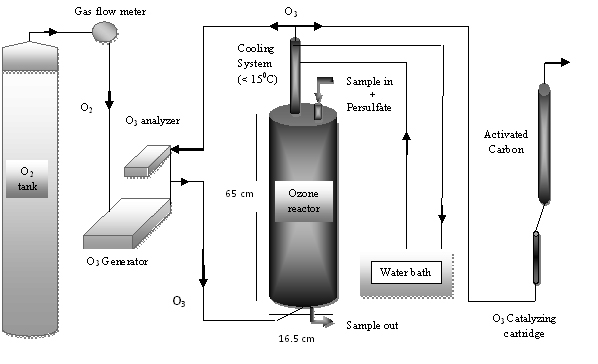
Figure 1: Schematic diagram of ozone equipment and experiments procedures.
Journal Reference
Environmental Progress & Sustainable Energy. Volume 33, Issue 1, pages 184–191, 2014.
Salem S. Abu Amr1, Hamidi Abdul Aziz2*, Mohd Nordin Adlan1, Jaber M. A. Alkasseh1
1School of Civil Engineering, Engineering Campus, Universiti Sains Malaysia, 14300 NibongTebal, Penang, Malaysia
2 Solid Waste Management Cluster, Engineering Campus, Universiti Sains Malaysia, 14300 Penang, Malaysia
ABSTRACT
This study investigated the effects of O3 and O3/S2O82− in the advanced oxidation process (AOPs) on the biodegradable and soluble characteristics of semiaerobic stabilized solid waste leachate. The biodegradability (BOD5/COD) ratio improved from 0.034 to 0.05 and 0.29 following O3 and O3/ S2O82−, respectively. Fractions of biodegradable COD(bi) (24%), nonbiodegradable COD(ubi) (76%), soluble COD(s) (59%), biodegradable soluble COD(bsi) (38%), nonbiodegradable soluble COD(ubsi) (62%), and particulate COD (PCOD) (41%) in stabilized leachate were also investigated. The fraction of COD (bi) increased to 28 and 39% after applying O3 and O3/ S2O82− in AOPs, respectively. COD(S) increased to 65 after O3 and to 72% after O3/AOPs, whereas COD (bsi) increased to 38 and 55% after O3 and O3/AOPs, respectively. The removal efficiency of total COD was obtained at 15 after O3alone and improved to 72% following ozone-based AOPs, whereas PCOD reduced from 41 to 35 after O3 and 28% after ozone-based AOPs. Ozone/Prsulfate is an efficient method for degradation of stabilized leachate, enhanced biodegradability and improved biodegradable and soluble characteristics of stabilized leachate. © 2013 American Institute of Chemical Engineers.
*Corresponding author: Dr. Hamidi Abdul Aziz
Tel: + 60-45996215;
Fax: +60-45941009.
E-mail: [email protected]