Advances in Engineering Advances in Engineering features breaking research judged by Advances in Engineering advisory team to be of key importance in the Engineering field. Papers are selected from over 10,000 published each week from most peer reviewed journals.

Journal Reference
Journal of Manufacturing Processes, Volume 20, Part 1, October 2015, Pages 40-45.
Eleonora Atzeni, Alessandro Salmi
Politecnico di Torino, Department of Management and Production Engineering (DIGEP), Corso Duca degli Abruzzi, 24, 10129 Torino, Italy.
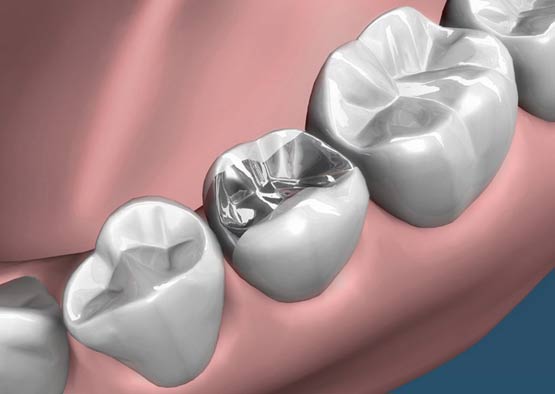
Two approaches, based on time compression techniques, have recently been introduced for the production of dental restorations: the use of drop-on-demand (DoD) wax patterns for the investment casting of cobalt–chromium (CoCr) alloy and the direct fabrication of metal restorations by means of selective laser sintering additive technique. These two technologies are analysed in this paper from the point of view of the accuracy of the final product that can be achieved. To this aim, the Virtual Model (VM) of a specifically designed artefact for dental applications has been used as a reference model. The restorations were first designed, disregarding the manufacturing process, in order to have a single geometry for the subsequent comparisons and were then produced in dental laboratories on the basis of the given geometry. After fabrication, the restoration surfaces were inspected, by using a coordinate measuring machine (CMM), to obtain information on the achieved accuracy. The results have shown that both processes are able to produce clinically acceptable restorations.
Go To Journal of Manufacturing Processes