 Advances in Engineering Advances in Engineering features breaking research judged by Advances in Engineering advisory team to be of key importance in the Engineering field. Papers are selected from over 10,000 published each week from most peer reviewed journals.

Significance Statement
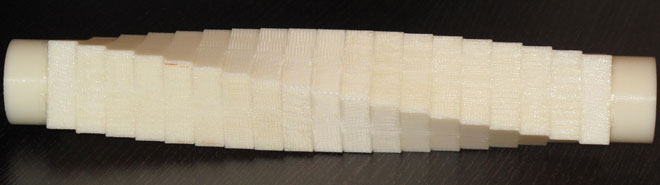
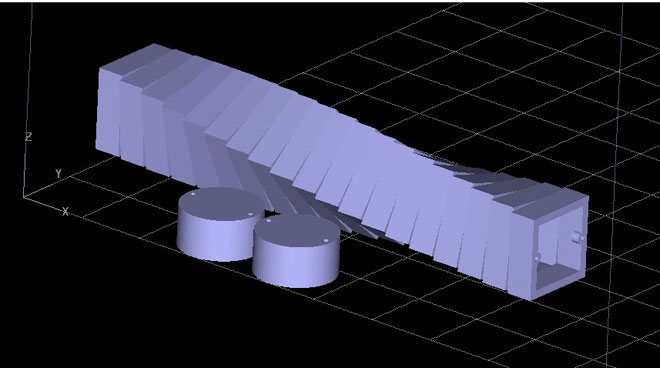
Several researchers have presented analytical models based on empirical investigation for the main roughness parameters to calculate the arithmetic mean surface roughness (Ra). In this research, the most cited analytical models are evaluated by the comparison of the performance criteria (MAPE) in different ranges. According to the provided assessments, best model for prediction of each range is introduced. Moreover, the main advantage of this research is the use of purely empirical data derived form a comprehensive test part which enables the assessment of surface roughness in all surface build angles, including all factors affecting the real rough surface creation such as roughness arising out of staircase effects, support burrs, material properties, and other factors which is not possible to achieve them in other ways.


Journal Reference
Sadegh Rahmati1 , Ebrahim Vahabli2.
[expand title=”Show Affiliations”]- Department of Mechanical Engineering, Majlesi Branch, Islamic Azad University, Isfahan, Iran
- Department of Mechanical Engineering, Science and Research Branch, Islamic Azad University, Tehran, Iran
Abstract
In additive manufacturing (AM) processes, the tessellation of CAD model and the slicing procedure are the significant factors resulting unsatisfactory surface quality, where the topics related to surface roughness have been a key issue in this regard. In this paper, analytical models which have been presented to express surface roughness distribution in fused deposition modeling (FDM) are assessed according to the variations in surface build angle by considering the main factors which crucially affect surface quality. Analytical models are verified by implementation and comparison with empirical data derived from the comprehensive FDM fabricated test part. Finally, the most accurate model for estimation of surface roughness in the process planning stage for optimization of effective parameters have been introduced upon calculating the mean absolute percentage error (MAPE) as performance criteria of each model in various equal ranges.
Go To The International Journal of Advanced Manufacturing Technology