Advances in Engineering Advances in Engineering features breaking research judged by Advances in Engineering advisory team to be of key importance in the Engineering field. Papers are selected from over 10,000 published each week from most peer reviewed journals.

Significance Statement
Rare-earth based nanomaterials produced via the high-energy ball milling have been the focus for their potential application as nanocomposite permanent magnets. The shape and size of as-milled particles may be controlled by several high-energy ball milling parameters. Pulverization process applied to many intermetallics causes a change of their crystal structure, morphology or even partial amorphization over milling, and this leads to an enhancement of coercivity.
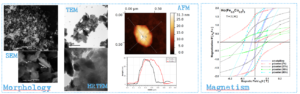
Dr. Anna Bajorek and colleagues from the University of Silesia in Katowice (Poland) developed a method to produce Ho(Fe0.5Co0.5)3 nanopowders via high-energy ball milling with enhanced magnetic parameters as compared to its bulk analogue, and investigated the effect of used ball-milling parameters on the morphology and magnetism in as-milled powders in a function of applied pulverization time. Their work is now published in peer-reviewed journal, Intermetallics.
The bulk Ho(Fe0.5Co0.5)3 compound was prepared by arc melting from high purity elements under argon atmosphere. The ingot was melted a number of time in order to attain homogeneity. The as-cast sample was afterwards wrapped in tantalum foil, placed in quartz tubes and annealed for 10 days. The crystal structure was later checked by the means of X-ray Powder Diffraction. In order to obtain the compound in powdered form, the bulk compound was first crushed and pre-milled with a standard agate mortar for approximately 10 minutes.
Wet milling method was carried out in dimethylformamide using the Eppendorf vials and mixer mill. The balls to powder ratio was approximately 10:1. Higher milling speeds leads to frequent collisions between the balls and powder, therefore, affecting final particle sizes. The crystal and electronic structure as well as morphology of the as-milled specimens were investigated. Magnetic properties were determined based on Superconducting Quantum Interference Device.
Dynamic light scattering method was applied into the as-milled powders in order to determine the particles sizes and distribution. Therefore, after every step of mechanical grinding, all specimens were suspended in 10ml of dimethylformamide in a glass cell and measured. A high degree of polydispersity is related to the homogeneous distribution and more than one fraction of particles in the studied solutions.
For extended milling the powders form a non-homogeneous mixture composed of larger and smaller particles as well as agglomerates. Agglomeration of particles, however, appears for middle-pulverization time and can be associated to a higher ability to concrescence of smaller particles. This coalescence and the formation of larger conglomerates is effective in the presence of applied magnetic field due to increase of magnetic interactions between finer flakes.
The application of high-energy ball milling method leads to the synthesis of non-homogeneous, polycrystalline nanoflakes with their size dependent on the grinding time. The ground powders show tendency to form agglomerates. Every nanoflake is composed of crystallites/grains with non-regular shape and various size embedded in the amorphous matrix. The diameter of each crystallite decreased across milling.
Magnetic properties of the nanopowders depend on the applied grinding time and vary nonlinearly. This variation over comminution is as a result of particle refinement, the increase within the number of nanograin boundaries, the change of the anisotropy or the random orientation of nanograins. This may be also caused by agglomeration of nanoflakes and their partial amorphization.



Journal Reference
Anna Bajorek1,2 , Krystian Prusik2,3, Marcin Wojtyniak1,2, Grażyna Chełkowska1,2. Evolution of morphology and magnetism of Ho(Fe0.5Co0.5)3 intermetallic Nano-powders synthesized by HEBM. Intermetallics, volume 76 (2016), pages 56-69.
[expand title=”Show Affiliations”]1 A. Chełkowski Institute of Physics, University of Silesia, Uniwersytecka 4, 40-007 Katowice, Poland.
2 Silesian Center for Education and Interdisciplinary Research, University of Silesia, 75 Pułku Piechoty 1A, 41-500 Chorzów, Poland.
3 Institute of Materials Science, University of Silesia, 75 Pułku Piechoty 1A, 41-500 Chorzów, Poland. [/expand]
Go To Intermetallics