Advances in Engineering Advances in Engineering features breaking research judged by Advances in Engineering advisory team to be of key importance in the Engineering field. Papers are selected from over 10,000 published each week from most peer reviewed journals.

Significance
In Europe, the built environment consumes more energy than any other sector and is responsible for a substantial share of greenhouse gas emissions. Ireland, much like its European counterparts, faces a daunting retrofit agenda. Nearly one-sixth of its housing stock predates 1940, and many of these buildings were constructed from local stone, using methods very different from modern cavity wall construction. The difficulty lies in the fact that these traditional structures are both culturally significant and materially unique. They cannot simply be treated as older versions of today’s buildings; their physical behavior under changing thermal and moisture conditions follows different rules, and misjudging those rules can have destructive consequences. One of the central obstacles is moisture. Modern insulation and sealing strategies often assume walls are resistant to water penetration and vapour movement. In traditional stone assemblies, however, moisture moves readily through the fabric, interacting with temperature changes, rainfall, and indoor humidity in complex ways. If insulation is added without an accurate understanding of these dynamics, the risk of condensation, mould growth, and freeze–thaw damage increases dramatically. Once such problems take hold, not only is energy efficiency compromised, but the historic fabric itself may deteriorate beyond repair. This is why conservationists and engineers alike stress the need for careful, material-specific data when designing retrofit interventions.
Despite the urgency of climate policy and retrofit targets, reliable datasets on the hygrothermal properties of Irish building stones have been almost entirely absent. Most of the widely used simulation programs, such as WUFI and DELPHIN, rely on material entries drawn from Central European contexts, where stone formations are geologically younger and typically more porous. Irish limestones, granites, and sandstones—formed predominantly in the Paleozoic era—tend to be denser and less permeable, meaning their thermal conductivity and moisture retention characteristics differ substantially. When practitioners select proxy materials from these databases to model Irish buildings, they often end up with results that do not reflect real performance. This disconnect leaves architects and engineers caught between ambitious energy goals and the risk of damaging structures that are irreplaceable cultural assets.
To this account, new research paper published in Building and Environment and conducted by Anna Hofheinz, Rosanne Walker, Dr. Caroline Engel Purcell, and led by Professor Oliver Kinnane from the University College Dublin, the researchers developed the first comprehensive dataset of hygrothermal properties for Irish building stones, including granites, limestones, and sandstones. This dataset captures critical parameters such as density, porosity, moisture adsorption, vapour diffusion resistance, capillary absorption, drying behavior, and thermal conductivity. By doing so, they provided accurate inputs for simulation tools like WUFI and DELPHIN, enabling more reliable modelling of traditional Irish stone walls. Their work equips engineers, architects, and policymakers with evidence-based data to design retrofits that improve energy efficiency without compromising historic fabric.
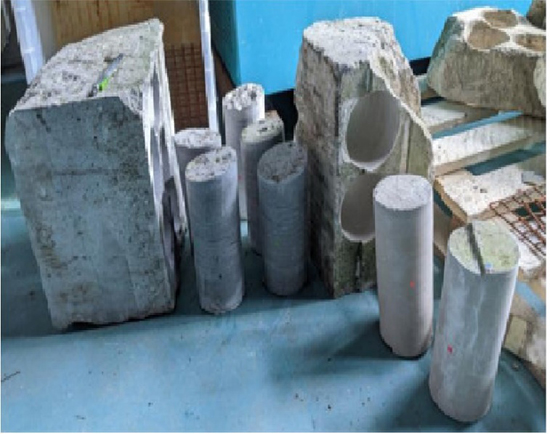
The research team collected samples from across Ireland—granites, limestones, and sandstones—materials that had been pulled from quarries for centuries and shaped into houses, stations, castles, and civic buildings. Rather than treating these stones as passive relics, the team treated them as active participants in the environmental life of a building. Each specimen was cored, cut, and tested under controlled conditions, with the goal of capturing how it responded to water, heat, and air. The first set of experiments measured bulk density and porosity, the twin indicators of how tightly or loosely the stone is packed. The authors found that Irish limestones, in particular, revealed themselves to be unusually dense, with porosities often below 5%. This finding alone challenged assumptions embedded in simulation databases, which generally contain lighter, more porous European stones. Such density was not a minor quirk; it explained why these walls behave so differently under moisture stress, resisting saturation but also slowing down drying once water is absorbed. Afterward, the researchers turned to moisture behavior more directly. Samples were exposed to air at controlled levels of humidity, as well as immersed in water to determine how much they could absorb at free saturation. The experiments showed that the low-porosity limestones barely took in moisture, while certain sandstones and the imported Portland limestone could soak up large amounts. Yet the story was not only about how much water they could hold; it was also about how they let it go. Drying tests revealed that the denser stones, while resistant to initial absorption, released moisture at a painfully slow rate. The team also measured vapour diffusion resistance, essentially the stone’s reluctance to let water vapour pass through. Here again, Irish stones distinguished themselves. Limestones produced astonishingly high resistance values, far greater than those reported for continental analogues. In practical terms, this means that if retrofits are designed assuming lower resistance, moisture could accumulate unseen within walls, endangering both structure and occupants. Complementing this were capillary absorption experiments, where dense limestones again showed vanishingly low uptake, while some sandstones demonstrated modest but measurable absorption. Finally, The Irish researchers conducted thermal conductivity tests which showed that Irish stones conducted heat at higher levels than expected. While engineers often model traditional walls as poor insulators, these results suggest they actually channel heat more effectively than predicted.
In conclusion, Professor Oliver Kinnane and colleagues demonstrated that Irish stones, shaped in the Paleozoic era, behave in ways that diverge fundamentally from the Mesozoic stones more commonly found in European hygrothermal databases. They are denser, less porous, more resistant to vapour diffusion, and more conductive to heat. These differences are not technical curiosities—they alter the entire risk profile of a retrofit. A wall modeled with the wrong inputs might be deemed safe for insulation, when in reality it could trap water and slowly destroy itself from within.
The authors showed the first full dataset of hygrothermal properties for Irish stones, the researchers have given practitioners the means to model these buildings with precision rather than approximation. The implications reach far beyond laboratory walls. Retrofit projects designed with this information will be less likely to trigger decay mechanisms such as freeze–thaw cycles, salt efflorescence, or persistent damp. This protects not only the performance of the building but also its cultural value. Many of these structures hold collective memory, defining the streetscapes of towns and cities, and to retrofit them responsibly is to preserve both energy and identity. We believe the study also challenges a prevailing tension in climate policy: the idea that energy efficiency and heritage conservation are opposing goals. What emerges here is a pathway for alignment. By grounding retrofit strategies in the actual physics of Irish stones, it becomes possible to upgrade thermal performance while safeguarding historic fabric. Policymakers tasked with meeting ambitious decarbonization targets can now draw on evidence that supports nuanced, locally adapted guidelines rather than one-size-fits-all prescriptions. Equally important is the methodological precedent this research sets. It shows that careful laboratory testing of traditional materials, even in small sample sets, can uncover patterns invisible in generic databases. This provides a model for other regions where heritage buildings rely on distinct local stone, brick, or earth. The approach signals a broader shift: sustainability in the built environment will not come from imposing universal solutions, but from respecting the particularities of place and material. The implications, then, are both technical and cultural. Better data leads to safer retrofits, but it also affirms a deeper lesson—that the path to a low-carbon future runs through our past, and that the materials of old buildings deserve to be studied with the same care we give to new technologies.

Reference
Anna Hofheinz, Rosanne Walker, Caroline Engel Purcell, Oliver Kinnane, The hygrothermal properties of stone used in traditional construction: A Western European case study, Building and Environment, Volume 276, 2025, 112855,