Advances in Engineering Advances in Engineering features breaking research judged by Advances in Engineering advisory team to be of key importance in the Engineering field. Papers are selected from over 10,000 published each week from most peer reviewed journals.

Significance Statement
When analyzing thermal noise of small channel metal-oxide semiconductor field-effect transistor (MOSFETs), mobility degradation effects are usually examined as generalized in Klaassen-Prins model. Drain thermal noise, induced by velocity saturation region, for MOSFETs operating in the saturation zone have numerous interpretations. Existing models have numerous applications though still an inclusive impedance field needs to be examined so as to analyze the thermal noise of the saturated metal-oxide semiconductor field-effect transistor.
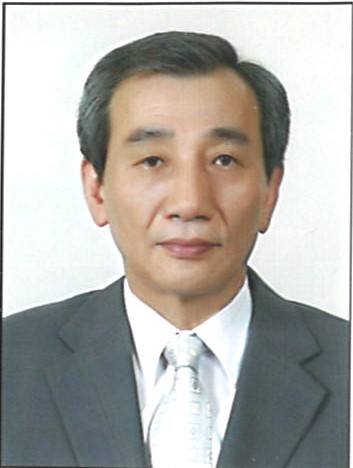
Recently, research has been conducted by Professor Kie-Young Lee from the School of Electrical Engineering at Chungbuk National University in Republic of Korea on the impedance field of saturated metal-oxide semiconductor field-effect transistor and drain thermal noise with an aim to ascertain the effects of velocity saturation region on impedance field of photo-type MOSFET devices that operate at the saturation region. His work is now published in journal Solid-State Electronics.
First, in order to analyze the drain thermal noise, an improved impedance field for the drain thermal noise had to be derived using a well-known physical analysis method of MOSFET noise. The drain thermal noise which reflects the effects of the velocity saturation region were was then developed with conventional assumptions that are commonly employed in the MOSFET device analyses.
Next, the thermal noise variables that were induced at the boundaries of the velocity saturation region were examined to develop models for the impedance field of the saturated MOSFETs. By injecting an incremental current in the gradual channel under the open circuited drain operation, the impedance field for the noise source in the region I of the gradual channel was derived. A noise equivalent circuit model which is applicable to both short- and open- circuited drain modes of noise operation was also provided.
Thereafter, an impedance field for the noise source in the region II of the velocity saturation region was to be derived. Again, an incremental voltage that was developed at the drain terminal by feeding an incremental current in the region II under the open circuited drain mode of operation was introduced. The drain noise component that originated from the velocity saturation region was evaluated by using the developed impedance field and the Gaussian surface that had been elaborated to obtain pseudo-2-dimensional electrostatics in the velocity saturation region.
It is notable that a modulation factor can be used to express short circuited drain noise current of saturated MOSFETs. It also indicates that its deviation from unity increases as channel length decreases. The modulator factor Rn manifests the physical effects of the velocity saturation region on the drain noise. The contribution to the total drain thermal in a complementary manner of the regionally short circuited noise source currents of the gradual channel region and the velocity saturation region was expressed in terms of the modulation factor. (A more correct expression regarding to this sentence is described in the last of the above paragraph.)
The drain thermal noise that was obtained after these tests was quite consistent with empirical data for devices of moderately short channel dimension. This analysis as performed for proto-type devices proves inadequate for pocket implanted deep short channel MOSFETs, where effects of non-uniformly doped channel must be considered.
 A self-consistent noise equivalent circuit model under the short circuited drain mode of noise operation with regionally short circuited noise source currents δInI and δInII of gradual channel region (GCR) and velocity saturation region (VSR), respectively.
Reference
Kie-Young Lee. Analysis of the impedance field of saturated MOSFETs and drain thermal noise. Solid-State Electronics. volume 130 (2017) pages 63–69.
School of Electrical Engineering, Chungbuk National University, 1 Chungdae-ro, Seowon-gu, Cheongju, Chungbuk 362-763, Republic of Korea.
Go To Solid-State Electronics