Advances in Engineering Advances in Engineering features breaking research judged by Advances in Engineering advisory team to be of key importance in the Engineering field. Papers are selected from over 10,000 published each week from most peer reviewed journals.

Significance Statement
To achieve energy sustainability the rich must switch to Electric Vehicles
Research has shown that achieving a more sustainable environment will require an increasing level of care for each other among increasingly financially minded society. The uptake of electric vehicles (EV), and along with it reducing the pollution levels in cities from cars, relies upon the wealthy to be altruistic by choosing EV.
Mark Andrich, along with Jörg Imberger, and Lord Ron Oxburgh, the former Chairman of Shell, conducted the research that was published in the Energy for Sustainable Development journal (http://www.sciencedirect.com/science/article/pii/S097308261300032X). It examined Western Australia’s present case of high fossil fuel usage, a 19th century technology, and the clear discrepancy between low and high income households.
The purpose of the research, which was to understand how wealth inequality affects sustainable development of energy resources, has also investigated the impact of which carbon dioxide emissions have on health of the population, particularly in relation to a household’s distance to vehicle pollution.
Because high income households live further away from vehicle pollution and that the distance from major roads is inversely proportional to income levels, the poor are burdened the most from vehicle traffic pollution, at a cost of more than $1,000 per household per year in health costs.
Due to this unfortunate relationship whereby the poor bear the brunt of unsustainable energy use, there is little incentive for those who are financially capable to convert to more sustainable forms of energy, given that close impacts such as vehicle pollution seem to be disconnected. As such, the incentive for high income earners to convert to sustainable forms of energy use is low, yet given the cost of electric vehicles this group is also the only segment of society capable of doing so. This doesn’t include any subsidies, which presumably would reduce other Government social services spending.
The research provided three steps that would lead to the most sustainable energy use scenario, and also reduce the gap between high and low level incomes, a major world-wide social and economic problem:
1) Medium-high income households, the only group with the necessary disposable income available, should reduce their use of Internal Combustion Engine Vehicles (IVEC) and convert to Electric Vehicles (EV).
2) Low-income households should continue to use ICEV and have access to low-cost (inc. fossil fuel based) electricity, until EV become more affordable than current alternatives.
3) Once households switch to EV they need to increase usage of renewable energy electricity to reduce carbon dioxide emissions.
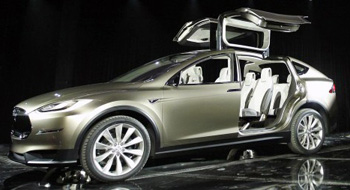
The theoretical research has since been backed up with real world evidence: Tesla is the most successful EV Company; its cars are targeted at the luxury market; and Norway and Japan have 2 of the world’s most equal societies – it is no coincidence that they have 2 of the world’s highest rates of EV penetration.
Energy for Sustainable Development, Volume 17, Issue 4, 2013, Pages 315-325.
Mark A. Andrich(a) , Jörg Imberger(a), E.R. Oxburgh(b)
a Centre for Water Research, University of Western Australia, Crawley, WA 6009, Australia and
b University of Cambridge, Cambridge, CB2 1TN, United Kingdom.
Abstract
The Australian state of Western Australia could follow a number of different paths to satisfy its future energy needs with each path meeting different criteria for sustainable development. A number of energy use scenarios were analysed, including the present case of high fossil fuel use, in terms of carbon dioxide emissions, water consumption, and financial impact on households with incomes at different levels. Scenarios had different combinations of electricity generation sources and vehicle type. It was found that health costs from vehicle emissions are a significant cost of energy use for households relative to other costs (e.g., cost of fuel). Because of high income inequality and the effects of vehicle emissions on health, it was found that the most sustainable use of energy for society overall requires households to use energy differently according to their income levels. Low-median income households have the most to gain from overall electric vehicle uptake, but these same households cannot afford to adopt these vehicles. We show that the differential effects of current energy use on households with different income levels is increasing inequality between households, and that inequality both results from, and is a cause of unsustainable energy use. The conclusion is that income inequality is an obstacle to the uptake of electric vehicles, and can therefore be an obstacle to sustainable energy use.