Advances in Engineering Advances in Engineering features breaking research judged by Advances in Engineering advisory team to be of key importance in the Engineering field. Papers are selected from over 10,000 published each week from most peer reviewed journals.

Significance
Interferometers use the superposition principle to extract useful information from interference. The recent technological advancement has led to the design of high-performance interferometers with extended applications in science and industry. Interferometers and spherical lenses, particularly those with a high numerical aperture (NA), are critical components for designing high-magnification and wide-angle optical products. For example, excellent spherical surface measurement repeatability of about 0.1 nm obtained using a phase-shifting Fizeau interferometer has significantly improved the quality control of optical products. Nevertheless, their practical applications are limited by numerous limitations associated with spherical testing.
Some known sources of errors in spherical testing are misalignment-induced aberrations, spatial nonuniformity of the phase shift and instantaneous tilt during phase modulation. For example, spatial nonuniformity during high-NA optical lens tests can degrade mechanical modulation and produce phase measurement errors. Although Fizeau interferometer with wavelength tuning source is a viable option for spherical testing, their use is also limited by the lack of spatial nonuniformity of the phase shift and intensity source variation that often leads to more errors.
Many phase-shifting algorithms have been developed to compensate for phase-shift errors. While most of these algorithms have successfully reduced the error in the measured phase by decreasing the maximum nonuniformity of the phase shift, there is still evidence of a discrete phase change error at the boundary, a new type of spatially non-uniform errors. This can be mainly attributed to the varying sensitivities of different algorithms to phase-shift error. Another common problem is the misalignment of the coefficient due to increased sensitivity to random noise. Thus, developing a more effective method for mitigating these errors and improving the performance of optical products is highly desirable.
Herein, Olympus Corporation scientists: Mr. Toshiki Kumagai and Mr. Keita Tomita together with Professor Katsumi Wasaki from Shinshu University and Dr. Kenichi Hibino from the National Institute of Advanced Industrial Science and Technology proposed a reliable and robust method for aligning the error coefficients for a set of algorithms to the phase-shift error. The momentum and other error coefficients were systematically adjusted based on the sampling window convolution with a three-frame processing window. Their research work is currently published in the research journal, Applied Optics.
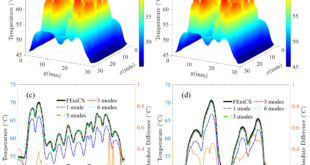
In their approach, the observation aperture was divided into several annular regions and used alongside several algorithms designed for different phase shifts to calculate the object phase. The feasibility of this approach was experimentally and numerically validated in high-NA spherical testing in Fizeau interferometry. The authors showed that the synthetic calculations substantially decreased the nonuniformity even though it resulted in the new type of spatially non-uniform errors.
The proposed convolution technique increased the orders of zeros and allowed manipulation of the position of zeros on the frequency axis. Remarkably, this manipulation, which could be achieved by fixing a single parameter for the processing window, played a critical role in adjusting the coefficients of the algorithm. A total of five algorithms having the same error coefficients but different optimal phase shifts were derived and used as examples. These algorithms were successfully used to measure a spherical surface with a NA of 0.86. Consequently, the processing window could also be used to eliminate linear error coefficients.
In summary, the research team demonstrated the effectiveness of a newly proposed convolution technique. This technique exhibited several benefits, including significantly minimizing the bias dc error in spherical testing, eliminating linear error coefficients, and achieving inertia alignment of the phase-shifting algorithms. In a statement to Advances in Engineering, Professor Katsumi Wasaki pointed out that their findings provided useful insights that would contribute to the design of high-performance optical products for application in different fields.

Reference
Kumagai, T., Hibino, K., Tomita, K., & Wasaki, K. (2022). Inertia alignment of phase-shifting algorithms for high-numerical-aperture spherical testing in Fizeau interferometry. Applied Optics, 61(30), 8926–8935.