 Advances in Engineering Advances in Engineering features breaking research judged by Advances in Engineering advisory team to be of key importance in the Engineering field. Papers are selected from over 10,000 published each week from most peer reviewed journals.

Significance
Steel structures rarely fail suddenly and deterioration happen over years of service, due to repeated fatigue cycles, environmental exposure, construction tolerances, and steadily increasing demands. In bridges and other large-span steel systems, this gradual process often manifests as localized cracking or stiffness loss—phenomena that may appear minor in isolation but can progressively undermine global structural performance. To address damage without amplifying stress concentrations or disrupting ongoing operation is still a challenge for engineers tasked with extending the life of existing infrastructure. Iron-based shape memory alloys (Fe-SMAs) have attracted growing attention as an alternative strengthening material. Their appeal lies not only in their mechanical strength, but in their ability to generate recovery stress through thermal activation when constrained. This mechanism enables the introduction of prestress without relying on hydraulic jacks, anchor systems, or extensive installation space. In practice, this distinction matters. Many in-service structures offer limited access, and reinforcement strategies that demand heavy equipment or intrusive anchorage can be impractical or undesirable. Fe-SMAs, by contrast, align well with such constraints while remaining mechanically compatible with steel substrates. However, the performance of an Fe-SMA strengthening system is not dictated by the alloy alone. The interface through which forces are transferred into the host structure plays a decisive role and the adhesive bonding is preferred connection method, largely because it avoids drilling-induced damage, maintains fatigue resistance, and promotes more uniform stress distribution along the bonded length. Moreover, experimental investigations have shown that adhesively bonded Fe-SMA joints can sustain loads exceeding the recovery stress generated by activation, which highlight their potential for structural rehabilitation.
Despite these encouraging findings, the mechanics of the Fe-SMA–steel interface remain only partially resolved and current design practice still lacks bond–slip models developed explicitly for this material pairing and while models adapted from CFRP–steel systems offer a starting point, Fe-SMAs differ markedly in stiffness, ductility, and stress evolution during loading and activation. Without interfacial models grounded in targeted experimental evidence, predictions of joint behavior remain uncertain, limiting confidence in design and hindering broader adoption. To this end, new research paper published in Structures and conducted by Dr. Yapeng Wu, Professor Xu Jiang, Professor Xuhong Qiang, and Dr. Wulong Chen from the College of Civil Engineering at Tongji University, the researchers developed experimentally calibrated bond–slip constitutive models for Fe-SMA–steel adhesively bonded joints, capturing both nonlinear loading and progressive debonding behavior. These models were simplified into bilinear, triangular cohesive zone formulations suitable for engineering design and numerical simulation. New predictive equations were proposed to calculate key interfacial parameters directly from adhesive mechanical properties.
The research team fabricated using Fe-SMA plates adhesively bonded to structural steel substrates to elucidate the interfacial behavior of Fe-SMA–steel bonded joints (series of single-lap-shear specimens). They focused on surface preparation, adhesive curing conditions, and thickness control to ensure consistent interfacial quality. They also employed three epoxy-based structural adhesives with distinct mechanical properties, while adhesive thickness was systematically varied to capture its influence on stress transfer and failure behavior. The authors found that under monotonic tensile loading, all specimens exhibited a characteristic two-stage response. In the initial loading phase, the applied force increased steadily with displacement, reflecting elastic deformation of the adherends and shear deformation within the adhesive layer. During this stage, strain measurements along the Fe-SMA plate revealed pronounced stress concentration near the loading end, indicating localized load transfer at the onset of loading. As displacement increased further, the joints reached an ultimate load beyond which the response transitioned into a debonding development stage. Once debonding initiated at the loaded end, damage propagated progressively along the bonded interface toward the clamping end. Importantly, the overall load did not collapse immediately after peak capacity was reached. Instead, it fluctuated around a relatively stable level as debonding advanced, demonstrating a form of pseudo-ductile behavior. Throughout this process, a distinct effective bonding length emerged—defined as the portion of the interface actively transmitting shear stress. Experimental strain and stress distributions showed that this effective length remained nearly constant during debonding, even as the damaged region expanded.
The interfacial shear stress profiles derived from strain measurements further clarified the stress transfer mechanism. Within the effective bonding zone, shear stress increased from zero to a peak value before decreasing again, while regions outside this zone carried negligible stress. Once local debonding occurred, the shear stress in the failed region dropped rapidly to zero, confirming that load transfer was confined to the intact effective length. Across different adhesives, this effective bonding length consistently fell within a narrow range, highlighting its material-dependent yet geometrically stable nature. The team found failure modes varied significantly depending on adhesive type and some joints failed primarily through interfacial debonding between Fe-SMA and adhesive, while others exhibited mixed interfacial and cohesive failure or fully cohesive fracture within the adhesive layer. These differences were reflected directly in the bond–slip responses extracted from experimental data. The ascending portions of the bond–slip curves showed a nonlinear, concave increase in shear stress with slip, whereas the post-peak behavior ranged from gradual linear softening to more abrupt exponential decay.
In conclusion, the research work of Tongji University scientists established a practical constitutive framework for designing and analyzing Fe-SMA-based structural reinforcement systems. The significance of this work lies in its systematic clarification of how Fe-SMA–steel bonded interfaces deform, transfer stress, and ultimately fail under mechanical loading. By moving beyond global load–displacement observations and directly interrogating interfacial stress and slip evolution, the study provides a mechanistic understanding that is often missing in reinforcement design. The authors successfully identified the stable effective bonding length that governs load transfer throughout the debonding process and this finding challenges the assumption that increasing bonded length indefinitely enhances joint capacity. Instead, it demonstrates that once the effective length is reached, additional bonded area contributes little to load resistance. From a design perspective, this enables more efficient material usage and clearer anchorage length requirements when bonding Fe-SMA components to steel structures.
Equally important is the establishment of bond–slip constitutive models specifically calibrated for Fe-SMA–steel interfaces. The triangular cohesive zone formulations proposed in this work strike a deliberate balance between physical realism and engineering simplicity. By expressing key interfacial parameters such as peak shear stress, characteristic slip values, stiffness, and fracture energy in closed-form relationships tied to adhesive properties, the models become directly usable in both finite-element simulations and analytical calculations. Moreover, the differentiation between adhesive systems further highlights the need for material-specific design approaches and the adhesives that promote cohesive failure the team show to mobilize higher interfacial fracture energy and more favorable stress redistribution, whereas joints dominated by interfacial debonding underutilized adhesive capacity. These findings have immediate practical implications, guiding engineers toward adhesive selection strategies that maximize the performance of Fe-SMA strengthening systems. Beyond Fe-SMA applications, the broader methodological framework developed here contributes to the general understanding of bonded joint mechanics in metallic systems. The reported study helps situate Fe-SMA technology within the larger context of bonded reinforcement research while highlighting where conventional assumptions must be revised by demonstrating strong parallels and critical distinctions between Fe-SMA steel and CFRP–steel interfaces,. As infrastructure systems worldwide continue to age, such physically grounded and practically implementable models will be essential for translating smart material technologies from laboratory demonstrations into durable, large-scale engineering solutions.

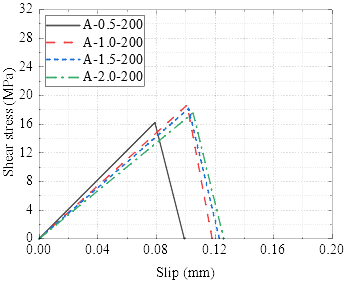
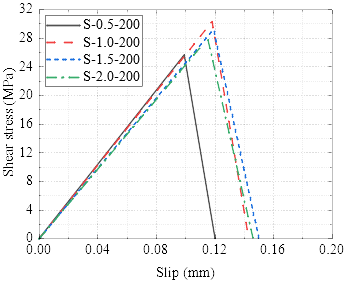
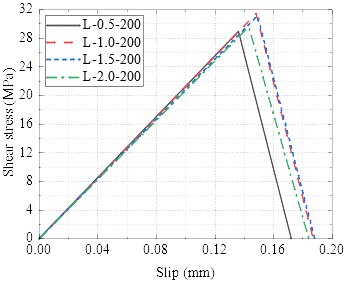
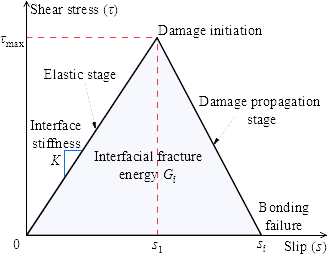
Fig. 3 Bilinear bond–slip constitutive models



Reference
Yapeng Wu, Xu Jiang, Xuhong Qiang, Wulong Chen, Interfacial constitutive model of Fe-SMA-and-steel single-lap-shear bonded joints, Structures, Volume 76, 2025, 108913,