Advances in Engineering Advances in Engineering features breaking research judged by Advances in Engineering advisory team to be of key importance in the Engineering field. Papers are selected from over 10,000 published each week from most peer reviewed journals.

Significance Statement
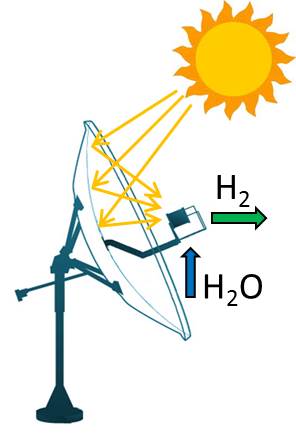
As global hunger for energy increases and conventional energy sources begin to dwindle, a new generation of energy technologies will be necessary for the continued advancement of human society. Recent interest in solar energy technologies in particular has given rise to increasingly popular photovoltaic systems which directly convert solar energy to electricity. Another form of solar utilization lies with concentrated solar power. Instead of directly converting sunlight to usable energy, this method uses the heat from concentrated sunlight to drive chemical reactions and produce fuels. While currently less developed, concentrated solar power can offer a significant advantage over its photovoltaic counterpart in storage and portability. That is, solar fuels can be stored, transported, and converted for flexible use.
The work herein discusses thermochemical cycling, a type of concentrated solar power that harnesses the heat from sunlight to drive oxidation and reduction reactions. Oxidation of an intermediate reactive material with water and/or carbon dioxide produces hydrogen or syngas fuels. Reduction at high temperature using solar thermal energy removes oxygen and primes the material for a new oxidation cycle, thus representing a regenerative cycle that produces fuel constantly with a supply of sunlight and water/CO2. The efficacy of thermochemical cycling depends, in significant part, upon the intermediate reactive material. Reactivity tends to decrease with increasing cycles due to effects such as sintering, thermal deactivation, or physical degradation. For this technology to be economical, a reactive stability of its intermediate material is important to achieve over many cycles. The reactive stability of a porous ceria material is explored in this work and is found to be promising for long term fuel production. When further optimized, the investigation of the reactive stability of thermochemical cycling materials leads to the possibility of practical and storable energy through solar thermal power.
Journal Reference
Energy, Volume 89, 2015, Pages 924-931.
Nathan R. Rhodes, Michael M. Bobek, Kyle M. Allen, David W. Hahn
Department of Mechanical and Aerospace Engineering, University of Florida, P.O. Box 116250, Gainesville, FL 32611-6300, USA
Abstract
The use of an intermediate reactive material composed of cerium (IV) oxide (ceria) is explored for solar fuel production through a CO2-splitting thermochemical redox cycle. To this end, powder and porous ceria samples are tested with TGA (thermogravimetric analysis) to ascertain their maximum fuel production potential from the CeO2 → CeO2−δcycle. A maximum value of the non-stoichiometric reduction factor δ of ceria powder was 0.0383 at 1450 °C. The reactive stability of a synthesized porous ceria sample is then observed with carbon dioxide splitting at 1100 °C and thermal reduction at 1450 °C. Approximately 86.4% of initial fuel production is retained after 2000 cycles, and the mean value of δ is found to be 0.0197. SEM (scanning electron microscopy) imaging suggests that the porous ceria structure is retained over 2000 cycles despite apparent loss of some surface area. EDS (energy dispersive x-ray spectroscopy) line scans show that oxidation of porous ceria becomes increasingly homogenous throughout the bulk material over an increasing number of cycles. Significant retention of reactivity and porous structure demonstrates the potential of porous ceria for use in a commercial thermochemical reactor.
Go To Energy