Advances in Engineering Advances in Engineering features breaking research judged by Advances in Engineering advisory team to be of key importance in the Engineering field. Papers are selected from over 10,000 published each week from most peer reviewed journals.

Significance
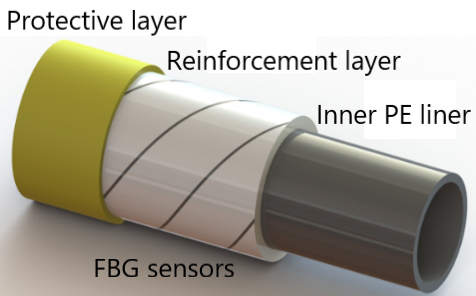
The use of lightweight fiber-reinforced plastic (FRP) materials has been gaining considerable attention, particularly in the form of thermoplastic composite pipes (TCPs) for offshore exploration and production. These innovative materials are increasingly replacing traditional steel components due to their outstanding properties, including high strength, low weight, and exceptional corrosion resistance. TCPs, comprised of inner liners, reinforcement layers, and outer layers, are utilized in various offshore applications, such as risers, hoses, and jumpers.
While many studies has been dedicated to studying the mechanical behavior and failure modes of TCPs under different conditions, there remains a significant gap in understanding how to identify and assess damages within these structures. Damage detection is a vital aspect of structural health monitoring (SHM) and operational risk management for offshore pipelines, as damage can result from various factors such as material defects, external loads, creep, and fatigue.
In pipeline monitoring, much attention has been given to leak detection, which is crucial for maintaining the integrity of pipelines. Leak detection methods can be broadly categorized into two groups: model-based and data-driven approaches. Model-based methods rely on mathematical models to predict and locate leaks. While they can be effective under ideal conditions, they often struggle to provide accurate results in the presence of external disturbances. Examples of model-based methods include those using wavelet packet entropy and acoustic wave amplitude attenuation models.
Data-driven methods, on the other hand, analyze data directly to detect and locate leaks. These methods have been gaining popularity, especially with the advent of machine learning techniques. Traditional machine learning methods such as random forests, Bayesian networks, and support vector machines have been applied to leak detection, but they are sensitive to noise in real-world data.
Machine learning, specifically deep learning techniques, have emerged as powerful tools for structural damage detection. These methods can handle large datasets and are more resilient to noisy data. Traditional machine learning algorithms like random forests, Bayesian networks, and support vector machines have been utilized, but they can struggle with noise in real-world applications.
Deep learning techniques, including convolutional neural networks (CNNs), recurrent neural networks (RNNs), and long short-term memory (LSTM) networks, have shown promise in structural damage detection. For example, CNNs have been used to analyze time-series acoustic data for pipeline leak detection, while LSTM networks have been applied to predict internal valve leakage rates in natural gas pipelines.
Although deep learning methods have demonstrated excellent performance in structural damage detection, LSTM networks, which are well-suited for sequence prediction tasks, have not received as much attention in the SHM field. Earlier research studies by Associate Professor Xingxian Bao and colleagues proposed an LSTM-based damage identification method for jacket offshore platforms, comparing it with CNN and CNN-LSTM methods in terms of accuracy and efficiency. LSTM networks have the potential to excel in damage detection tasks, even in the presence of noise.
In light of the current state of research, it is evident that while leak detection in pipes has received significant attention, the focus on damage detection in TCPs is notably lacking. To address this gap and in a new study published in the Journal of Ocean Engineering, Associate Professor Xingxian Bao from the China University of Petroleum (East China) and colleagues proposed a method that combines the random decrement technique (RDT) with the random forest (RF) algorithm and LSTM networks for damage localization and severity estimation in TCPs, even under challenging noise conditions. The RDT serves as a data preprocessing step to enhance the noise immunity of traditional machine learning algorithms and deep-learning LSTM networks. Indeed, the study’s findings are highly promising and contribute significantly to the field of structural health monitoring for TCPs:
The research team conducted numerical experiments involving simulated circular holes of varying radii and depths on different layers of the TCP demonstrated that the RDT-RF and RDT-LSTM methods consistently outperformed RF and LSTM methods, even under high noise levels. The accuracy of damage localization approached 100%, highlighting the robustness of the proposed approach. Furthermore, the RDT-RF and RDT-LSTM methods excelled in damage severity identification, with maximum errors of only 1.67% and 2.00%, respectively.
The authors’ experimental investigations using Fiber Bragg Grating (FBG) sensors to collect strain responses from a TCP model subjected to random excitation confirmed the effectiveness of the RDT-RF and RDT-LSTM methods for damage localization and severity estimation. These methods demonstrated their utility irrespective of whether the damage was located at a single or multiple locations within the structure.
The authors’ innovative approach has the potential to revolutionize damage detection in thermoplastic composite pipes and other similar structures, particularly under noisy conditions. By combining the RDT, RF, and LSTM networks, this methodology offers a robust solution for identifying and assessing damage in TCPs, enhancing their structural health monitoring capabilities. Furthermore, the prospect of automating the calculation process and implementing these methods as part of unmanned structural health monitoring systems holds promise for the future. This could lead to improved operational risk management and safety in offshore applications.
In conclusion, Professor Xingxian Bao and colleagues research work is an important step forward in the field of structural health monitoring for thermoplastic composite pipes. It highlights the importance of adopting advanced machine learning techniques, such as LSTM networks, and the potential for their broader application in damage detection and monitoring of critical infrastructure.

Reference
Xingxian Bao, Zhichao Wang, Dianfu Fu, Chen Shi, Gregorio Iglesias, Hongliang Cui, Zhengyi Sun, Machine learning methods for damage detection of thermoplastic composite pipes under noise conditions, Ocean Engineering, Volume 248, 2022, 110817,