 Advances in Engineering Advances in Engineering features breaking research judged by Advances in Engineering advisory team to be of key importance in the Engineering field. Papers are selected from over 10,000 published each week from most peer reviewed journals.

Significance Statement
Fumiyoshi Yoshinaka and colleagues carried out a research to reveal the propagation process of internal crack growth in titanium alloys Ti-6Al-4V. The research published in International Journal of Fatigue investigated the very high cycle fatigue properties of titanium alloys.
The study used synchrotron radiation micro computed tomography μCT technique to observe internal fatigue crack growth which is small to be detected by commonly used X-ray CT. The synchrotron radiation facility is located in Hyogo, Japan. With this facility, high brightness synchrotron radiation of one million time can be achieved. Super Photon ring-8GeV (SPring-8) is one of the world largest third-generation synchrotron radiation facilities.
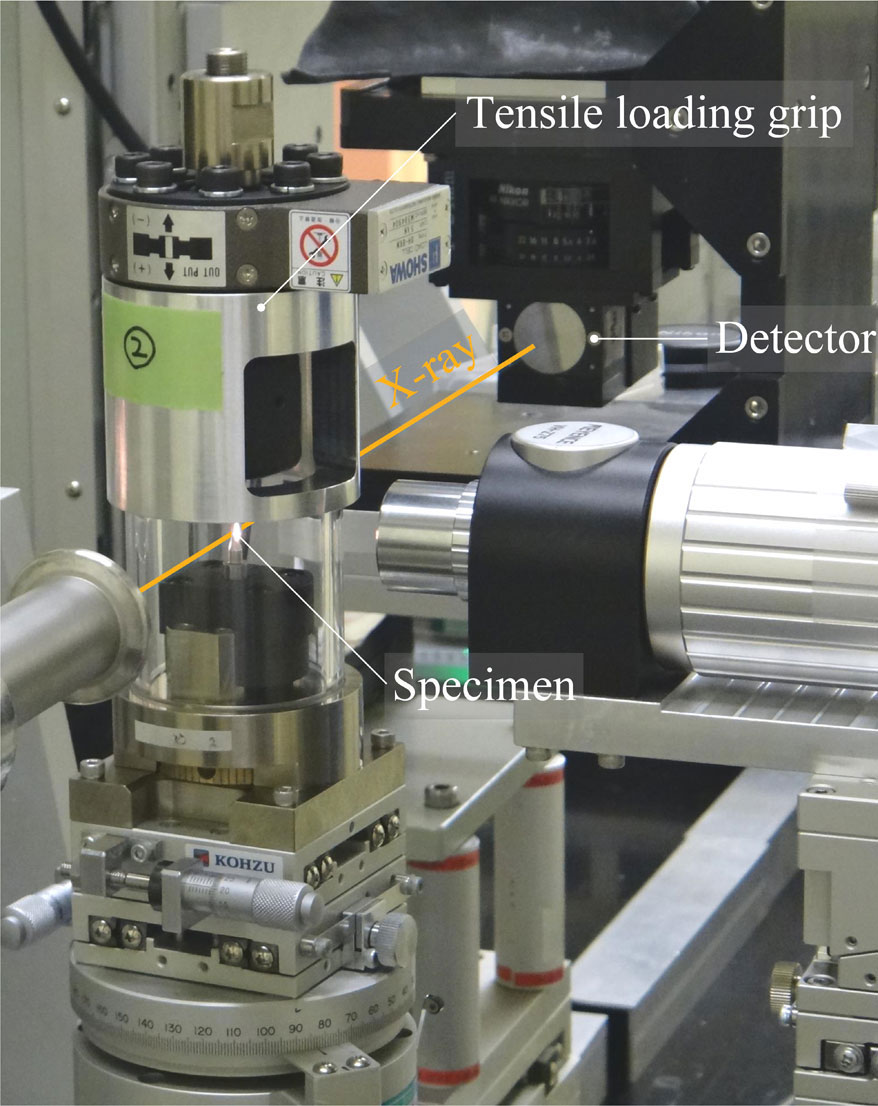
The research team explained that fatigue test was carried out using a high response and transportable axial hydraulic servo fatigue testing machine that was developed in the laboratory. The imaging system consists of light source, optical system, a detector, and a specimen. In Ti–6Al–4V, the size of the initial crack would be a few tens of micrometers. Nakamura and his co-researcher assumed fatigue cracks close under unloading conditions. It seems to be difficult to detect such a closed small crack, so a tensile loading grip was developed to open the crack during μCT imaging.
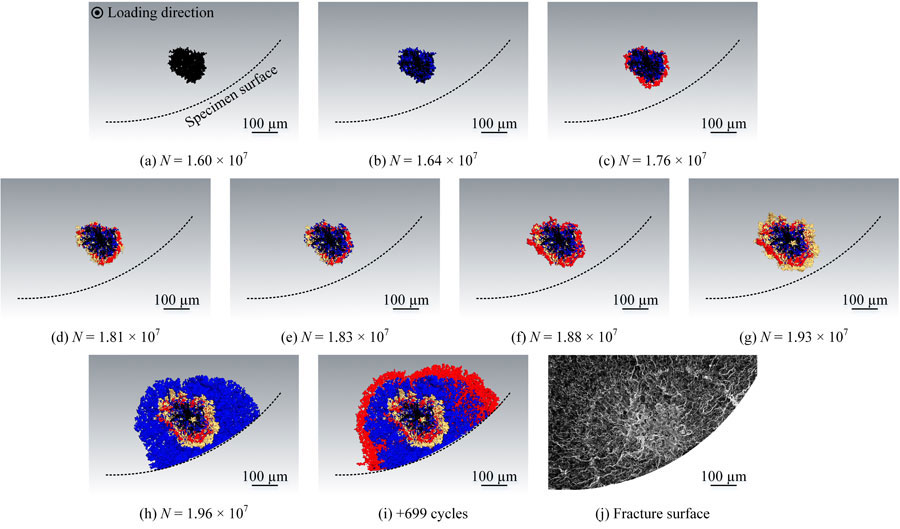
To find an internal small crack, the projected image perpendicular to the loading axis was carefully examined in the parallel part of the pre-fatigued specimen. As a result, a circular dark region was observed in the images of the first μCT imaging.
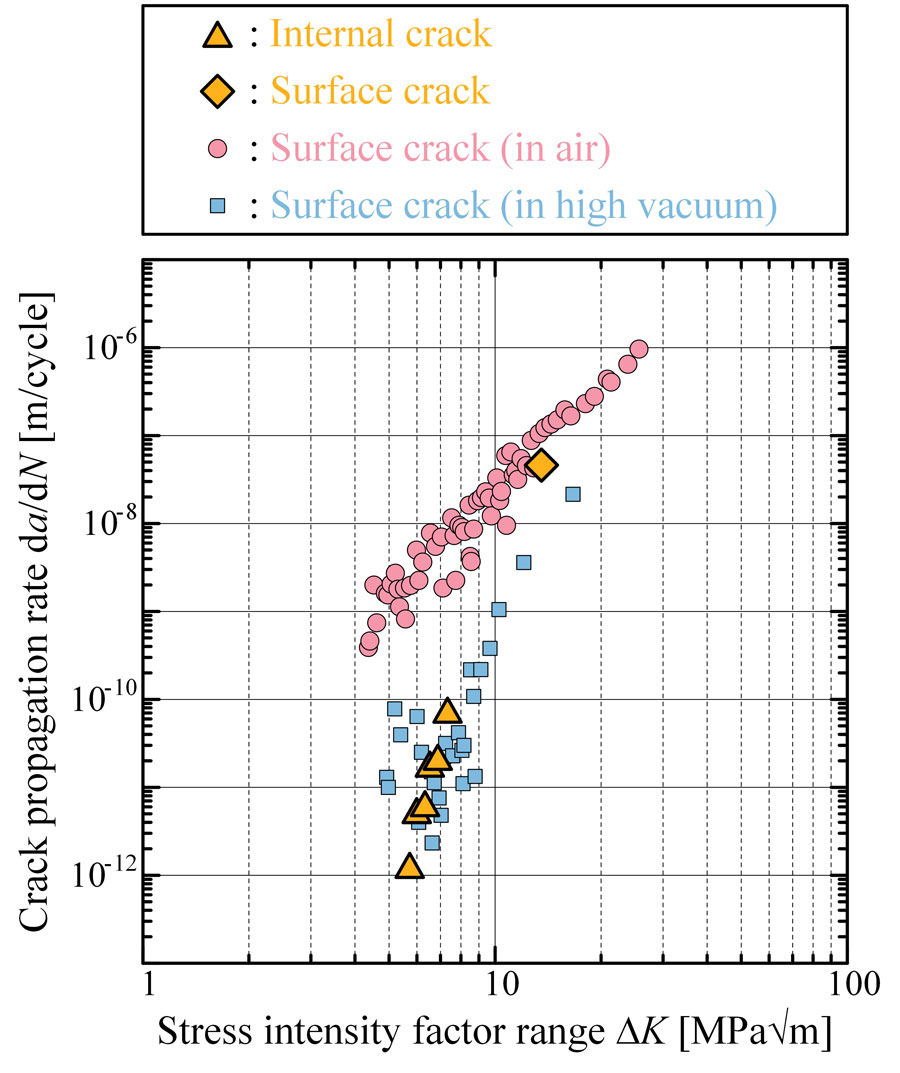
The propagation of an internal fatigue crack in Ti–6Al–4V was non-destructively observed by synchrotron radiation μCT imaging to clarify the crack growth rate in very high cycle fatigue. The results show that the internal crack propagated quite slowly at a rate of less than 10-10 m/cycle.
The shape and dimension of the internal fatigue crack observed by μCT imaging matched those measured on the surface profile of the fracture surface obtained by 3D-SEM. The accuracy of μCT imaging was considered sufficient to give a reliable image of the internal crack propagation. The rate of the internal crack was similar to that of the surface crack in high vacuum which was obtained by their previous research, but was significantly lower than that in air.
These findings suggest that the reason for the great difference between the propagation rates of internal and surface cracks is the difference in environments around them.






Journal Reference
Fumiyoshi Yoshinaka1, Takashi Nakamura2, Shinya Nakayama1, Daiki Shiozawa3, Yoshikazu Nakai3, Kentaro Uesugi4, Non-destructive observation of internal fatigue crack growth in Ti–6Al–4V by using synchrotron radiation μCT imaging. International Journal of Fatigue , 2016 , 93 , Part 2 , 397-405.
[expand title=”Show Affiliations”]- Division of Mechanical and Space Engineering, Graduate School of Engineering, Hokkaido University, Kita 13, Nishi 8, Kita-ku, Sapporo, Hokkaido 060–8628, Japan.
- Division of Mechanical and Space Engineering, Faculty of Engineering, Hokkaido University, Kita 13, Nishi 8, Kita-ku, Sapporo, Hokkaido 060–8628, Japan.
- Department of Mechanical Engineering, Kobe University, 1-1, Rokkodai-cho, Nada-Ku, Kobe 657-8501, Japan.
- Japan Synchrotron Radiation Research Institute, 1-1-1, Kouto, Sayo-cho, Sayo-gun, Hyogo 679-5198, Japan.
Go To International Journal of Fatigue