Advances in Engineering Advances in Engineering features breaking research judged by Advances in Engineering advisory team to be of key importance in the Engineering field. Papers are selected from over 10,000 published each week from most peer reviewed journals.

Significance
The health and long-term integrity of bridges is vital taking into consideration infrastructure aging and increased traffic demands. Now among the most critical tools in modern bridge management is structural health monitoring (SHM), which relies on continuous data collection from embedded sensors to evaluate performance and predict potential failures. However, the effectiveness of SHM systems is often limited by the very data they produce. Sensor readings, although rich in information, are frequently marred by complex noise profiles—particularly non-Gaussian noise originating from environmental factors, sensor degradation, and operational inconsistencies. This creates a significant barrier to interpreting stress measurements and, more importantly, to calculating reliable safety margins. For engineers and inspectors tasked with safeguarding critical infrastructure, the challenge lies not just in gathering data, but in extracting truth from within it. Another major challenge emerges from the way reliability assessments are traditionally carried out. Standard models used in structural reliability theory tend to assume that failure mechanisms behave independently or follow linear correlation structures. These assumptions simplify mathematical treatments but often misrepresent the actual dynamics of complex systems like cable-stayed or suspension bridges, where various structural elements are inherently interdependent. In particular, the interrelation between stress responses at different monitoring points—caused by shared loading conditions or systemic design features—tends to have nonlinear behavior that conventional approaches cannot capture accurately.
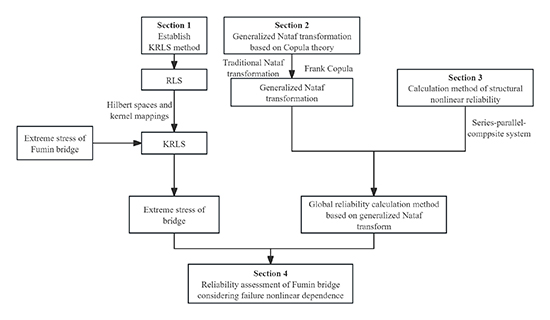
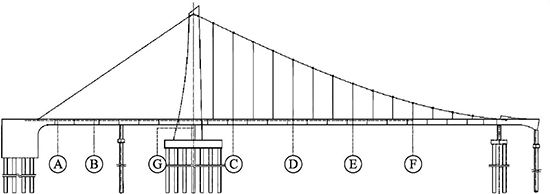
To this account, new research paper published in Journal Structures and conducted by Qifan Zhao, Yuefei Liu, and led by Professor Xueping Fan from the School of Civil Engineering and Mechanics at Lanzhou University, the researchers wanted to address two essential points in the field: how to effectively denoise bridge monitoring data and how to model the true, often nonlinear, relationships among structural failure indicators. Therefore, they designed an integrated method combining Kernel Recursive Least Squares (KRLS) filtering with a generalized Nataf transformation to improve the accuracy of bridge reliability assessments. The KRLS algorithm effectively removed non-Gaussian noise from sensor data, revealing more reliable stress measurements. Simultaneously, the generalized Nataf transform, enhanced by copula theory, captured nonlinear dependencies between structural components. In their experiments, the research team began by collecting extensive time-series data from three fiber-optic strain sensors embedded in the transverse floor section of the bridge’s main girder, each strategically placed to represent critical points in the structural layout and over a span of ten days, data was captured every five minutes which resulted in 2,700 stress measurements per sensor. These collected data points reflected structural responses to traffic and temperature and also contained layers of unpredictable, non-Gaussian noise—exactly the type of distortion the researchers wanted to filter out. Afterward, the authors applied the KRLS algorithm, training it on the first 1,800 data points and testing it on the remaining 900. They noticed that the algorithm succeeded in denoising the input signals with high precision, outperforming the more conventional Kernel Least Mean Square (KLMS) method by a notable margin. The mean square error from KRLS rapidly converged and remained low, while KLMS exhibited slower convergence and a rougher trajectory. The filtering process also revealed that the noise affecting the raw signals spanned a wide and irregular range, further justifying the need for robust nonlinear denoising techniques. Afterward, the authors shifted focus to the question of how different monitoring points interacted under shared loading conditions. Using the filtered stress data, they calculated reliability indices for the section by applying three distinct models: one assuming no correlation among sensor readings, another based on Gaussian copulas, and finally, their proposed model using the generalized Nataf transform built around the Frank copula. The differences were striking. When interdependencies were ignored, the reliability estimates were overly conservative, suggesting a higher risk of failure than was likely. Data also showed that the Gaussian-based model improved upon this but still failed to capture the subtle curvature in the data’s dependency structure. In contrast, the generalized Nataf method delivered results that better reflected the system’s actual behavior—yielding higher reliability indices and lower failure probabilities that aligned more closely with empirical expectations.
In conclusion, the research work of Professor Xueping Fan and colleagues is an important and meaningful step forward in how structural engineers can evaluate the reliability of complex bridges under real-world conditions. The researchers successfully addressed two foundational issues often overlooked in traditional assessments—noisy, non-Gaussian monitoring data and the oversimplification of how different structural components interact under stress by their new method of integrating kernel-based filtering with an advanced statistical transformation. We believe the implications are practical and immediate, for instance for engineers and policymakers: overly conservative models often lead to premature interventions or unnecessary reinforcements, inflating costs and diverting resources from areas of greater need. Conversely, overly optimistic models put lives at risk by failing to anticipate failure. The proposed new method provides a path toward balance with better data fidelity and an excellent understanding of how stresses correlate across the structure, maintenance schedules can be better timed, retrofitting decisions can be more targeted, and risk assessments can carry more confidence. Furthermore, this new methodology can be applied to any bridge and any type of structure and the core concepts—nonlinear filtering and flexible dependency modeling—are transferable to a wide range of infrastructures where sensor data is noisy and component interactions are not purely linear.




Reference
Qifan Zhao, Yuefei Liu, Xueping Fan, Bridge reliability assessment method considering failure nonlinear dependence based on kernel recursive adaptive filtering and generalized Nataf transformation, Structures, Volume 79, 2025, 109539,