Advances in Engineering Advances in Engineering features breaking research judged by Advances in Engineering advisory team to be of key importance in the Engineering field. Papers are selected from over 10,000 published each week from most peer reviewed journals.

Significance
In the modern marine industry, reliability assessment of marine equipment is indispensable. Generally, the reliability of marine equipment refers to the capability to perform a specified function under specified conditions within a specified duration. It is important in ensuring operational and environmental safety as well as the selection of appropriate optimum maintenance intervals and scheduling ship maintenance plans. Although the ship reliability problem has been extensively studied in the literature, most studies have focused on reliability assessment methods for ship human factor with little attention to marine equipment. Consequently, influential assessment methods have concentrated on technical parameters with less focus on user feedback.
Some fundamental issues still need to be explored in detail to bridge the existing literature gap. First, the design of parameters fails to measure some assessment process criteria, which require analyzing and judging from user perspectives. This could be addressed by developing marine equipment reliability assessment approach from the user perspective, otherwise known as Group-Decision Making (GDM) process. Second new reliability assessment methods need to consider the complexity of modern ships and be compatible with complex evaluation data types and criteria.
Third, to avoid the information loss associated with many evaluation methods, the new assessment methods should be able to measure the closeness of the user evaluation matrix to ideal situations without aggregation of individual decisions. Finally, the challenges associated with the complex criteria containing imprecise and subjective factors can be overcome by developing a more effective and robust projection measure for assessing the reliability of marine equipment. These issues are related to the complex criteria, which makes reliability assessment more challenging.
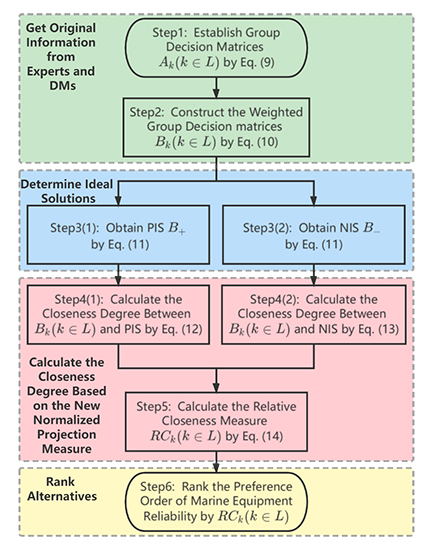
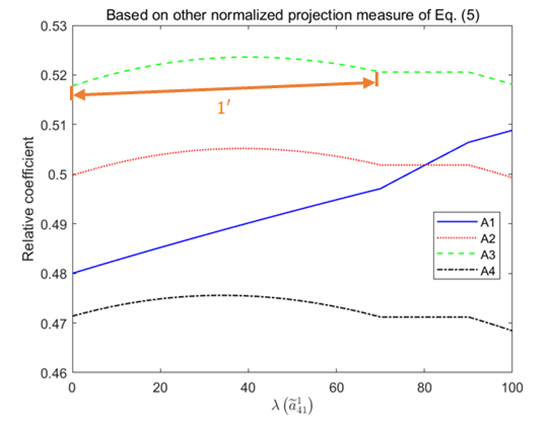
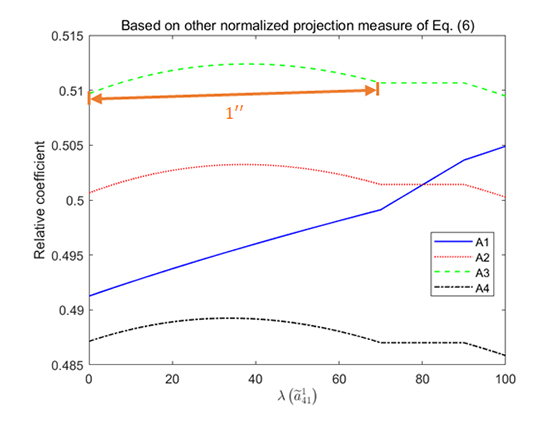
To address the above issues and problems, Associate Professor Xiaoping Jia and Professor Baozhu Jia from Guangdong Ocean University proposed a novel normalized projection-based GDM method and demonstrated its application to marine equipment reliability assessment. The technique for Order Performance by Similarity to Ideal Situation (TOPSIS) framework was adopted in this new methodology to address the issues associated with hybrid decision information, including interval number, crisp number and intuitionistic fuzzy number. An application case involving the assessment of marine equipment reliability was adopted to illustrate the effectiveness and feasibility of the proposed methodology. Their work is currently published in the journal, Ocean Engineering.
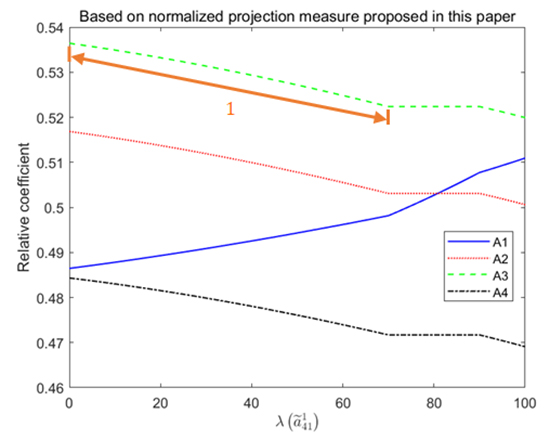
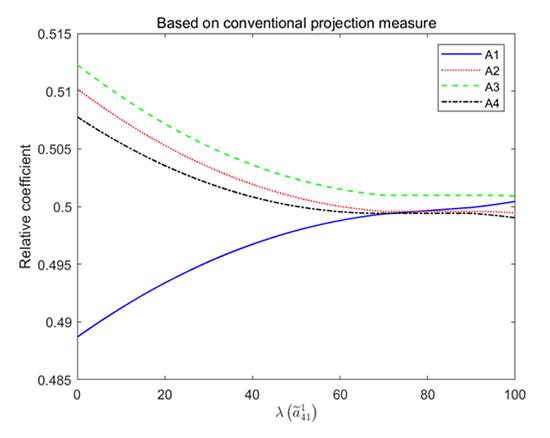
The research team showed that the new method had both bidirectional projection invariance as well as improved monotonicity of the vector variables in the dynamic sense compared with existing methods. The decision-making capability of this model was more macroscopical and compromising because it considered the effects of both distance and direction factors. The proposed model also allowed direct processing of the original information collected directly from decision-makers, such as marine engineers, without aggregations or transformation to minimize information loss. These benefits were attributed to the extension of the new projection method to cover three different hybrid decision information, namely, intuitionistic fuzzy number interval number and crisp number as well as its compatibility with both fuzzy and hybrid decision criteria.
In summary, a GDM model based on an improved TOPSIS framework and cumulative normalized projection measure was proposed to address the complexities involved in evaluating the reliability of marine equipment. This new approach exhibited several novelties and advantages, making it generally superior to most existing reliability assessment methods. Additionally, it is a straightforward and feasible technology that can be easily implemented to deal with large-scale decision data. In a statement to Advances in Engineering, the authors said their findings would contribute to developing more reliable and effective reliability assessment methods for marine equipment.


Reference
Jia, X., & Jia, B. (2022). Normalized projection-based group decision making method and application to Marine Equipment Reliability Assessment. Ocean Engineering, 251, 111043.