Advances in Engineering Advances in Engineering features breaking research judged by Advances in Engineering advisory team to be of key importance in the Engineering field. Papers are selected from over 10,000 published each week from most peer reviewed journals.

Significance
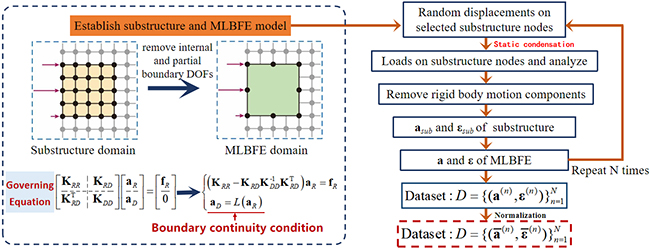
The finite element method (FEM) has been the go-to tool for engineers to resolve complex structural and mechanical problems. Its power lies in discretizing a continuous domain into smaller elements which allow physical fields like stress and displacement to be approximated with mathematical precision. This framework has proven remarkably versatile, whether applied to bridges, pressure vessels, or biomechanics. But recently and with the growing demand for high-resolution, real-time simulations, FEM has started to hit its limits. As computational models scale up in size and complexity, issues of efficiency and feasibility begin to take center stage. The root of the problem is often the mesh. To capture localized effects like sharp stress gradients or subtle deformations, we need fine meshes—sometimes very fine. But as mesh density increases, so does the number of degrees of freedom (DOFs), inflating system matrices and drastically slowing computations. One might think using high-order elements would solve this, and in some cases it helps. But those come with trade-offs too: more complicated shape functions, steeper learning curves in implementation, and less numerical stability. So engineers often face a difficult decision—stick with simple low-order elements and pay the price in speed, or upgrade to higher-order formulations and accept increased complexity. This tension between accuracy and efficiency has made many researchers look toward machine learning (ML) for help. ML, after all, excels at spotting patterns and making predictions from data. That said, many early attempts to fuse ML with FEM leaned heavily on black-box models—replacing physical principles entirely with data-driven approximations. While that might offer faster computations, it often strips the method of interpretability. And in structural engineering, where decisions carry real-world risk, that’s not a compromise most are willing to make. New research paper published in Computers & Structures Journal and conducted by Professor Gang Li, Rui Luo, and Professor Ding-Hao Yu from the Dalian University of Technology, researchers developed a method to enhance FEM by embedding ML into the elemental formulation without discarding physics. By training a multivariate linear regression model to approximate strain fields from nodal displacements, they create what they call a machine learning-based finite element (MLBFE). The result is a model that drastically reduces computation time while maintaining physical transparency.
The team began their validation with a cantilever beam subjected to a parabolic load which provided a controlled environment to explore how variations in the MLBFE configurations would affect accuracy. The authors compared several models, tweaking the substructure mesh density and nodal arrangements, and pitted their results against both classical FEM outputs and analytical solutions. They observed when the substructures were too coarse and nodal inputs sparse, the MLBFE struggled to produce reliable deflections—undershooting the target behavior by a wide margin. However, refining the nodal layout—particularly by using an 8-node configuration derived from 16 traditional elements—and choosing an appropriate number of integration points brought the predictions almost perfectly in line with theoretical expectations. The error became negligible. What’s compelling is not just that the MLBFE matched the accuracy of standard FEM—it did so with far fewer degrees of freedom, offering a promising trade-off between detail and speed. Afterward, the researchers escalated to a more demanding test: a nonlinear planar panel incorporating a bilinear hardening material model. Here, they tested ten distinct MLBFE variants, adjusting not just element count and integration density, but also the assumed continuity at element boundaries. As loads intensified, the disparities between configurations became more pronounced. When quadratic boundary continuity was enforced and the number of integration points carefully moderated—not maximized—they observed a striking convergence between the MLBFE predictions and expected responses. Conversely, models with weaker continuity assumptions or insufficient refinement either diverged or yielded physically implausible deformations. These patterns revealed just how sensitive performance is to how well the elemental structure preserves real-world deformation behaviors. Moreover, the researchers turned to reinforced concrete shear walls under cyclic lateral loading—an archetype of inelastic structural behavior. Importantly, they reused previously trained MLBFE elements without any retraining, a deliberate choice to test generalizability. They found the model reproduced stress evolution and hysteresis curves with high fidelity and also delivered a 60% reduction in computational time compared to standard FEM. Even in more irregular geometries, such as a shear wall with window openings, the MLBFE retained accuracy with a fraction of the DOFs.
In conclusion, Dalian University of Technology scientists successfully managed to blend two fundamentally different modeling paradigms—physics-based simulation and data-driven learning—into a coherent framework. What the researchers have done here is introduce an innovative method that retains the physical integrity of the FEM while strategically incorporating machine learning—specifically, multivariate linear regression—to reduce the computational burden. Unlike black-box ML models that attempt to replace physical modeling altogether, this approach uses learning to enhance, not obscure, the mechanics we already trust.
We think the implications of the new research work are quite practical. For instance, in engineering, resources—whether time, computational power, or personnel—are rarely unlimited. Running a detailed nonlinear simulation of a large structure is often slow and expensive, especially when high mesh resolution is involved. The new method trims those costs substantially. In the examples they tested, computation time was cut by more than half, sometimes by as much as 60%, and that’s without sacrificing accuracy. For applications like iterative design, or real-time structural diagnostics following seismic events, this could make a tangible difference in how quickly and confidently decisions are made. Another point worth emphasizing is the generalizability of the model. Once trained, it can be applied across multiple structures and loading conditions without retraining, which is fairly unusual in machine learning workflows. That makes it a viable option for everyday engineering use—not just research environments. It also performed reliably in nonlinear regimes, including elastoplastic simulations involving reinforced concrete elements under cyclic loading. That kind of robustness gives it immediate credibility beyond theoretical promise.
Reference
Gang Li, Rui Luo, Ding-Hao Yu, A framework for developing a machine learning-based finite element model for structural analysis, Computers & Structures, Volume 307, 2025, 107617,