Advances in Engineering Advances in Engineering features breaking research judged by Advances in Engineering advisory team to be of key importance in the Engineering field. Papers are selected from over 10,000 published each week from most peer reviewed journals.

Significance Statement:
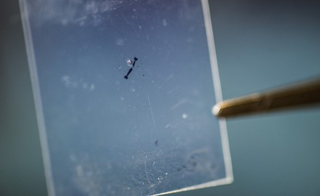
Scientists from Georgia Research Institute and Columbia University demonstrated the mechanical generation of electricity from Mobybdenum disulfide. The piezoelectricity and the piezotronic effect resulted in a unique electric generator and mechanosensation devices that are optically transparent, extremely light, and very bendable and stretchable.
Photo credit: Rob Felt at Georgia Tech
Nature 514, 470–474, 2014.
Wenzhuo Wu, Lei Wang, Yilei Li, Fan Zhang, Long Lin, Simiao Niu, Daniel Chenet, Xian Zhang, Yufeng Hao, Tony F. Heinz, James Hone, Zhong Lin Wang.
School of Materials Science and Engineering, Georgia Institute of Technology, Atlanta, Georgia 30332-0245, USA &
Department of Electrical Engineering, Columbia University, New York, New York 10027, USA &
Department of Physics, Columbia University, New York, New York 10027, USA &
Department of Mechanical Engineering, Columbia University, New York, New York 10027, USA &
Beijing Institute of Nanoenergy and Nanosystems, Chinese Academy of Sciences, 100083 Beijing, China.
ABSTRACT
The piezoelectric characteristics of nanowires, thin films and bulk crystals have been closely studied for potential applications in sensors, transducers, energy conversion and electronics. With their high crystallinity and ability to withstand enormous strain, two-dimensional materials are of great interest as high-performance piezoelectric materials. Monolayer MoS2 is predicted to be strongly piezoelectric, an effect that disappears in the bulk owing to the opposite orientations of adjacent atomic layers. Here we report the first experimental study of the piezoelectric properties of two-dimensional MoS2 and show that cyclic stretching and releasing of thin MoS2 flakes with an odd number of atomic layers produces oscillating piezoelectric voltage and current outputs, whereas no output is observed for flakes with an even number of layers. A single monolayer flake strained by 0.53% generates a peak output of 15 mV and 20 pA, corresponding to a power density of 2 mW m−2 and a 5.08% mechanical-to-electrical energy conversion efficiency. In agreement with theoretical predictions, the output increases with decreasing thickness and reverses sign when the strain direction is rotated by 90°. Transport measurements show a strong piezotronic effect in single-layer MoS2, but not in bilayer and bulk MoS2. The coupling between piezoelectricity and semiconducting properties in two-dimensional nanomaterials may enable the development of applications in powering nanodevices, adaptive bioprobes and tunable/stretchable electronics/optoelectronics.