Advances in Engineering Advances in Engineering features breaking research judged by Advances in Engineering advisory team to be of key importance in the Engineering field. Papers are selected from over 10,000 published each week from most peer reviewed journals.

Significance
Secondary cooling remains one of the most delicate and consequential stages in slab continuous casting, as it governs not only the thermal history of the solidifying strand but also the eventual surface integrity and internal soundness of the product. In modern high-productivity casters, more than half of the total heat extraction occurs in the secondary cooling zones, where arrays of flat nozzles deliver controlled sprays to the slab surface. Although flat nozzles are widely favored for their broad coverage, geometric simplicity, and adaptability to different caster configurations, their collective behavior under multi-nozzle arrangements remains far from trivial. Even small deviations in spray performance or arrangement parameters can propagate into severe nonuniformities in local water flux, particularly near slab corners and bending regions, where thermal gradients are inherently steep. A persistent challenge in industrial practice is the uneven distribution of cooling water caused by a combination of nozzle performance variability, complex spatial arrangements, and constrained installation environments. The unevenness is associated with corner cracking, subsurface defects, and deterioration of hot ductility during straightening and previous efforts to address these problems have largely focused on empirical optimization of nozzle spacing, spray distance, or cooling intensity for specific steel grades or caster geometries. However, these approaches are often narrowly applicable and heavily dependent on extensive trial-and-error experimentation, which limits their generalizability and practical efficiency. Another challenge is the limited ability to predict water flux distributions under changing operating conditions. Laboratory measurements of spray characteristics are time-consuming, and direct measurement within operating casters is impractical. Moreover, fluctuations in nozzle quality, aging, or clogging introduce additional uncertainty that is rarely captured in conventional cooling models. As a result, the design of secondary cooling systems often relies on simplified assumptions that do not adequately reflect the spatial complexity of real spray interactions.
To this end, a new research paper published in Journal of Steel Research International and conducted by Dr. Huisheng Wang, and led by Professor Qing Liu and Dr. Jiangshan Zhang from the University of Science and Technology Beijing, in collaboration with Mr. Biao Tao from Nanjing Iron & Steel Co., Ltd., Ms. Weili Huang from Delong Steel Co., Ltd., Mr. Jun Wu from Xinjiang Bayi Iron & Steel Co., Ltd and Dr. Min Guan from Jiangsu Boji Spray Systems Co., Ltd., the researchers developed an experimentally grounded prediction model that quantitatively links single-nozzle spray characteristics to multi-nozzle water flux distributions through geometric similarity and superposition. They introduced a practical evaluation index to assess cooling uniformity and guide optimization of spray distance and nozzle spacing.
The research team evaluated the flat-nozzle spray behavior using a dedicated detection apparatus capable of resolving water flux distributions across the spray footprint. Individual nozzles of different types, including water and air–water designs commonly employed in slab casters, were investigated. They found pronounced differences in spray stability between nozzle types with some nozzles produced highly reproducible, symmetric water flux profiles, while others exhibited noticeable fluctuations in spray angle, coverage width, and local water concentration, even under nominally identical conditions. The authors examined single-nozzle characteristics under multi-nozzle arrangements representative of foot-roller and bending zones, and found in regions where stable nozzles were deployed, overlapping sprays produced relatively smooth and centrally concentrated water flux distributions. By contrast, arrangements involving less stable nozzles generated pronounced asymmetries and local peaks, particularly in bending zones where nozzle spacing is constrained and the number of nozzles is high. Quantitative analysis showed that the standard deviation of water flux in central spray regions increased markedly when unstable nozzles were used, highlighting their disproportionate influence on overall cooling uniformity.
Afterward, the authors developed a prediction model based on geometric similarity and spray superposition principles. Their key idea was to treat the water flux distribution of a single nozzle as a scalable base function that could be transformed with spray distance and combined with neighboring sprays through linear superposition. The new model captured the stretching and redistribution of water flux without altering total flow rate by discretizing the spray footprint into narrow bands and tracking how water proportions shifted as spray distance varied. They demonstrated excellent agreement between predicted and measured distributions, and across a range of spray distances and nozzle spacings, average prediction errors remained below a fraction of a percent, even for multi-nozzle arrangements. Importantly, they noticed accuracy was highest when the reference spray distance used for calibration lay near the midpoint of the allowable operating range, and highlighted the practical importance of selecting representative baseline conditions. Moreover, they systematically explored how spray distance and nozzle spacing affected cooling uniformity by introducing an evaluation index that quantified the imbalance between water flux in overlapping and central spray regions. They applied the framework to industrial bending-zone configurations and showed that replacing unstable nozzles and adjusting arrangement parameters could dramatically reduce water flux disparities. Subsequent measurements confirmed that optimized layouts significantly flattened water flux profiles across slab width, validating the effectiveness of the combined experimental–predictive approach.
In conclusion, the new work of Professor Qing Liu and colleagues developed a new unified design and optimization strategy that reduces experimental workload while enabling robust, transferable nozzle-arrangement design for industrial continuous casting systems. Indeed, the significance of the research is refining nozzle layout for a specific caster, and also establishing a transferable methodology for spray system design in continuous casting. Additionally, the study provided a mechanistic understanding of how local spray imperfections amplify at the system level which is important findings in industrial environments, where nozzle performance degradation over time is unavoidable and often overlooked in cooling models. Moreover, the reported prediction model represents a practical compromise between full multiphase computational fluid dynamics and purely empirical tuning. Its reliance on experimentally measured base distributions ensures physical realism, while its analytical structure allows rapid exploration of parameter space. As a result, engineers can assess the impact of alternative nozzle types, spacing strategies, or spray distances without extensive additional testing. This capability has clear implications for caster commissioning, retrofitting, and troubleshooting.
Another equally important contribution is the development of a quantitative evaluation index tailored to water flux uniformity and rather than relying on qualitative judgments or isolated metrics, the index provides a single, physically interpretable measure that reflects the balance between overlapping and central cooling regions. This facilitates objective comparison of competing designs and supports data-driven decision-making in secondary cooling optimization. These findings are relevant to industry because it demonstrated improvements achieved in bending zones, where cracking susceptibility is highest. Indeed, the optimized nozzle arrangements contribute directly to more uniform thermal fields, improved hot ductility, and reduced defect incidence by significantly reducing water flux asymmetry and central-region variability. Over time, such improvements can translate into higher casting speeds, lower rejection rates, and more consistent downstream processing.
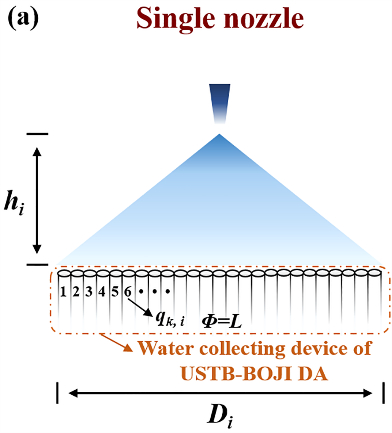
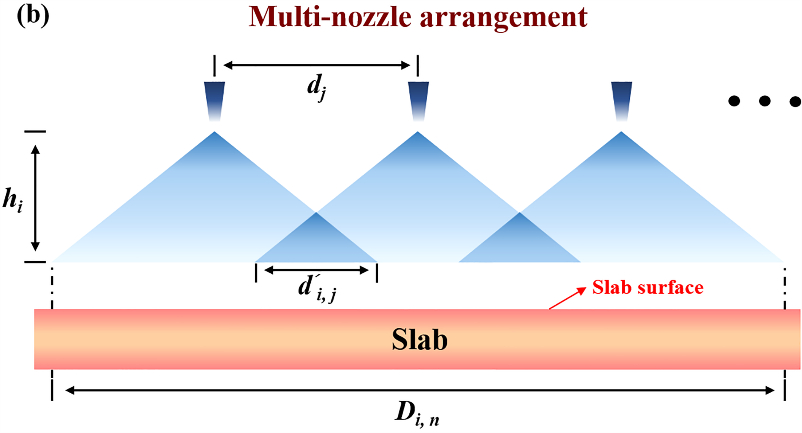
Figure 1 Schematic diagram of water flux distribution of flat nozzles:
a) single-nozzle arrangement, b) multi-nozzle arrangement.
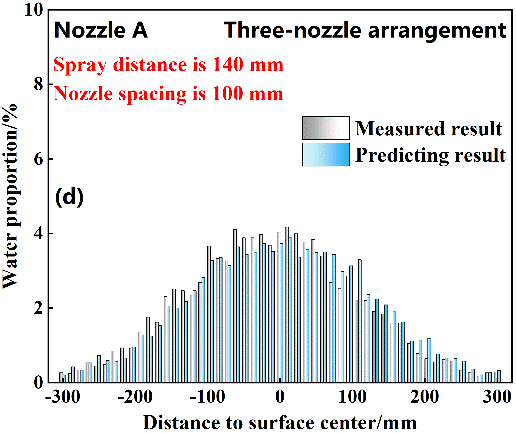
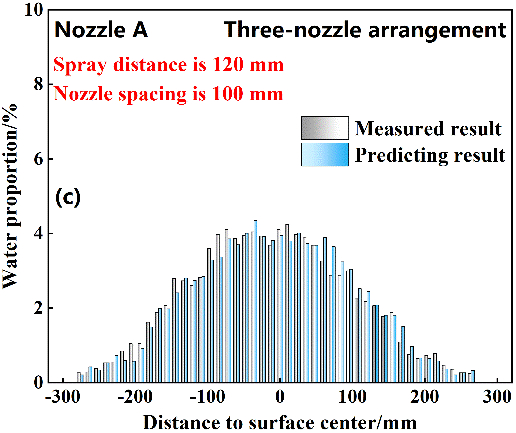
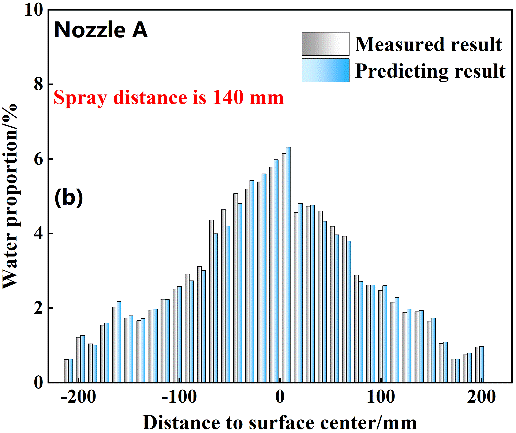
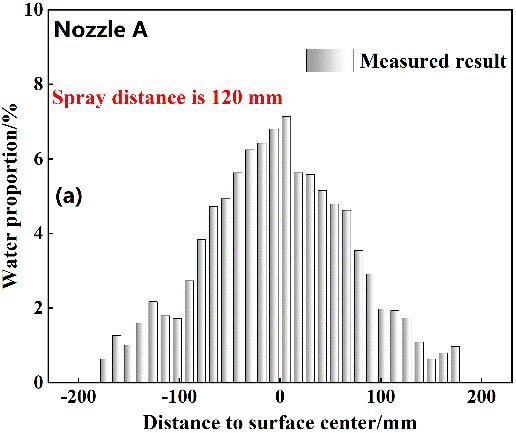
Figure 2 Measured and prediction results of water flux distributions under different nozzle arrangements: a)~b) single-nozzle arrangement, c)~d) multi-nozzle arrangement.
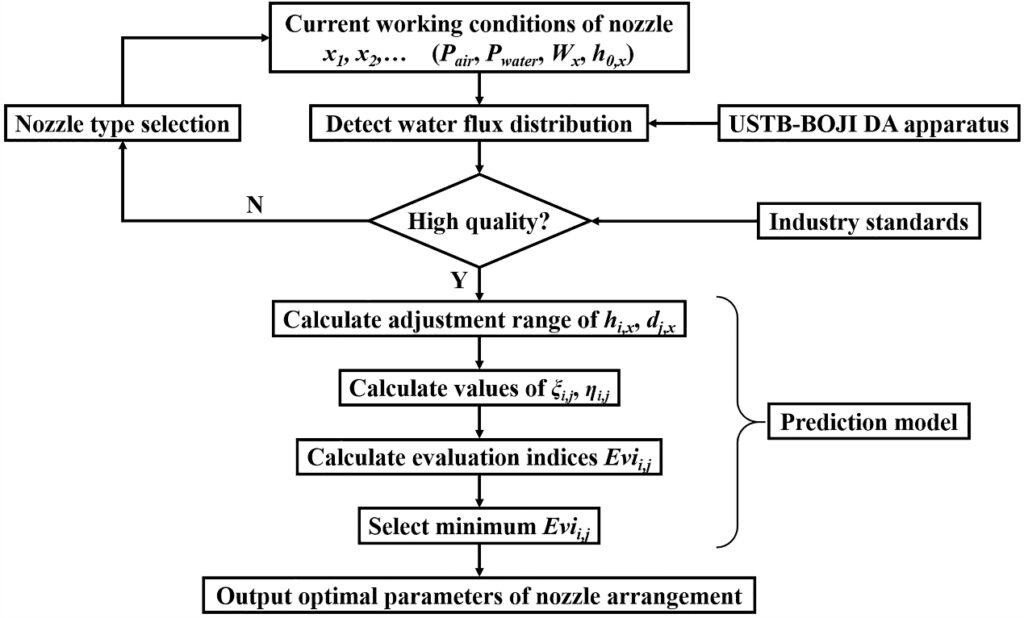
Figure 3. Workflow of design and optimization strategy/method for flat-nozzle arrangement.
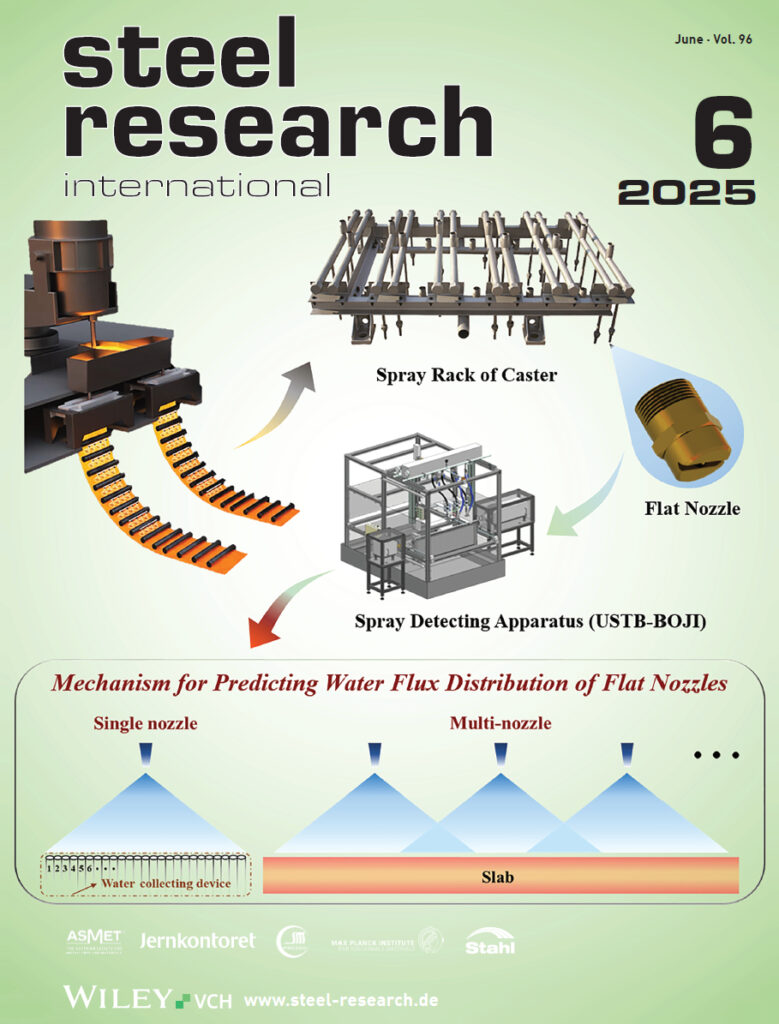
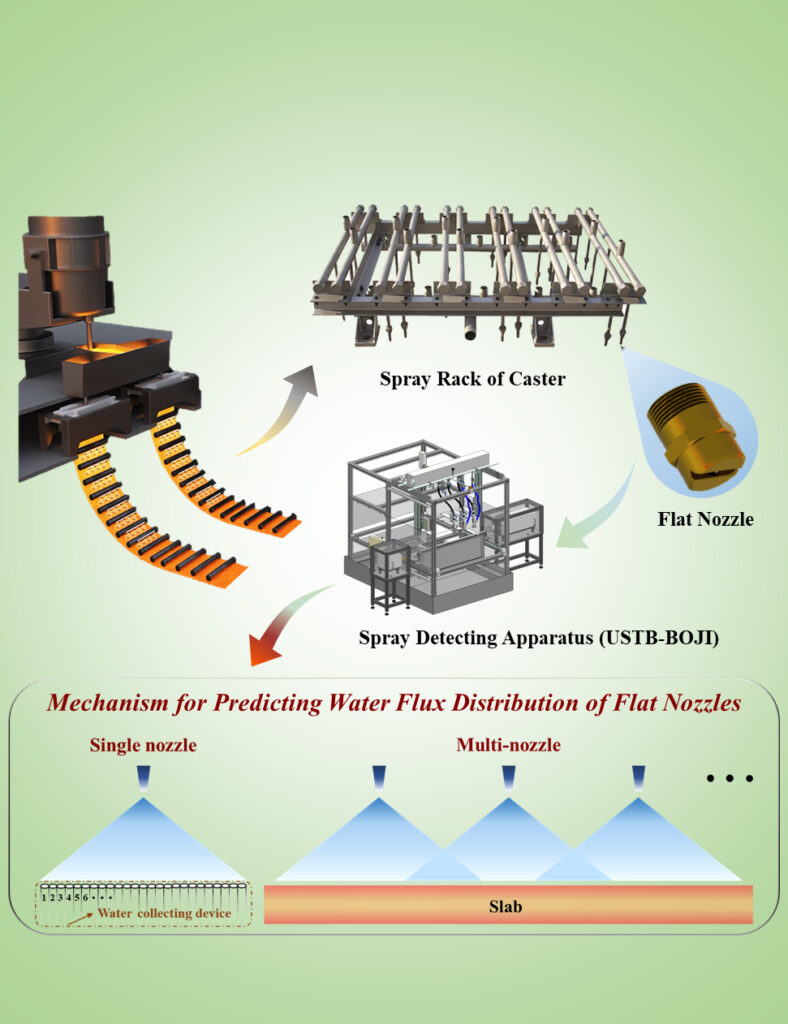
Figure 4. Paper Cover picture


Reference
Wang, Huisheng & Zhang, Jiangshan & Tao, Biao & Huang, Weili & Wu, Jun & Guan, Min & Liu, Qing. (2024). Prediction and Optimization of Water Flux Distribution for Flat Nozzles in Slab Continuous Casting. steel research international. 96(6). 2400738. 10.1002/srin.202400738.
Go to Journal of steel research international.