Advances in Engineering Advances in Engineering features breaking research judged by Advances in Engineering advisory team to be of key importance in the Engineering field. Papers are selected from over 10,000 published each week from most peer reviewed journals.

Significance
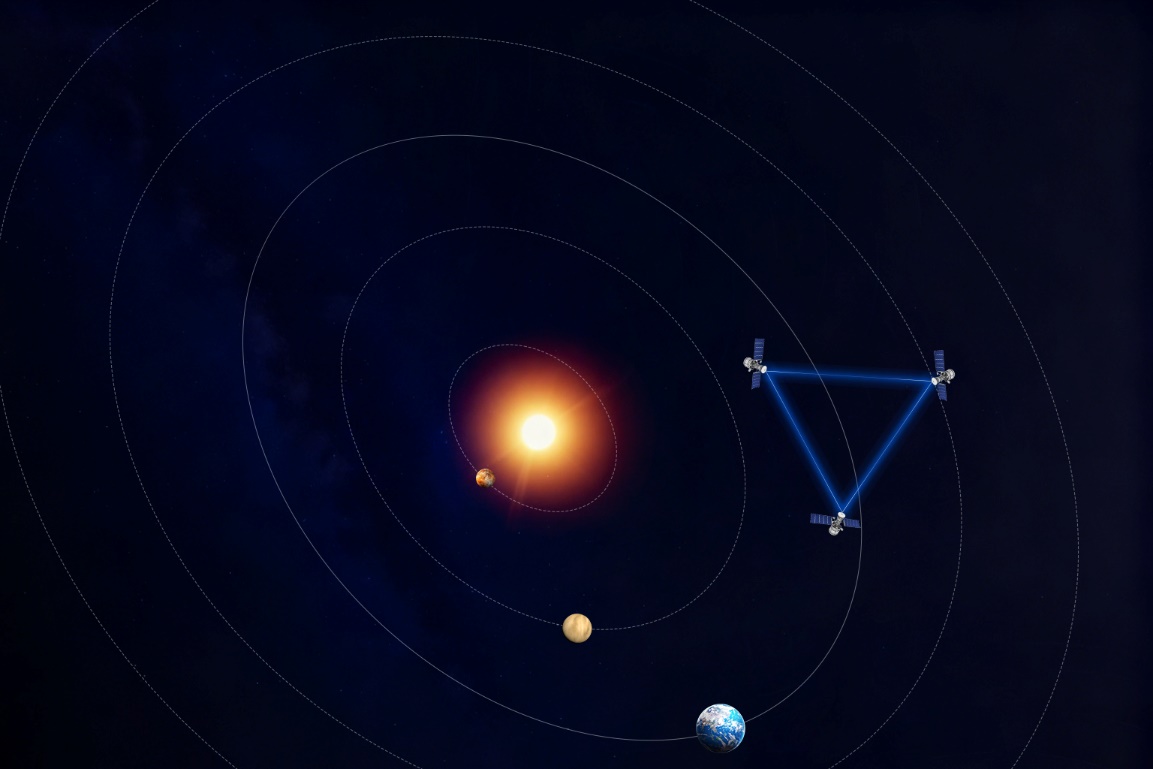
The researchers first established a high-precision dynamical framework for spacecraft motion within the heliocentric J2000 inertial reference frame, and incorporated gravitational perturbations from major celestial bodies. They developed the MPG model that retained only the dominant influences of Venus and Jupiter while neglecting weaker effects from outer planets to balance computational efficiency and physical accuracy. This simplification reduced computational cost without compromising long-term orbital accuracy and provided the foundation for predictive control simulations. The authors implemented the MPC algorithm and found the system continuously predicted the future states of each spacecraft over a finite horizon, optimized the thrust inputs using sequential quadratic programming, and applied the first optimal command in each control cycle. Their new method ensured engine feasibility while dynamically adjusting thrust direction by constraining thrust magnitudes within physically achievable limits—set to 0.1 N in this work. The updated predictive model assessed whether the anticipated thrust effect in the next interval would exceed ongoing perturbations, determining whether control action was necessary. This conditional logic prevented redundant firings and minimized fuel waste. The authors tested control scheme across several mission configurations representative of LISA-type systems: formations leading and trailing Earth by 20° phase angles, each analyzed under both circular and slightly elliptical initial orbits. Simulations assumed a ten-year mission duration, with a one-year control interval and a one-month non-scientific mode for adjustments. They found in the leading configuration, the proposed MPC strategy reduced maximum arm-length deviations from approximately 92,900 km to 68,150 km and breathing-angle fluctuations from 2.12° to 0.59°, which corresponded to reductions of over 70%. Fuel consumption totaled only 9.47 kg across three spacecraft over the full decade. The trailing configuration showed similar improvement, with deviations reduced by nearly half and mass expenditure of about 9.65 kg. Notably, a circular initial orbit required even less fuel (approximately 6.6 kg) while maintaining exceptional stability which confirmed that the proposed MPC-based low-thrust control not only stabilized the geometric formation but also extended mission lifetime by curbing propellant use.
In conclusion, the new work of Professor Hongwei Yang and colleagues successfully developed new models that allowed spacecraft to anticipate orbital perturbations and selectively apply corrective thrust only when beneficial. This dual-system design achieves continuous formation stability with minimal fuel expenditure and provides a scalable control architecture for future heliocentric gravitational wave observatories. With the embedding of predictive intelligence into spacecraft control, Professor Hongwei Yang and colleagues bridge the longstanding divide between orbital dynamics modeling and real-time guidance. The rolling optimization paradigm of MPC enables spacecraft to “think ahead,” anticipate perturbations and to respond only when necessary, which sharply contrasts with the reactive nature of traditional controllers. This enhances long-term positional stability and advance spacecraft autonomy which is important for deep-space observatories operating far beyond continuous ground supervision.
It is important to mention that the innovative study also teaches how it redefines the priorities of spacecraft formation control. Instead of rigidly maintaining equal arm lengths—a convention long treated as non-negotiable—the authors recognize that small deviations in distance contribute far less to signal degradation than variations in angular geometry. What truly matters for the integrity of laser interferometry, they argue, is the preservation of precise angular alignment. By tightening control over the breathing angle rather than arm length, the system sustains optical coherence while using considerably less fuel. It’s an elegant recalibration of focus: subtle in theory, but transformative in practice. The implications for missions such as LISA and TaiJi are significant, where every gram of propellant and watt of power carries strategic value. Their results—showing roughly a 30–40% reduction in cumulative velocity corrections—suggest that the proposed MPC framework could effectively stretch mission longevity or even allow for lighter propulsion subsystems, cutting costs and design complexity at once. Additionally, the new approach is versatile where the same framework could support other coordinated multi-satellite systems, from interferometric imagers to modular telescopes or swarm-based planetary explorers, where spatial coherence defines mission success. The combination of predictive optimization with low-thrust propulsion introduces a kind of computational intelligence into orbit maintenance and allows spacecraft to anticipate drift, make corrections, and sustain formation over timescales previously deemed impractical. Because of its modular nature, the control architecture could also be reconfigured for emerging propulsion methods like ion drives or solar sails, where thrust delivery is continuous yet inherently variable.