Advances in Engineering Advances in Engineering features breaking research judged by Advances in Engineering advisory team to be of key importance in the Engineering field. Papers are selected from over 10,000 published each week from most peer reviewed journals.

Significance
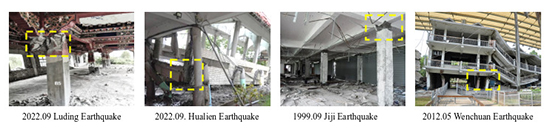
Earthquakes can erase entire neighborhoods in less than a minute and the danger is not uniform, though. When shaking originates close to an active fault, the violence takes a particular form: short, high-intensity velocity pulses. These pulses are powerful and efficient. They arrive in seconds, and yet they line up with the natural vibration periods of buildings. The outcome is resonance—motion amplified until ordinary structures behave in ways their designers never intended. Reinforced concrete (RC) frames, the workhorse of city construction, have an especially awkward relationship with such forces. They depend on plastic hinges to absorb energy. This works—up to a point—but once those hinges form, the damage lingers. A building may remain standing, but it leans, twisted out of plumb. Anyone who has seen post-earthquake photos knows what this means in practice: residual drifts, cracked joints, classrooms or apartments that no one dares occupy again (Refer Fig. 1). The history is not abstract. In Wenchuan (2008), many RC schools failed outright. Kobe and Chi-Chi showed similar patterns. Even when collapse was avoided, the repair bill often surpassed the cost of starting fresh. The uncomfortable truth is that “life-safety” design, as codified today, accepts this outcome. Survival, yes but usability, no. Self-centering systems have been suggested as a way out of this trap. The idea is straightforward: prestressed tendons and joints detailed to open under load but then close again, pulling the structure back toward vertical once the shaking ends. It is resilience built from elasticity rather than sacrifice. In a self-centering RC (SCRC) frame, rotations are allowed, but the tendons act as a restoring memory. However, most demonstrations have been under moderate or far-fault motions while near-fault pulses are different—more powerful in their suddenness, nonlinear in effect. They push displacements high in seconds. Will the self-centering action still engage, or will the system be overwhelmed? This remains a real concern, and design codes are silent.
To this account, new research paper published in Engineering Structures and conducted by Hongmei Zhang, Yi Fang, Lening Cao, Fan Hu, and led by Professor Yuanfeng Duan from the Zhejiang University, the researchers developed a three-story SCRC frame designed with prestressed tendons and specially detailed joints that allow controlled opening and closing during seismic loading. By testing this scaled structure on a shaking table under both pulse-type and non-pulse earthquake records, they demonstrated that the frame could sustain large displacements while returning to its original position with minimal residual drift. The system effectively combined high-strength materials and self-centering mechanisms to resist damage, showing that even under severe pulse excitations it maintained stability and functionality. This development provides a practical experimental basis for advancing seismic design codes in regions exposed to near-fault ground motions.
The research team designed their experiment around a three-story scaled model of a self-centering reinforced concrete frame and placed it on a shaking table capable of reproducing realistic earthquake motions. The model was carefully proportioned system, built to preserve the mechanics of a real building through strict scaling laws. Columns were cast with steel fiber reinforced concrete to add toughness, beams used high-strength mixes, and prestressed tendons were threaded through ducts to provide the restoring action central to self-centering behavior. Achieving this balance required precision: the stresses, displacements, and vibration periods had to reflect what a full-scale structure would experience. Once assembled, the frame was bolted firmly to the table, and an array of sensors—tracking accelerations, displacements, joint rotations, and tendon forces—was mounted to record every movement. The authors used six seismic inputs. Four were taken from actual earthquake records, while two were generated artificially to serve as control motions. Among them, the Chi-Chi earthquake proved particularly useful, since recordings from two nearby stations captured both a pulse-type ground motion and a non-pulse counterpart. This unusual pairing allowed the researchers to isolate the role of velocity pulses, something rarely possible in controlled testing. The research team began their tests at low intensities, around 0.11 g, and escalated step by step until they reached extreme levels near 1.0 g—far beyond what conventional RC frames would typically endure. After each run, the team measured the natural frequency of the model. It declined gradually, from about 4.44 Hz to 3.40 Hz, a clear sign of stiffness loss due to cracking and tendon relaxation. Still, the prestressing tendons never approached yield, showing that the heart of the self-centering mechanism remained intact.
The authors found the differences between pulse and non-pulse records to be clear with upper-story accelerations were consistently higher under pulse excitations, sometimes more than 20 percent above non-pulse cases. In practice, this would mean far greater demands on nonstructural components and building contents. Displacements told an even stronger story: inter-story drifts under pulse inputs climbed as much as 40 percent above their non-pulse counterparts. Under the Chi-Chi pulse, the second-story drift ratio reached values that would normally cause serious column damage, yet the fiber-reinforced columns displayed only hairline cracks. Much of this resilience came from the prestressing and the controlled opening of joints, which widened under loading but closed once shaking ceased.
Tendon force records supported these observations. Additionally, fluctuations were larger during pulse events which reflect the stronger joint rotations, but also stresses remained comfortably below yield. These findings showed that even when pushed by violent near-fault pulses, the scaled SCRC frame preserved its ability to reset itself, avoiding the permanent deformation that plagues conventional RC designs.
In conclusion, the value of the study of Professor Hongmei Zhang and colleagues is best understood in the context of a long-standing uncertainty. For more than a decade, engineers have pointed to SCRC frames as a potential path to seismic resilience. The appeal is obvious: structures that can re-align themselves after an earthquake promise lower repair costs and faster recovery for communities. Yet one weakness has always lingered in the background—the question of how these systems behave under near-fault, pulse-type ground motions. Theory and small-scale simulations suggested they might perform well, but until now there had been little experimental evidence. The research team addressed successfully the gap directly by testing a rigorously scaled three-story model on a shaking table and exposing it to genuine earthquake records, including those from the Chi-Chi event,. Their findings provide cautious optimism. The SCRC frame absorbed the extreme demands of velocity pulses—larger displacements, sharper joint rotations—without collapsing or locking into permanent drift. The tendons, despite being stressed more severely under pulse records, remained below yield. In short, the system preserved its ability to reset itself, a quality that conventional reinforced concrete frames lack.
In regions that straddle active faults, the true hazard is not always catastrophic collapse but buildings rendered permanently uninhabitable. Traditional RC frames often survive in form but fail in function, forcing demolition and replacement. What this study shows is that SCRC systems can help avoid that fate, giving cities a chance at quicker, less costly recovery. At a time when downtime translates directly into economic paralysis, such resilience is far from a luxury. There is, however, a critical policy angle. Current seismic design codes do not distinguish clearly between pulse and non-pulse ground motions. The experiments here revealed that neglecting this distinction can underestimate demands by 30–40% in key response measures such as drift. That oversight risks unsafe designs if left uncorrected. These results therefore argue for a recalibration of design provisions, particularly in high-risk near-fault zones. A further lesson lies in the evolving nature of structures themselves. As shaking progresses, stiffness degrades, periods lengthen, and resonance with dominant pulse frequencies becomes more likely. The new study demonstrated that combining steel fiber reinforced concrete with self-centering mechanisms can mitigate these amplified demands. Future refinements will need to focus on joint opening behavior and tendon force management to ensure robustness across a spectrum of pulse conditions.




Reference
Hongmei Zhang, Yi Fang, Lening Cao, Fan Hu, Yuanfeng Duan, Shaking table investigation of pulse-type seismic behavior of a self-centering reinforced concrete frame structure, Engineering Structures, Volume 325, 2025, 119417,