Advances in Engineering Advances in Engineering features breaking research judged by Advances in Engineering advisory team to be of key importance in the Engineering field. Papers are selected from over 10,000 published each week from most peer reviewed journals.

Significance
South Korea is the 11th largest economy in the world based on nominal GDP, and at the same time the 7th largest CO2 emitter. Its high energy intensity is due to the fact that Korea’s economy is powered by energy intensive industries such as semiconductors, petrochemicals, steel, and automobiles; it is a matter of national concern to meet energy demand for these industries at an ‘affordable’ price. Energy independence is extremely low with over 95% of energy consumption being imported making energy security a critical issue as well. Nonetheless, there is increasing pressure both domestic and international to work towards climate change mitigation. Current announcements by the South Korean government are ambiguous concerning the transition to a higher renewable energy future. The present energy roadmap has some drawbacks and ought to be reviewed.
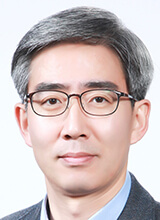
With this in mind, a team of researchers led by Professor Jong Ho Hong from the Graduate School of Environmental Studies, Seoul National University, Seoul, Republic of Korea, presented a study aimed at providing a discussion platform for South Korea’s transition to a sustainable energy system. They intended to put into consideration a sustainable energy system that takes into account the scarcity of resources, social and economic conditions, and the environment; with the goal being to blend and align it with the much-debated energy policy issues in South Korea. Their work is currently published in the research journal, Energy Policy.
With the goal being to provide roadmaps for the sustainable development for South Korea’s energy system, the team proposed to develop transition scenarios towards renewable energy for both supply and demand. To do this, they used “Long-range Energy Alternatives Planning system (LEAP)” Model and a back-casting approach to illustrate pathways to achieve the goals set forth in each of the scenarios. The four scenarios developed included: Business-As Usual (BAU), Moderate Transition Scenario (MTS), Advanced Transition Scenario (ATS), and Visionary Transition Scenario (VTS).
The scenarios were defined according to the differences in levels of final energy consumption and renewable energy share by 2050. The analysis showed that an increase in the percentage of renewable energy and a decrease in energy demand lead to improved energy security, more jobs in the electricity generation sector, and a decrease in greenhouse gas emissions.
In summary, Professor Jong Ho Hong and his research team proposed three energy scenarios for the sustainable development of South Korea’s energy system and provided an assessment of these alternatives in comparison to the BAU. Generally, scenarios were based on different assumptions concerning demand-side management and retirement of coal and nuclear power plants, while providing explanations for the underlying assumptions. The ensuing assessments were modelled and investigated. It was shown that if a substantial amount of effort was made on both the supply and demand side of the energy system, it would be possible for South Korea to reduce a remarkable amount of fossil fuel combustion in the future. Altogether, the pathways represented by these scenarios can be regarded as strategic targets for the sustainable development of South Korea’s energy system.
Reference
Jong Ho Hong, Jitae Kim, Wonik Son, Heeyoung Shin, Nahyun Kim, Woong Ki Lee, Jintae Kim. Long-term energy strategy scenarios for South Korea Transition to a sustainable energy system. Energy Policy, volume 127 (2019) page 425–437.
Go To Energy Policy