 Advances in Engineering Advances in Engineering features breaking research judged by Advances in Engineering advisory team to be of key importance in the Engineering field. Papers are selected from over 10,000 published each week from most peer reviewed journals.

Significance
Measuring gas density in moving flows provides important information about heat transfer, convection, and combustion. It helps explain how heated gases spread, how surrounding air mixes with a jet, and how thermal disturbances develop. Obtaining such measurements can be difficult because many diagnostic techniques require specialized instruments that may disturb the flow. Shadowgraph imaging offers a relatively simple, non-invasive alternative. When light passes through air with an uneven density distribution, differences in refractive index cause the rays to bend and these deflections produce changes in brightness that a camera can record, making it possible to observe thermal plumes, heated jets, and flame boundaries.
To convert these brightness patterns into quantitative measurements can be challenging. Light intensity depends on spatial variations in refractive index and does not directly indicate the gas density at each location and determining the underlying distribution requires solving an inverse mathematical problem. Conventional methods use differential equations to establish the connection between optical intensity and refractive index. The accuracy of these calculations depends strongly on boundary conditions, which are often difficult to determine in practical experiments. Each image must be processed separately, making the method time-consuming when the flow changes rapidly.
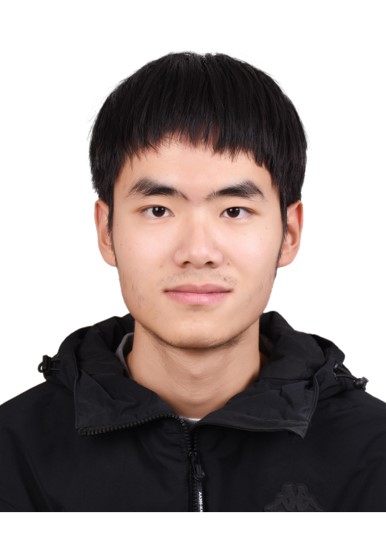
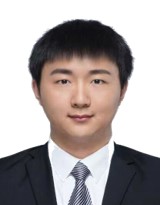
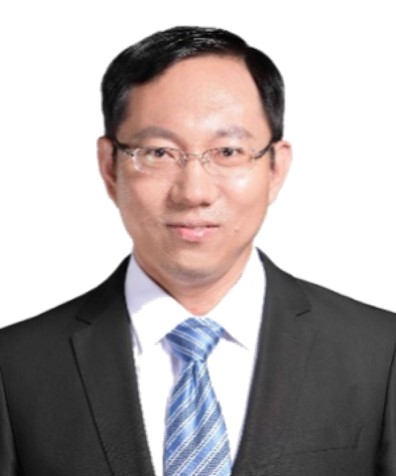
Deep learning offers an alternative, but conventional neural networks generally require training examples containing both images and corresponding density measurements. Producing detailed experimental datasets of this kind presents another challenge. In a research paper published in Experimental Thermal and Fluid Science, Dr. Xutun Wang, Yuchen Zhang, Zidong Li, Haocheng Wen, and Professor Bing Wang from Tsinghua University developed a physics-informed neural network that reconstructs gas density fields from shadowgraph images without requiring labeled training data. Their approach incorporates the underlying optical equations into the learning process, allowing the trained model to estimate density distributions directly from new images.
In their experiments, the network consisted of an encoder and two decoders. The encoder extracts relevant features from the recorded brightness patterns. One decoder attempts to reproduce the original image, helping the network learn its visual characteristics. The other uses this information to predict the refractive index distribution.
Training of the second decoder is guided by a Poisson equation relating shadowgraph intensity to refractive index. The network calculates spatial derivatives of its predicted field and compares them with the recorded brightness variations. Differences between the two guide the learning process toward a solution consistent with the governing optical equation. A known reference refractive index and physically reasonable limits help control the predicted values. The resulting optical field is then converted into gas density using the Gladstone–Dale relation.
The team evaluated the method using three experimental conditions: a horizontal hot-air jet, a rising thermal plume, and an alcohol burner flame. These cases represented forced convection, buoyancy-driven motion, and combustion. The hot-air jet provided the first quantitative test. Heated air was directed horizontally through the observation region, with outlet temperatures ranging from 100 to 500 °C. The reconstructed fields captured the jet core, its expansion into the surrounding air, and its upward movement under buoyancy. At higher temperatures, the heated region became wider and the flow more irregular.
To assess accuracy, the estimated density was converted into temperature using the ideal gas law under an assumed constant pressure. Near the jet outlet, the calculated mean values agreed with thermocouple readings to within 5% relative error. Variations between individual predictions increased at higher temperatures, reflecting the more unsteady behavior of the heated jet.
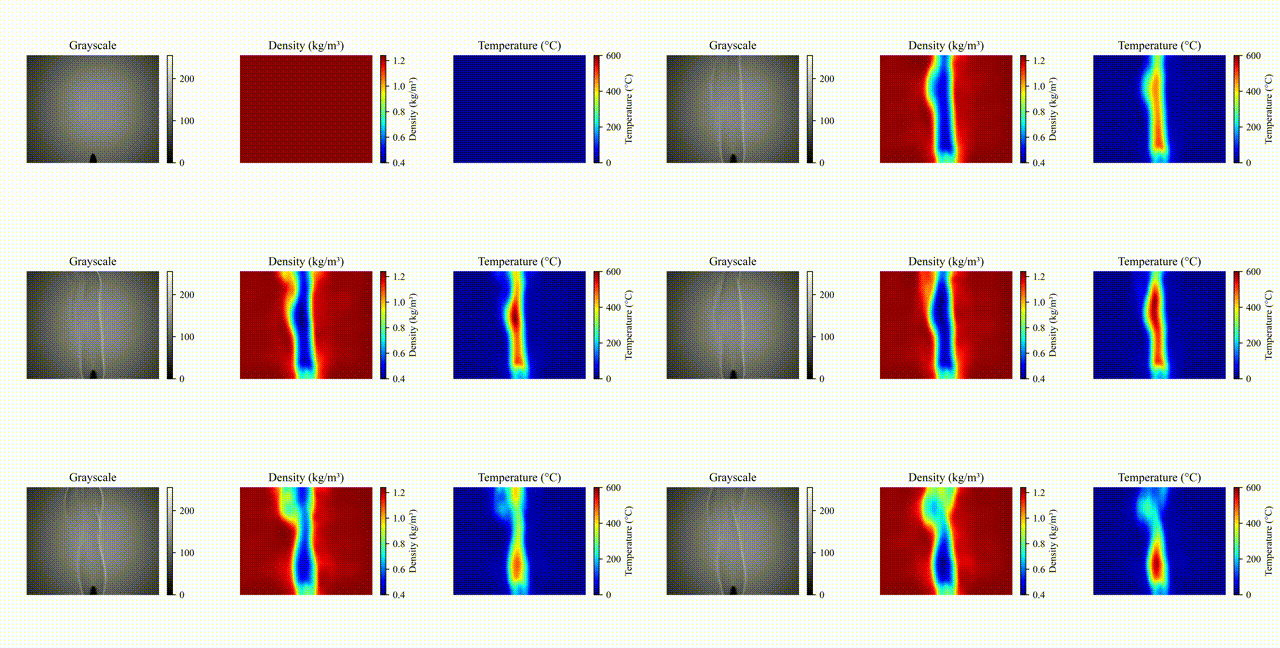
The next experiment, the authors examined natural convection above a heated soldering iron tip. Here, warmer, less dense air rose from the heat source, forming a plume that spread and entrained surrounding air. The model reproduced these features and provided temperature distributions for comparison with thermocouple measurements and computational fluid dynamics simulations.
The predicted temperatures followed the experimental and numerical trends, with the closest agreement near the heat source. Differences increased farther along the plume, where the optical intensity gradients became less pronounced. This comparison showed how the strength of the recorded signal influences the precision of density reconstruction.
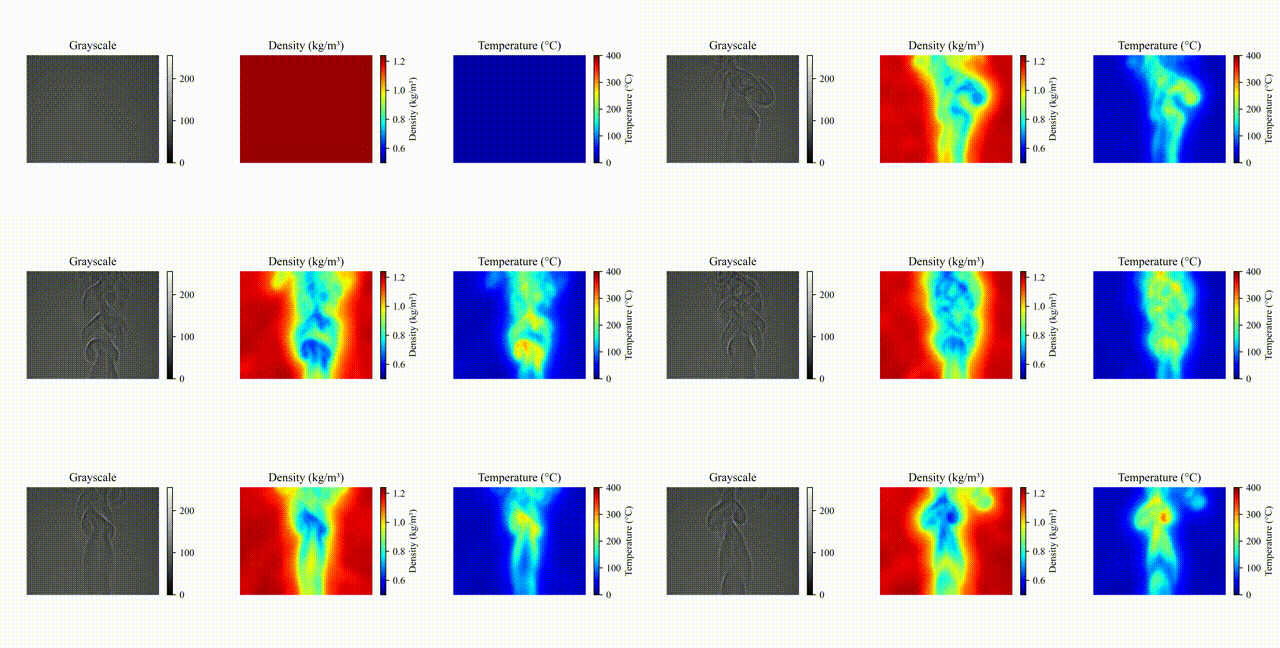
The final experiment involved an alcohol burner flame, introducing the additional complexity of combustion and changing gas composition. The model distinguished the inner and outer flame regions and followed the rising plume. Successive images captured changes in flame shape and oscillations associated with unstable combustion. Qualitative and semi-quantitative analysis provided further evidence of the method’s ability to resolve evolving flow structures under different thermal conditions.
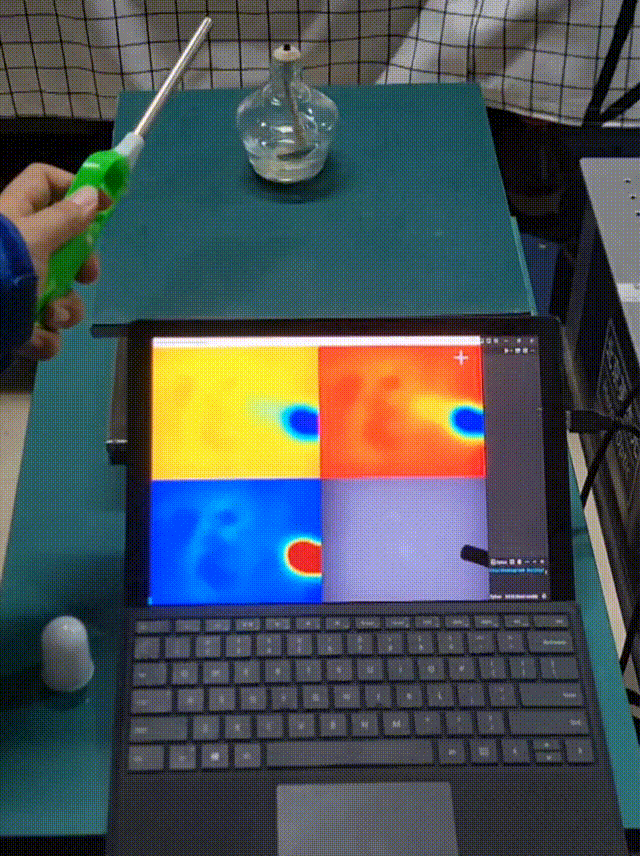
The network also demonstrated fast computational performance. Using an NVIDIA GeForce RTX 4090 graphics processor, the trained model generated a density reconstruction in approximately 10 milliseconds per frame. This enabled rapid analysis of changing flow patterns without having to solve the underlying differential equation for each image.
The new study demonstrates how physical equations can guide a neural network in recovering quantitative information from optical images without relying on labeled density measurements. This reduces the need for extensive reference datasets, which can be difficult to obtain for complex or unsteady flows.
The method also separates model training from the reconstruction process. Once the network has learned the relationship between recorded optical patterns and the corresponding physical fields, it can analyze new images directly. This reduces the computational effort required compared with conventional numerical methods and allows changes in thermal flow structures to be investigated more efficiently. The reported experimental comparisons also showed how signal strength influences measurement accuracy. More pronounced changes in brightness provide a clearer picture of the gas density distribution and can help researchers choose appropriate imaging conditions.
In conclusion, by combining shadowgraph imaging with physically constrained neural-network learning, the researchers established a method for examining thermal flows through their estimated density distributions. Its application to heated jets, natural convection, and combustion illustrates how a single computational approach can be used to study different flow conditions.
Reference
Xutun Wang, Yuchen Zhang, Zidong Li, Haocheng Wen, Bing Wang, Physics-informed shadowgraph network: an end-to-end self-supervised density field reconstruction method, Experimental Thermal and Fluid Science, Volume 169, 2025, 111562,