Advances in Engineering Advances in Engineering features breaking research judged by Advances in Engineering advisory team to be of key importance in the Engineering field. Papers are selected from over 10,000 published each week from most peer reviewed journals.

Significance
Recent market demands have created an acute need for unconventional gas. More so, coalbed methane, a peculiar kind of unconventional gas, has become of much interest owing to the increasing pressure for supplying conventional gas and reducing greenhouse effect. Since coalbed methane is embedded in coal, studying the nature of coal itself has become a priority. Unfortunately, it is difficult to employ a single technique when exploring the chemical nature of coal owing to its heterogeneous and intricate nature. Solvents treatments have provided a way to research and study the structure of coal. However, up to date, an assessment of the existing plethora of literature has revealed that very few researchers have attempted to choose varied solvents with different properties to study composition and structure of semi-anthracite coal in detail.
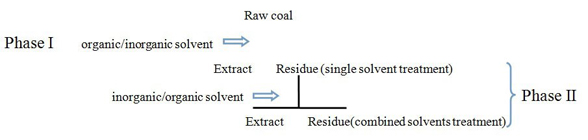
Recently, Henan Polytechnic University researchers led by Professor Xiaodong Zhang assessed the effect of major functional groups and microcrystalline structure under the solubility of multi-components from semi-anthracite coal, through different single solvent treatments, including: tetrahydrofuran, carbon disulfide, hydrochloric acid, chlorine dioxide and combined solvents treatments. Of utmost importance, they explored the variations in the change characteristics and treatment mechanisms with two independent techniques, namely: Fourier transform infrared spectroscopy for identification of functional groups and X-ray diffraction for determination of microcrystalline structure. Their work is currently published in the research journal, Fuel Processing Technology.
In brief, the research method used by the scientists commenced with the collection of the semi-anthracite coal samples. They then selected the previously named solvents and proceeded with the treatment experiments. Next, they engaged in X-ray diffraction measurements where four microcrystalline structure parameters of the samples were acquired. Lastly, Fourier transform infrared spectroscopy measurements were performed.
The authors observed that the extraction yields of organic solvents were significantly greater than the dissolution yields of inorganic solvents, and the solubility of hydrochloric acid was relatively higher than that of chlorine dioxide. In addition, they noted that the main functional groups in coal, including aliphatic, aromatic and oxygen-containing functional groups, possessed a decline tendency to different degrees under the treatment of organic solvents. Furthermore, they saw that the main microcrystalline structure parameters increased in vertical direction but reduced in parallel direction of the aromatic carbon network layer with the swelling effect, regardless of an organic solvent or inorganic solvent treatment.
In summary, Xiaodong Zhang and colleagues successfully presented a detailed examination of the impacts of different solvents on coal structure. In general, they observed that the main functional groups and microcrystalline structure in coal showed relatively intricate features within the combined solvents treatment because of the phenomenon of pore-blockade, pore-expansion or slight solvent retention. Altogether, their study established the chemical structure models of semi-anthracite coal on pre and post solvent treatments and could therefore act as a stepping stone and reference for studying the chemical structure of semi-anthracite coal.




Reference
Xiaodong Zhang, Shuo Zhang, Pengpeng Li, Zhe Ding, Zongchao Hao. Investigation on solubility of multi-components from semi-anthracite coal and its effect on coal structure by Fourier transform infrared spectroscopy and X-ray diffraction. Fuel Processing Technology, volume 174 (2018) page 123–131.
Go To Fuel Processing Technology