Advances in Engineering Advances in Engineering features breaking research judged by Advances in Engineering advisory team to be of key importance in the Engineering field. Papers are selected from over 10,000 published each week from most peer reviewed journals.

Significance
Carbon fibre-reinforced polymers (CFRPs) are the go-to materials in aerospace, high-performance transport, and structural engineering because of their extremely lightweight, yet mechanically resilient, with excellent fatigue and corrosion resistance. But translating these materials from raw panels into functional components often proves less straightforward than expected. For instance, drilling deep micro-holes is anything but trivial when it comes to CFRPs. However, it’s essential for things like fastener placement, embedded sensors, and even ventilation pathways in multilayered composite structures. The core problem isn’t just the material’s hardness or brittleness—it’s the dual nature of its composition. CFRPs are built from conductive carbon fibres suspended in an insulating epoxy resin. This mix of radically different properties within one material introduces challenges that neither mechanical nor electrical machining can solve alone. Drill bits tend to wear quickly or delaminate the layers, especially when working at the micro-scale. And EDM, despite its precision and non-contact operation, simply doesn’t work on the resin-rich layers due to their lack of conductivity. That mismatch—between what each process is good at and what the material demands—has limited how effectively CFRPs can be machined for advanced applications. To this account, Dr. Yijin Zhao, Dr. Xiaodong Yang, Professor Yong Lu, and led by Professor Xiaoming Duan from the Dept. of Mechanical Engineering and Automation at Harbin Institute of Technology, the researchers build a new system that lets two very different methods—EDM and mechanical drilling—work in tandem. In their recent paper, published in the International Journal of Machine Tools and Manufacture, they describe a hybrid approach that can intelligently switch between spark erosion and conventional cutting. What makes it work is a feedback loop that monitors gap voltage in real time. When the tool enters a conductive fibre zone, the system initiates EDM; when it hits resin, it reverts to mechanical cutting. The machine adjusts dynamically, no need for manual intervention.
To evaluate the effectiveness of their hybrid drilling method, the researchers assembled a purpose-built experimental setup. At the heart of it was a tungsten steel drill, spinning at high speed, but wired to a pulse power supply so it could also function as an EDM electrode. The tool wasn’t merely acting as a cutter or discharge source—it alternated between both roles as needed. What made the system genuinely novel wasn’t just the dual-purpose hardware, but rather how intelligently it was controlled. Using a customized servo algorithm, the team continuously monitored the gap voltage between the tool and the workpiece. When the signal suggested the tool was in contact with carbon fibres, the system slowed to maintain stable EDM. When the voltage jumped—signaling resin—it sped up to cut mechanically. That seamless switching let the tool engage the material on its own terms, rather than imposing a fixed-mode process onto such a structurally diverse composite.
The authors’ initial trials involved machining micro-holes into CFRP sheets with thicknesses up to 5 mm and the team was able to drill holes as small as 330 microns in diameter, with aspect ratios pushing past 15:1—something that’s often considered impractical using EDM or mechanical drilling alone. Post-process inspection using SEM and confocal microscopy showed clear advantages. Hole walls were smoother, fibre exposure was noticeably reduced, and the resin layers hadn’t been scorched or unevenly melted—problems frequently encountered in traditional approaches. This pointed toward a more coordinated interaction between tool and material, one that respected the CFRP’s alternating fibre-resin structure rather than forcing it into submission. They also conducted high-speed imaging during the drilling and captured real-time transition points between spark erosion and mechanical cutting. These observations were supported by synchronized voltage and current traces, reinforcing that the system was adapting accurately based on conductivity. Debris analysis revealed more. EDM-only holes left behind long, thread-like carbon fragments—often problematic during discharge. In contrast, the hybrid strategy produced smaller, more fragmented debris, which is easier to clear and less likely to destabilize the process. When they compared outcomes, the improvements were striking. Material removal rates jumped by nearly 30%. Heat-affected zones were less than half as large. Taper was significantly reduced. While electrode wear remained a concern, as expected, it followed a more predictable pattern and was more evenly spread between the two machining modes—a trade-off the team considered acceptable, especially given the gains elsewhere.
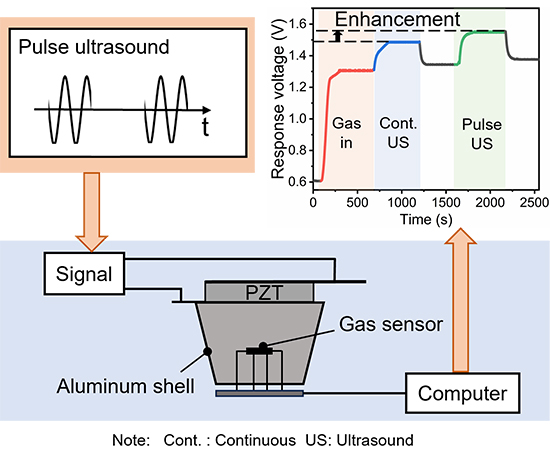
There is an urgent need for fast, affordable, and highly sensitive gas sensors to detect a gas leak in a factory or monitoring volatile organic compounds in urban air in areas like public health, industrial safety, and environmental regulation. Metal oxide semiconductor (MOX) sensors—especially those built around tin dioxide (SnO₂)—have remained an appealing choice because of their low cost, compatibility with miniaturized systems, and relatively high gas sensitivity. But these same sensors often falter in applications requiring high resolution or rapid detection of trace gases. Several strategies have been explored to address these performance gaps, most of which involve modifying the sensor material itself. Techniques like doping, introducing nanostructures, or applying catalytic coatings can offer improvements, but they also introduce complications—fabrication and tedious material design becomes more involved. These are real barriers for developers trying to build more sensitive devices. Physical methods, such as the application of ultrasound, have offered an appealing workaround. Ultrasound doesn’t require chemical modification of the sensor; instead, it enhances gas interactions at the surface by disturbing the boundary layer and increasing molecular diffusion. The problem is, when ultrasound is applied continuously—as has typically been the case—it triggers something called acoustic streaming. This refers to slow, circulating flows near the sensor surface, generated by the ultrasonic field. What makes this especially troublesome is that these flows tend to cool the sensor, destabilizing the temperature-sensitive reactions that MOX sensors rely on. To this account, new research paper published in ACS Sensors and led by Dr. Yumin Yang and Professor Junhui Hu from the State Key Laboratory of Mechanics and Control for Aerospace Structures at Nanjing University of Aeronautics and Astronautics, approached the issue from a different angle. Instead of increasing the power or changing the material, they focused on timing. They hypothesized it might be possible to preserve the beneficial acoustic pressure while suppressing the unwanted fluid motion that follows, by delivering ultrasound in short pulses rather than continuously.
The researchers explored whether pulsed ultrasound could outperform continuous modes in enhancing gas sensor response. At the heart of their setup was a focused ultrasonic transducer, precisely aligned over a commercial SnO₂-based MOX sensor. Inside a well-sealed test chamber, the authors introduced five analytes—methanol, ethanol, acetone, hydrogen, and nitrogen dioxide—each at controlled concentrations. During each trial, they alternated between applying continuous ultrasound and pulsed ultrasound, varying key parameters like pulse width, duty cycle, and interpulse delay. Using thermocouples, they kept a close watch on surface temperature, and with finite element simulations, they tracked acoustic fields and fluid behavior down to fine-scale details. This mix of experimental and computational tools gave them a sharp lens into what was really happening around the sensor.
Dr. Yumin Yang and Professor Junhui Hu found that the contrast between continuous and pulsed modes didn’t take long to surface. Under continuous ultrasound, the sensors initially responded well—but soon, the gains plateaued or declined. Thermal readings told the story clearly: the sensor’s temperature dropped, consistent with acoustic streaming disrupting thermal stability. When they switched to pulsed ultrasound, using finely tuned parameters—particularly a 0.4 ms pulse width—the results flipped. Temperature stayed steady, and signal response increased, markedly so. Take methanol as an example. At just 2 ppm, the sensor’s response under pulsed ultrasound improved by 50% over the continuous case. That level of enhancement, achieved without changing the sensor material or chemistry, was striking. The improvement held across other analytes too, regardless of their chemical type. The key wasn’t the gas—it was the surrounding conditions. Pulse timing allowed enough energy to enhance catalysis, but not so much that convective flows had time to develop fully. They even found that increasing the ultrasound power reduced the optimal pulse width, matching simulations that showed faster stabilization of acoustic pressure at higher energy levels. Perhaps most intriguingly, small tweaks to the interpulse time had outsized effects. If the delay was too short, streaming persisted; too long, and the acoustic benefits faded. It’s a reminder that in systems like this, precision in when energy is delivered can matter just as much as how much is delivered.
In conclusion, what makes this study is the precision with which Dr. Yumin Yang and Professor Junhui Hu adjusted when energy is delivered to the sensor which has broad and meaningful consequences. Because with the application of ultrasound in controlled pulses rather than as a continuous wave, they revealed that timing alone—without any structural change to the sensor—can substantially boost performance. It’s a clever rethinking of the usual approach: instead of adding complexity to the sensor itself, they optimized the surrounding energy environment, allowing the system to work more efficiently with what it already had. The new technique addresses a frustrating challenge in gas sensor engineering. Continuous ultrasound can stimulate surface reactions, yes—but it comes with an unwelcome side effect: acoustic streaming. These tiny, sound-induced fluid currents tend to cool the sensor surface, which interferes with the redox chemistry that underlies detection. In essence, previous designs had to trade off sensitivity for stability. With the introduction of pulsed ultrasound, that compromise can be relaxed. The method allows for fine-tuning: enough stimulation to enhance detection, but not so much that it destabilizes the local temperature. It shifts the design conversation from “how much energy” to “how well-timed is the energy”. Moreover, the practical impact of this is hard to overstate. By stabilizing sensor temperatures and amplifying response signals—even at very low analyte concentrations—the researchers are paving the way for more responsive and adaptable gas sensing technologies. For instance, applications like breath-based disease diagnostics or trace gas monitoring in industrial settings stand to benefit immediately. A 50% increase in response to 2 ppm methanol isn’t a theoretical improvement—it’s a real, measurable jump in performance that could make low-cost sensors competitive with systems that currently require more power or complex signal processing. Another major advantage is compatibility. Because this approach relies entirely on signal modulation rather than material redesign, it fits naturally into systems already moving toward software-defined, IoT-connected sensor platforms. Adjusting pulse width or duty cycle in response to changing environmental conditions could be done in real time, with minimal hardware overhead. In that sense, the new study doesn’t just propose a better sensor—it sketches the blueprint for smarter ones in the future.


Reference
Yang Y, Hu J. Pulse Ultrasound-Based Response Enhancement of a MOX Gas Sensor. ACS Sens. 2024 Dec 27;9(12):6421-6429. doi: 10.1021/acssensors.4c01548.