Advances in Engineering Advances in Engineering features breaking research judged by Advances in Engineering advisory team to be of key importance in the Engineering field. Papers are selected from over 10,000 published each week from most peer reviewed journals.

Significance
Industries all over the world are feeling the pressure to find smarter ways to manage waste, and the push for sustainability has never been stronger. Among the many byproducts piling up, red mud stands out as a serious challenge. This material, which is a leftover from aluminum production is produced in massive quantities every year. It is highly alkaline and difficult to reuse which creates major environmental risks. Think about it—millions of tons of this stuff are sitting in landfills, taking up valuable space, and potentially contaminating the soil and water around them. On top of that, managing red mud is expensive, but there is another thing that is important, it is not just waste. It has untapped potential. Packed with alumina, silica, and iron oxides, red mud could actually be a valuable ingredient for making construction materials. Fly ash, another industrial byproduct, comes from burning coal in power plants. It is a little better known and is already used in making cement and concrete, but a lot of it is still going to waste. Fly ash, like red mud, is rich in materials that make it perfect for something called geopolymers. These are advanced construction materials that are made by reacting aluminosilicates with alkaline solutions. Using these two byproducts could help solve two big problems at once: reducing industrial waste and offering sustainable building options. Of course, it is not as simple as mixing these materials together. Red mud has its issues. Its crystalline structure makes it stubborn and less reactive, and its high alkalinity can be a problem too. Even though geopolymers show a lot of promise as a green alternative to traditional cement, making them strong, durable, and workable is no small feat. Everything needs to be just right—from the way the materials are processed to how they are cured.
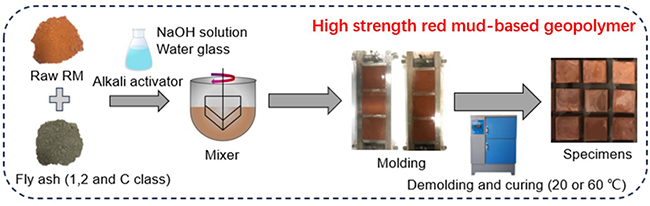
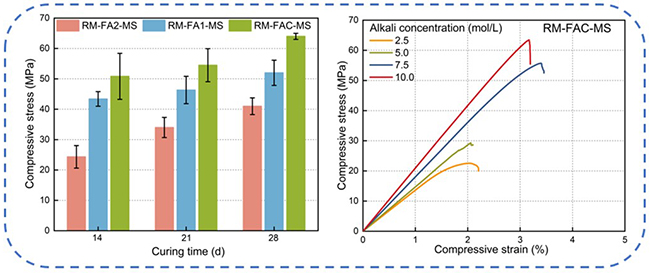
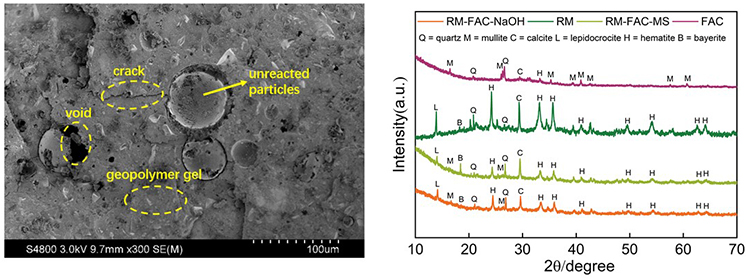
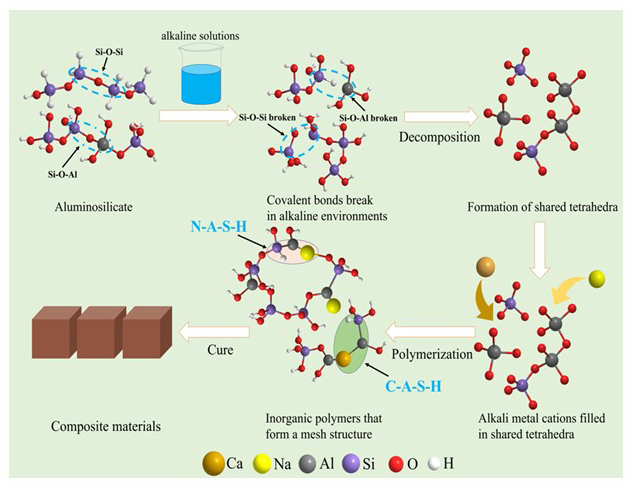
To this account, new research paper published in Journal Powder Technology and led by Professor Bing Bai and Fan Bai from the Beijing Jiaotong University together with Qingke Nie and Xiangxin Jia from the China Hebei Construction and Geotechnical Investigation Group Ltd., the researchers tackled the tricky chemistry of red mud by pairing it with highly reactive Class C fly ash and using a combination of alkali activators to boost the geopolymerization process. Their goal was simple but ambitious: to turn waste into something valuable, like a high-strength material that could replace conventional cement, which is a major contributor to carbon emissions. The team also studied into the details, testing how factors like temperature, mixing ratios, and chemical activators influenced the material’s performance. The researchers worked with red mud from an aluminum plant and three types of fly ash, including a high-calcium variant known as FAC, as their main ingredients. To activate these materials and kickstart the geopolymerization process, they used two types of alkali solutions: sodium hydroxide (NaOH) and a mixed solution (MS) made of NaOH and water glass. These activators were chosen for their ability to enhance the chemical reactions needed to form strong and durable geopolymers. The team also tested several variables—such as the ratios of red mud to fly ash, the concentration of the activators, and the curing temperatures—to figure out how each factor influenced the material’s final properties. In one part of the study, the authors investigated different red mud-to-fly ash ratios, ranging from 2:8 to 8:2. Using sodium silicate as the activator, they discovered that adding more fly ash significantly boosted the geopolymer’s compressive strength. The sweet spot was a 5:5 mix of red mud and fly ash, which provided the perfect balance of active aluminosilicates for polymerization. This ratio also avoided having too much crystalline material, which could block the reactions. To make things even better, curing the samples at a steady 60°C for 28 days pushed their strength beyond 60 MPa—comparable to high-grade concrete. These results highlighted the importance of fine-tuning raw material ratios to get the best performance. Next, they tested the effectiveness of different activator concentrations. The mixed solution of NaOH and water glass consistently outperformed NaOH alone, resulting in denser, stronger geopolymers. The mixed solution brought extra silica into the mix, improving how well the particles stuck together. At a concentration of 10 mol/L NaOH, the geopolymer achieved a remarkable compressive strength of 63.5 MPa, far surpassing samples activated with NaOH alone. This highlighted the powerful synergy between the two components in the mixed solution. The curing process was another critical focus. Samples cured at higher temperatures (60°C) hardened faster and reached their optimal strength in less time compared to those cured at room temperature. However, curing at very high heat risked forming cracks due to rapid moisture loss, so they found that maintaining controlled humidity during curing was essential. Moist curing at 60°C produced dense, crack-free samples with superior mechanical properties. Structural analyses using microscopy showed that the mixed solution created tightly bonded, low-porosity geopolymers, while NaOH alone left behind a looser structure with undissolved particles, explaining the difference in strength. X-ray tests confirmed that most of the fly ash’s active components were consumed during the reaction, while red mud primarily acted as a stable filler, boosting the geopolymer’s overall integrity.
In conclusion, this study led by Professor Bing Bai and his colleagues is significant for both environmental progress and building materials innovation. What they have done is take two major industrial wastes—red mud and fly ash—and turned them into something truly useful. These materials, which are usually seen as nothing more than problems to get rid of, are being given a second life. Instead of sitting in landfills and risking harm to the environment, they’re now playing a part in creating strong, sustainable building materials. What makes these geopolymers special isn’t just that they’re made from waste. They’re strong—so strong, in fact, that they can replace traditional cement in many situations. Cement, as you might know, is a major source of carbon emissions, so finding an alternative like this is a big win for the planet. These geopolymers not only match cement’s performance but also help reduce the environmental footprint of the construction industry. That’s a win-win. The practical applications are exciting, too. With their high compressive strength, these materials can be used for things like stabilizing roads, supporting heavy foundations, or replacing concrete in challenging environments. They’re built to last and hold up well in tough conditions, thanks to the curing methods the researchers worked out. And because they’re made from materials that would otherwise be thrown away, they’re affordable, making them an ideal option for places where cost is a major concern. In short, this research is a breath of fresh air for industries looking to be greener and smarter. It’s not just about solving a waste problem; it’s about showing what’s possible when you rethink how materials can be used. This is the kind of work that moves us closer to a sustainable future.

Reference
Bing Bai, Fan Bai, Qingke Nie, Xiangxin Jia, A high-strength red mud–fly ash geopolymer and the implications of curing temperature, Powder Technology, Volume 416, 2023, 118242,