Advances in Engineering Advances in Engineering features breaking research judged by Advances in Engineering advisory team to be of key importance in the Engineering field. Papers are selected from over 10,000 published each week from most peer reviewed journals.

Significance
Cementitious materials are comprised of hydraulic binders formed by anhydrous constituents crystallized or vitreous, appearing in the form of fine powders. This material can be upgraded to form strain hardening cementitious composites (SHCC) which have desirable properties in terms of ductility and micro-cracking with self-controlled widths upon addition of polyvinyl alcohol. The excellent strain hardening behavior can be attributed to the mechanical interactions between the fiber, matrix and interface. A plethora of literature has been published in relation to this topic, however, most of it focusses on the tensile properties thereby overlooking compressive and shear behavior of the SHCC material. Additionally, compressive properties of SHCC with high strength have been rarely studied. Therefore, there is a need to establish the relationship between the compressive strength and the tensile properties for ease of application of the SHCC.
Tongji University researchers: Dr. Yao Ding (Now in Chongqing University), Professor Jiang-tao Yu, Ke-Quan Yu (PhD student) in collaboration with Professor Shi-lang Xu at Zhejiang University systematically investigated the mechanical properties of polyethylene fiber-reinforced SHCC with compressive strength ranging from normal strength to high strength. During their quest, the team developed a novel material and named it ultra-high ductility cementitious composite (UHDCC) since it possesses outstanding strength. Their work is now published in the research journal, Composite Structures.
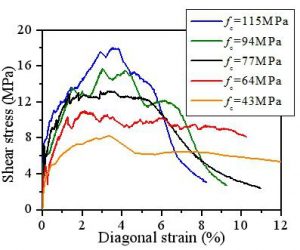
The researchers initiated their studies by preparing composite specimens to be used in the study and obtained their compressive parameters and the strain at peak stress. Next, the failure modes of the specimens under uniaxial compression with different strengths were compared. The team then proceeded to determine the tensile properties of the specimens. Eventually, Iosipescu shear beams were utilized to investigate the shear behavior of SHCC after which the relationships between the shear strength and the compressive strength, tensile strength was established.
The authors commenced their study by investigating the effects of the microstructure of the dust particles and their morphology evolution during the in-flight process. The parameters and the rate controlling step of the process was determined through kinetic analysis.
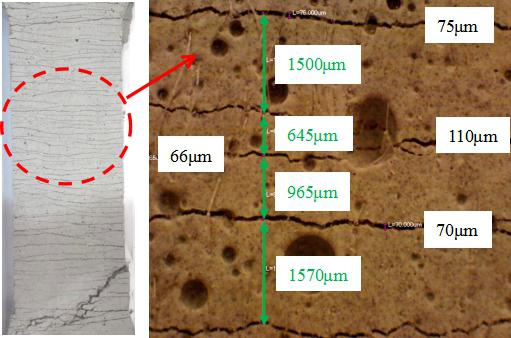
The authors observed that the ductility of all polyethylene fiber-reinforced SHCC of normal to high strength developed in this research were beyond 8% and attained a maximum strain capacity of up to 11%, which was way larger than the conventional SHCC reinforced by polyvinyl alcohol fiber. In addition, they noted that with the incorporation of polyethylene fibers, the failure mode of UHDCC under uniaxial compression was ductile shear failure. The researchers also observed that the initial cracking stress and peak stress of UHDCC under uniaxial tension increased with compressive strength, whereas the strain capacity corresponding to the peak stress exhibited an opposite trend.
The study has successfully presented a systematical research on the compressive performance, the tensile behavior and the shear response of UHDCC. In this study, the relationships between the compressive strength and the tensile parameters have been established as well as the relationships between the shear strength and the compressive/tensile strength. It has been seen that the shear strength of UHDCC increases almost linearly with the corresponding compressive strength. Altogether, a novel ultra-high ductility cementitious composite has been developed and has wide applicability potential in many civil engineering areas.






Reference
Yao Ding, Jiang-tao Yu, Ke-Quan Yu, Shi-lang Xu. Basic mechanical properties of ultra-high ductility cementitious composites: From 40 MPa to 120 MPa . Composite Structures 185 (2018) 634–645
Go To Composite Structures